
Contents
1. Institutional response and basis for compliance 4
2. Programmed institutional commitment 5
Commitment translated into delivery 5
Why the evidence demonstrates commitment 5
3. Five-year evidence overview: 2021–2025 6
Universities’ efforts to achieve the SDGs 7
Fifth Equal Opportunities Conference 8
CBF International Conference on Business and Technology 9
Sustainable leadership and equal opportunities 10
Civil-society partnership for education 11
The 11th Consultative Meeting with Civil Society Institutions 11
Youth, employability and entrepreneurship 12
Ahlia Youth 2023: Empowering Tomorrow’s Leaders 12
Second Forum on Inclusion of Students with Disabilities 13
Eighth Equal Opportunities Conference 16
9. Community reach and SDG education pathways 19
Programmed and responsive activity 20
Knowledge transfer beyond the event 20
10. Consolidated conclusion 20
Commitment to SDG Education
Beyond Campus in the Wider Community
SDG 17 · Indicator 17.4.2
DIRECT RESPONSE: YES Ahlia University demonstrates a planned, institution-wide and sustained commitment to SDG education beyond campus through public and professional conferences, youth and innovation programmes, civil-society engagement, inclusion forums and open community-partnership mechanisms. |
1. Institutional response and basis for compliance
Ahlia University’s answer is YES. The evidence for 2021–2025 shows that education for sustainable development is extended beyond enrolled students through structured community engagement, public and professional knowledge exchange, partnership-based training, youth development and recurring forums that translate SDG themes into community practice. [S1]
Indicator interpretation
| Requirement | Evidence of fulfilment |
| Institutional commitment | Community engagement is embedded in the University’s core values, mission, strategic goals and operational plans, with a specific 2021–2025 direction. |
| Education beyond campus | Activities reach citizens, innovators, civil-society organisations, professionals, researchers, policymakers, employers and young people through external venues, virtual access and public invitations. |
| SDG content | Programmes address equality, inclusive education, decent work, innovation, responsible business, sustainable leadership, digital transformation and partnerships. |
| Continuity | Verified activity is documented in every year from 2021 through 2025, including recurring Equal Opportunities Conferences and complementary outreach formats. |
| Institutional delivery | Delivery involves university leadership, colleges, the Deanship of Student Affairs, the Entrepreneurship and Invention Centres, Professional Relations and the Community Engagement Committee. |
Evidence standard
The report uses the five completed calendar years 2021–2025. Each item is supported by a clickable original Ahlia University source. Evidence is presented chronologically; no single year is treated as the core year.
2. Programmed institutional commitment
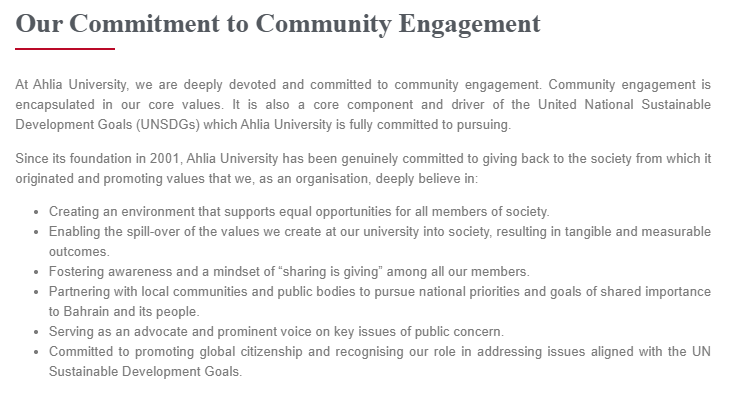
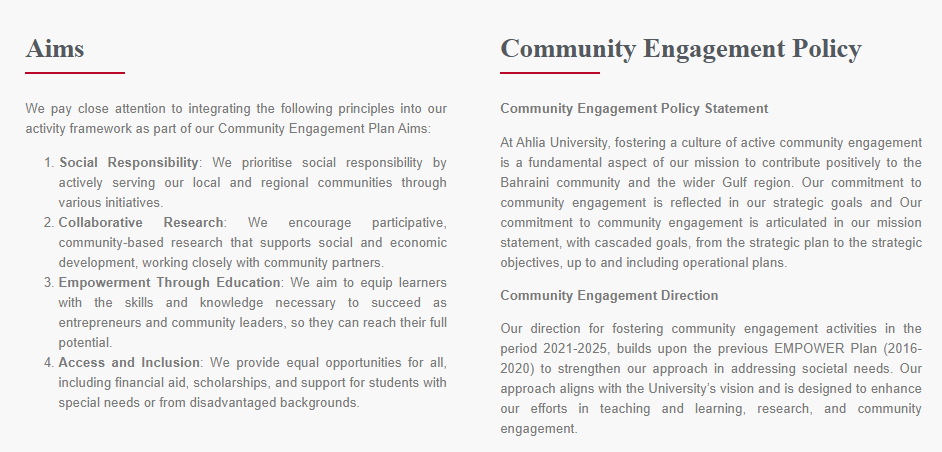
Ahlia University defines community engagement as a core value and a driver of the United Nations Sustainable Development Goals. Its policy links this commitment to the mission, strategic goals, strategic objectives and operational plans. The stated 2021–2025 direction strengthens teaching and learning, research and engagement in response to societal needs. [S1]
Commitment translated into delivery
Social responsibility: active service to local and regional communities. [S1]
Collaborative research: participative, community-based research supporting social and economic development with community partners. [S1]
Empowerment through education: equipping learners to become entrepreneurs and community leaders. [S1]
Access and inclusion: equal opportunities and support for people with disabilities or disadvantaged backgrounds. [S1]
Public partnership mechanism: students, staff, citizens and residents may propose community projects, while community-based events may use University premises free of charge. [S1]
Governance
A Community Engagement Committee coordinates planning and implementation. Its membership connects executive leadership with the Entrepreneurship Centre, Student Activities and Services, Professional Relations, Human Resources and faculty representatives. This structure makes outreach an institution-wide responsibility rather than an isolated event function. [S1]
Why the evidence demonstrates commitment
The policy framework, coordinating committee, open proposal route and multi-year recurrence of outreach activities demonstrate a programmed commitment. Individual conferences, forums, workshops and innovation challenges provide the dated implementation evidence.
Community Engagement
3. Five-year evidence overview: 2021–2025
| Year | Representative verified outreach | Primary wider-community audience | SDG contribution |
| 2021 | Universities’ SDG efforts forum; Fifth Equal Opportunities Conference | Higher-education bodies, public institutions, civil society, students, organisations concerned with women’s advancement | 4, 5, 10, 16, 17 |
| 2022 | We Invent Hackathon; hybrid CBF International Conference | Innovators across Bahrain, industry experts, academics and researchers | 4, 8, 9, 11, 17 |
| 2023 | Sixth Equal Opportunities Conference; civil-society consultative meeting; Ahlia Youth; Tamkeen session | Professionals, policymakers, charities, societies, employers, youth and entrepreneurs | 4, 5, 8, 9, 10, 17 |
| 2024 | Forum on inclusion of students with disabilities; ICGER 2024 | Parliament, specialists, civil society, academics, researchers and industry professionals | 4, 8, 9, 10, 17 |
| 2025 | Eighth Equal Opportunities Conference; ITIKD 2025 | Policymakers, business leaders, professionals, scholars and researchers from 50 countries | 4, 5, 9, 10, 16, 17 |
Reach and delivery modes
| Mode | How it extends SDG education |
| Public/professional conferences | Research and practice are translated for scholars, professionals, industry leaders and policymakers. |
| Hybrid and virtual access | Microsoft Teams and Zoom links broaden participation beyond the physical campus. |
| Community partnerships | Civil-society bodies, public agencies, businesses and international partners co-design or contribute expertise. |
| Challenge-based learning | Hackathons invite community innovators to solve real technical and societal problems with faculty support. |
| Youth and employability programmes | Young people gain industry insight, career readiness and leadership capacity. |
| Inclusion forums | Specialists, legislators and community stakeholders share practices for equitable access to education. |
4. Evidence from 2021
Universities’ efforts to achieve the SDGs
In April 2021, Ahlia University reported a forum that brought together the Higher Education Council, the Education and Training Quality Authority, the United Nations Development Programme office, the World Association for Sustainable Development, the Regional Network for Social Responsibility, universities, quality and accreditation bodies, students and other stakeholders. The dialogue addressed integrating the SDGs into higher education, capacity building, knowledge exchange and research for local priorities, and affirmed the roles of universities, civil society and the private sector in achieving the goals. [S2]
Al-Dhaen: Universities’ Efforts Forum Achieved Significant Success in Transforming Ideas into Practical Plans
Dr. Esra Al-Dhaen affirmed the success of the Forum on Universities’ Efforts to Achieve the Sustainable Development Goals in generating ideas and perspectives aimed at integrating as many SDGs as possible into higher education in the Kingdom of Bahrain and across the wider region.
In a press statement, Dr. Al-Dhaen praised the strong engagement shown by representatives of the General Secretariat of the Higher Education Council, the Education and Training Quality Authority, the United Nations Development Programme, the World Association for Sustainable Development (WASD), and the Regional Network for Social Responsibility. The forum also attracted considerable interest and participation from numerous specialists and stakeholders.
Dr. Al-Dhaen stated that the forum’s discussions emphasised the importance of universities and various private-sector institutions contributing to the achievement of the Sustainable Development Goals, provided that an educational system capable of keeping pace with rapid developments in the labour market is established. She thanked all universities, educational institutions, quality-assurance bodies, international accreditation organisations, students, and employers who engaged with the forum’s activities.
She explained that Ahlia University’s successful integration of seven Sustainable Development Goals into its curricula and university activities represents one of its major achievements in this field. The University plans to accomplish even more, enabling it to play a pioneering, central, and effective role in achieving the SDGs through close cooperation with all relevant stakeholders, particularly the General Secretariat of the Higher Education Council.
She stressed that involving leading and distinguished universities in achieving the United Nations Development Programme’s Sustainable Development Goals promotes the exchange of ideas among decision-makers and the scientific and academic communities. It also highlights the importance of drawing upon research, studies, and socioeconomic analyses that help stakeholders understand the local context and identify priorities aligned with the development agenda.
Dr. Al-Dhaen also highlighted Ahlia University’s strong commitment to educational and knowledge-based concepts related to sustainable development, including innovation, capacity-building, and knowledge exchange. She noted that the University’s academic staff had achieved a high level of success in incorporating these concepts into its educational system.
Participants in the forum included Dr. Amina Bouallay, Head of Scientific Research at the Higher Education Council; Ms. Esmat Jaffar, Director of National Qualifications Framework Operations at the Education and Training Quality Authority; Professor Allam Ahmed, President of the World Association for Sustainable Development (WASD); Professor Yousef Abdul Ghaffar, President of the Regional Network for Social Responsibility; and Mr. Bety Lofy, an economist at the United Nations Development Programme Office.
Fifth Equal Opportunities Conference
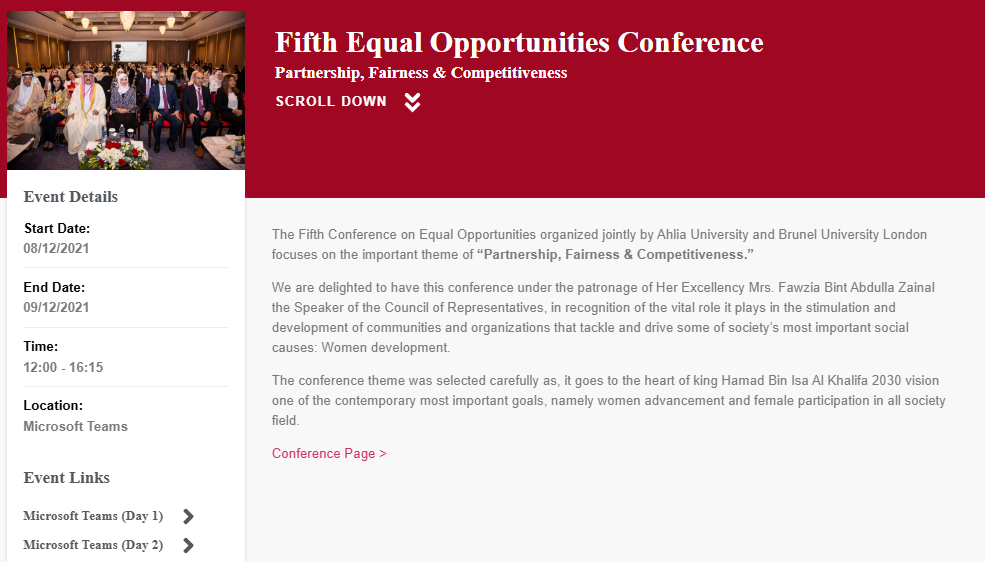
On 8–9 December 2021, Ahlia University and Brunel University London jointly delivered the Fifth Equal Opportunities Conference under the theme “Partnership, Fairness & Competitiveness.” Conducted through Microsoft Teams with published access links, the conference focused on women’s development, women’s advancement and female participation in society. Patronage by the Speaker of Bahrain’s Council of Representatives connected research-led discussion with a nationally significant social cause. [S3]
Wider-community value
The online format enabled participation beyond a campus-only audience. [S3]
The SDG forum connected education, government, international bodies, civil society and private-sector responsibility. [S2]
The equality conference translated partnership and gender-equality themes into a public professional learning forum. [S3]
SDG alignment: SDG 4 (Quality Education), SDG 5 (Gender Equality), SDG 10 (Reduced Inequalities), SDG 16 (Strong Institutions) and SDG 17 (Partnerships for the Goals).
5. Evidence from 2022
We Invent Hackathon
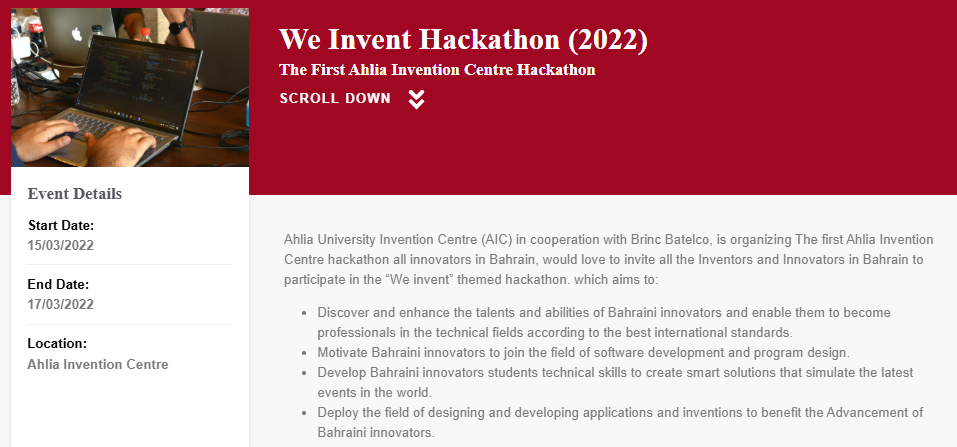
From 15–17 March 2022, the Ahlia Invention Centre, in cooperation with Brinc Batelco, invited inventors and innovators across Bahrain to the first We Invent Hackathon. The programme aimed to develop technical capability, software and application design, and smart solutions. Teams could include community participants, with at least one Ahlia student, and received advice from University faculty and others. This model opened University expertise to a wider innovation community and created direct knowledge exchange around technology for societal benefit. [S4]
CBF International Conference on Business and Technology
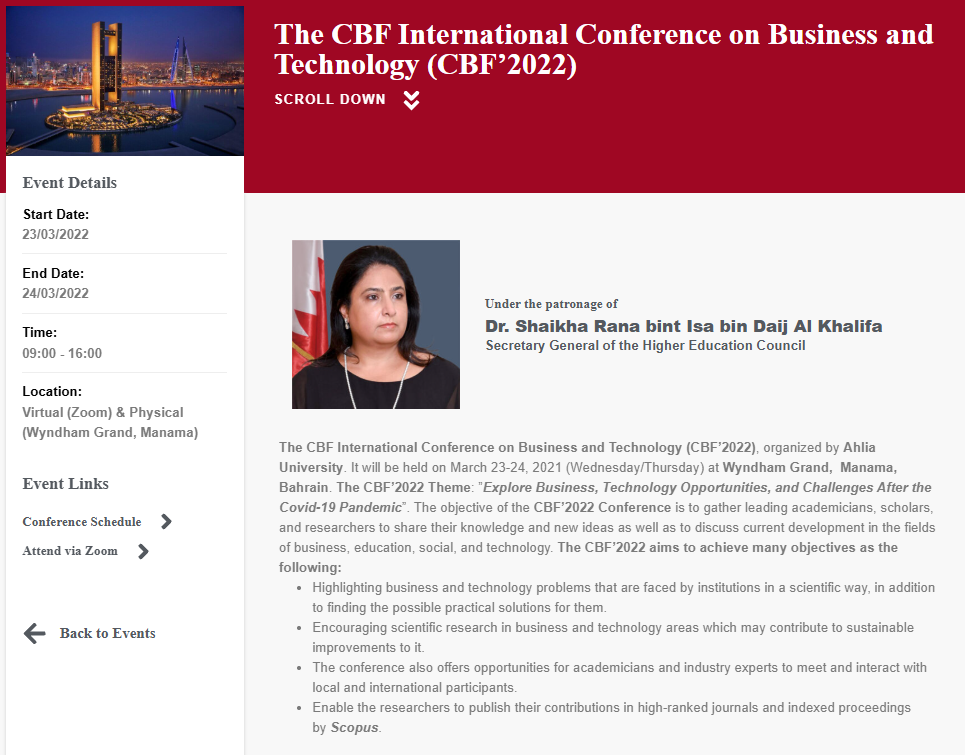
On 23–24 March 2022, Ahlia University delivered CBF’2022 in a hybrid format at Wyndham Grand, Manama and through Zoom. The programme gathered academics, scholars, researchers and industry experts to discuss post-pandemic challenges across business, education, society and technology. Its objectives included identifying practical solutions to institutional problems, encouraging research that contributes to sustainable improvement and enabling interaction between academic and industry participants. [S5]
Wider-community value
A Bahrain-wide invitation expanded innovation learning beyond enrolled students. [S4]
Faculty mentoring connected public innovators with University knowledge and facilities. [S4]
Hybrid delivery and direct Zoom access widened professional knowledge exchange. [S5]
Both activities linked learning to practical, sustainable solutions and employment-relevant technical skills. [S4] [S5]
SDG alignment: SDG 4, SDG 8 (Decent Work and Economic Growth), SDG 9 (Industry, Innovation and Infrastructure), SDG 11 (Sustainable Communities) and SDG 17.
6. Evidence from 2023
Sustainable leadership and equal opportunities
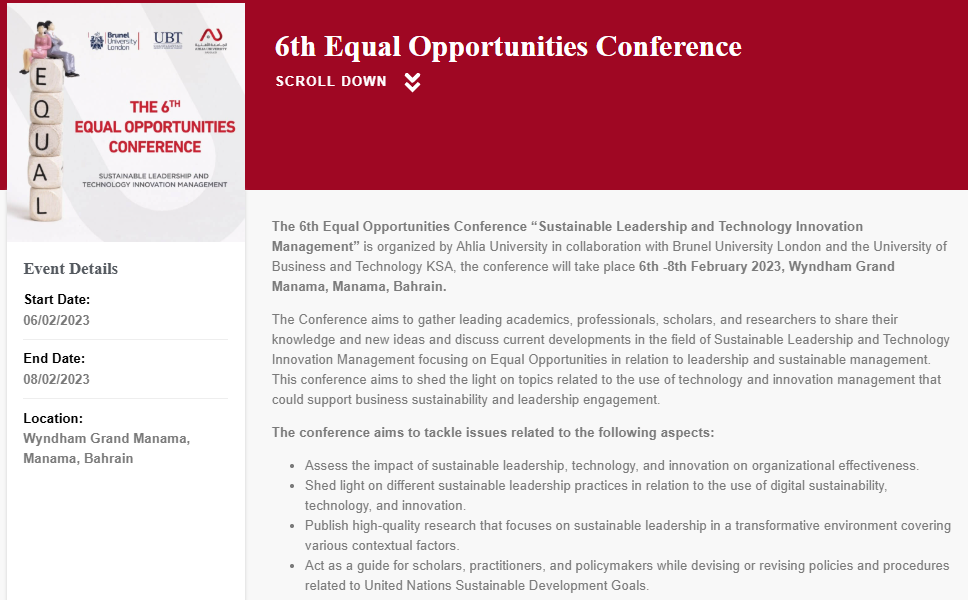
The Sixth Equal Opportunities Conference, held 6–8 February 2023 at Wyndham Grand Manama, was organised with Brunel University London and the University of Business and Technology, Saudi Arabia. It convened academics, professionals, scholars and researchers on sustainable leadership, digital sustainability and technology innovation, and was expressly intended to guide scholars, practitioners and policymakers when developing or revising SDG-related policies and procedures. [S6]
Civil-society partnership for education
The Eleventh Consultative Meeting with Civil Society Institutions brought University leaders and academics together with heads of civil, charitable, professional and social societies. The University affirmed education for everyone in line with the SDGs and Bahrain Vision 2030, described civil-society organisations as key partners, and documented calls for expanded partnerships to improve educational and training opportunities—especially for young people. [S7]
The 11th Consultative Meeting with Civil Society Institutions
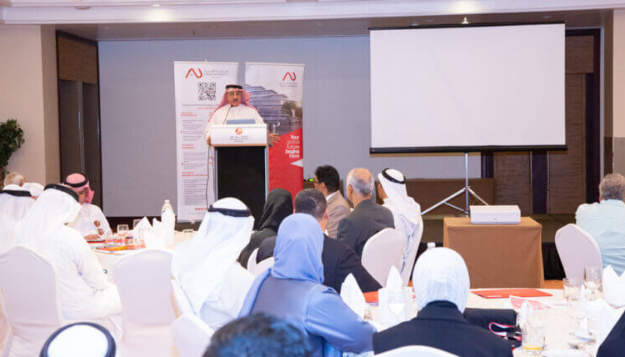
Success Stories Have Been Achieved Through Cooperation with Civil Society Institutions
The Deanship of Students Affairs organised the 11th consultative meeting, conducted at Awal Ballroom at Gulf Hotel, and attended by several representatives and the leaderships, academic faculties and members of Ahlia University, as well as chairpersons of civil, charity, professional, social societies.
Prof. Abdulla Al-Hawaj, the Founding President of Ahlia University, Chairman of the Board of Trustees, stressed on the strategic importance of providing education for everyone, in line with the United Nations sustainable development goals and Bahrain vision 2030, noting the role of civil society institutions in supporting the universities and educational institutions to achieve their goals.
The meeting included honoring the civil society institutions due to its role in community service and its positive cooperation with Ahlia University. Prof. Al-Hawaj said that the civil society institutions are the key partners in success, stressing that Ahlia University provided support to these institutions, especially in education and research fields.
Many Chairpersons of civil societies called for more partnerships and collaborations with Ahlia University in order to enhance the educational and training opportunities for community members especially the youths.
Youth, employability and entrepreneurship
Ahlia Youth 2023 ran from 1 October to 30 November under the patronage of Bahrain’s Minister of Labour. The programme connected young people with professionals, industry experience, real business challenges and labour-market insight, while inviting external organisations to contribute to developing future leaders and a skilled workforce. [S8]
Ahlia Youth 2023: Empowering Tomorrow’s Leaders
Under the Patronage of HE Mr. Jameel Bin Mohammed Ali Humaidan, Minister of Labour, We are thrilled to announce the launch of Ahlia Youth 2023, an exciting initiative aimed at nurturing the potential of our youth and preparing them for success in the world of work. this program is set to take place from October 1st to November 30th, 2023.
About Ahlia Youth Connect
Ahlia Youth Connect is an exciting series of events. The primary goal of this program is to give our students a taste of the real working world. We want to help them get ready for jobs and careers by connecting them with professionals and real-life industry experiences. The program is all about getting students in touch with the world of work. It’s designed to help students connect with businesses and industries so they can become job-ready graduates.
During these events, students will have the chance to dive into real business challenges. They’ll learn from experts about what’s happening in the job market and how they can take advantage of career opportunities. It’s an opportunity for our students to get a head start on their future careers!
Join Us in Shaping the Future
We invite all forward-thinking organizations to be part of Ahlia Youth Connect by participating, you can contribute to the development of the next generation of leaders and play a pivotal role in shaping a skilled and dynamic workforce. To register and get involved, please click here.
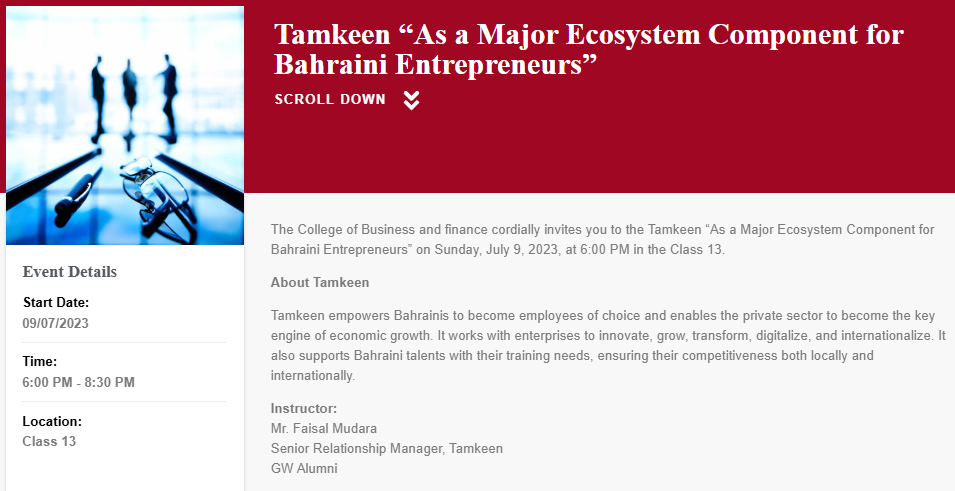
On 9 July 2023, the College of Business and Finance hosted a Tamkeen learning session on Bahrain’s entrepreneurial ecosystem. Delivered by a Tamkeen senior relationship manager, it addressed enterprise innovation, growth, transformation, digitalisation, internationalisation and training support for Bahraini talent. [S9]
SDG alignment: SDG 4, SDG 5, SDG 8, SDG 9, SDG 10 and SDG 17.
7. Evidence from 2024
Second Forum on Inclusion of Students with Disabilities
On 25 September 2024, Ahlia University’s Deanship of Student Affairs organised the Second Forum on the Inclusion of Students with Disabilities in Higher Education at Wyndham Hotel. The forum brought together the Speaker of the Council of Representatives, academics, specialists and people interested in inclusive education. Presentations and panels shared challenges, services, facilities and successful practices for equal participation in higher education. [S10]
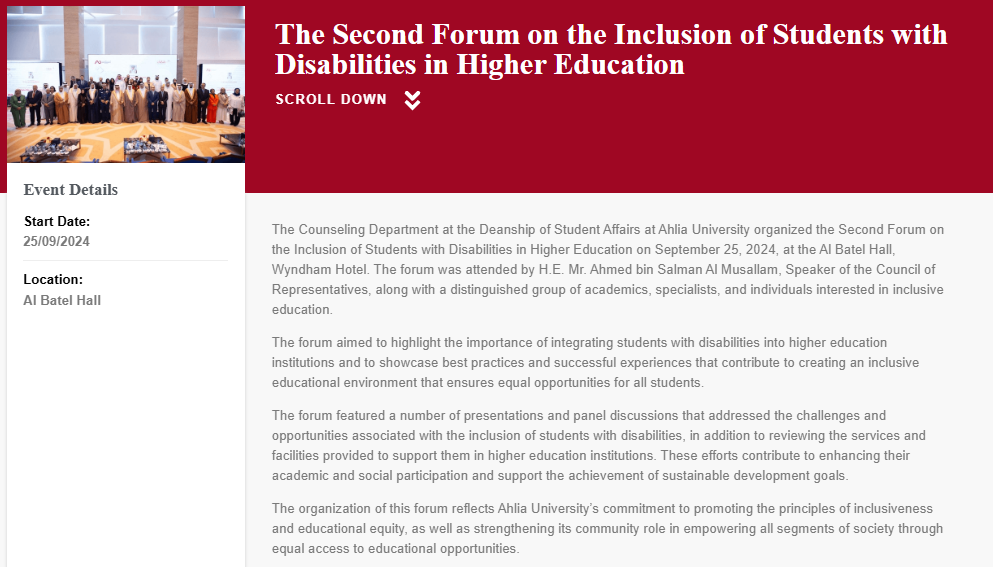
The resulting public discussion advanced community learning on accessibility, assistive technology, specialised training, educator capacity and communication between academic institutions and organisations. Recommendations included stronger community support, tailored training and expanded use of artificial intelligence to empower people with disabilities. [S11]
Inspiring Change: Ahlia University a Beacon of Special Needs Integration in HEIs Alaali Advocates for Sharing Successful Practices in Universities
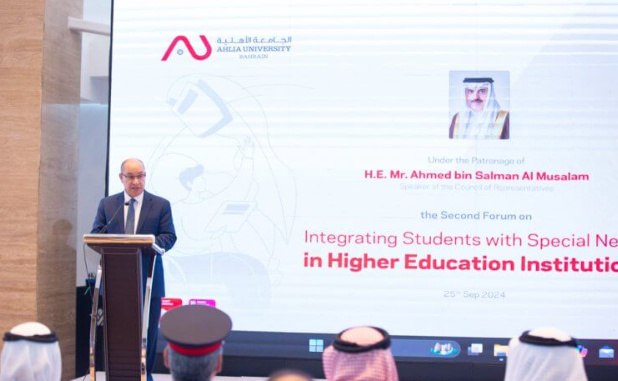
Professor Mansoor Alaali, President of Ahlia University, emphasized the need for greater focus on research and academic attention to issues faced by individuals with determination. He highlighted the importance of evaluating the integration in universities and sharing successful practices to improve the educational landscape.
During a forum on the integration of students with determination into higher education institutions, held under the patronage of Mr. Ahmed bin Salman Al-Musallam, Chairman of the House of Representatives, several recommendations were made. Key suggestions included increasing governmental and community support for institutions that assist individuals with determination, establishing supportive legislative frameworks, and creating specialized training programs tailored for these individuals, particularly in suitable fields such as administration, organization, reception, support roles, and public relations.
The forum also called for improving transportation and traffic systems in line with international standards for individuals with determination. It aimed to empower these individuals with tools like artificial intelligence, increase community initiatives, and develop clear strategies for training educators to effectively support students with disabilities, ensuring ongoing communication between academic institutions and organizations.
A presentation by Ms. Lulwa Ali Al-Rumaihi, Member of Parliament, highlighted the legislative and oversight efforts of the Parliament to protect the rights of individuals with determination. She underscored the Parliament’s role in enhancing these rights across various sectors, including health services, youth and sports, training, and employment.
Discussions revealed significant challenges faced by students with determination in universities, such as accessibility to buildings and facilities, social integration difficulties, limited access to assistive technologies, and financial constraints. Addressing these issues requires effective strategies for integration and comprehensive academic and financial support.
Ms. Shatha Al-Qasimi, HR Supervisor at the National Bank of Bahrain and a graduate of Ahlia University, shared the bank’s successful experience in integrating individuals with determination into its workforce in partnership with the Bahrain Down Syndrome Society. This initiative began with a specially prepared training room and followed a two-phase approach: obtaining necessary approvals and then moving to practical employment and on-the-job training. This effort led to notable success, with the number of employees with Down Syndrome at the bank increasing from three in 2018 to five in 2019.
Dr. Fatima Al-Dhaen, Assistant Professor at Ahlia University, discussed the role of artificial intelligence in helping students with determination pursue higher education. She emphasized how tools like “ChatGPT” can assist these individuals in reading by converting text to audio, simplifying complex language, and aiding in writing and grammar. Such technologies can also make difficult subjects more understandable by breaking them down into simpler terms or providing summaries.
ICGER 2024
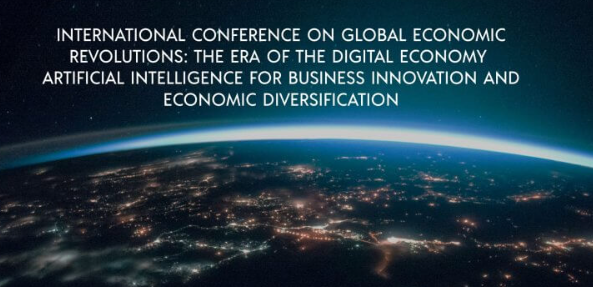
The International Conference on Global Economic Revolutions 2024, held 1–3 October, convened researchers, academics, scientists, scholars and industry professionals around artificial intelligence, business innovation and economic diversification. Its published scope included digital inequality, circular economy, sustainability governance, digital social equality, Industry 5.0 and Society 5.0, making it a multidisciplinary knowledge-exchange platform for the social, economic and environmental dimensions of sustainable development. [S12]
Call For Papers: ICGER 2024 Artificial Intelligence For Business Innovation And Economic Diversification
While Industry 4.0 witnessed the beginnings of Artificial Intelligence, Internet of Things (IoT) and big data, the new digital revolution will take a societal approach to digitalization. Therefore, it is essential to prepare for the upcoming revolution starting today. With the ongoing advancement in technology, from AI to the metaverse, the phenomenon of the digital divide has become more prominent, particularly post-pandemic. Thus, hindering and limiting equal opportunities among countries and societies for economic diversification, business innovation and sustainable development. The digital divide refers to the disparities and inequalities among societies in Information and Communications Technology access, usage, and impacts.
Sustainable technologies such as AI and big data o!ers us new ideas and methods to understand society and undertake the epic mission of economic diversification, business innovation and sustainable development with a new impetus. Nevertheless, digital inequalities restrict compliance and effective implementation of the SDGs in several countries around the world. Thus, it is particularly necessary to improve access to technologies, data, and the exchange of information between di!erent organizations and countries. This is only possible by democratizing digital resources, information, data and in particular scientific knowledge.
The International Conference on Global Economic Revolutions: The Era of the Digital Economy (ICGER) is an international forum for the exchange of ideas and information on the economic changes and developments in the era of the digitalization. ICGER aims to provide a premier platform for discussing a variety of views on a wide range of novel and important topics in the digital era. ICGER brings together contributors from a variety of perspectives, disciplines, and communities seeking the advancement of knowledge regarding the digital economy.
The purpose of the ICGER 2024 conference is to bring together leading researchers, academics, scientists, research scholars and industry professionals to exchange their ideas, present their research, and offer solutions to important issues such as economic diversification, digital inequalities, business innovation for sustainability and the circular economy. This conference further aims to provide an interdisciplinary platform to discuss the most recent innovations, trends, and approaches which will support economic diversification strategies and address concerns faced by businesses in the era of the digital economy.
This year’s hybrid conference will be organized by Ahlia University, the Kingdom of Bahrain. ICGER 2024 “Artificial Intelligence for Business Innovation and Economic Diversification” will be held on 1-3 October 2024
Wider-community value
Inclusive-education knowledge was shared with legislators, specialists and community stakeholders. [S10] [S11]
Practical recommendations linked education, mobility, technology, employment and community support. [S11]
ICGER connected research with industry and public-policy-relevant sustainability themes. [S12]
SDG alignment: SDG 4, SDG 8, SDG 9, SDG 10 and SDG 17.
8. Evidence from 2025
Eighth Equal Opportunities Conference
On 12–13 February 2025, Ahlia University convened leading academics, professionals, scholars, researchers and policymakers at Wyndham Grand Bahrain Bay. The conference addressed responsible innovation, Society 5.0, equal opportunities, digital transformation and business sustainability. Its published aims included enabling audiences to benefit from national, regional and international research and guiding scholars, practitioners and policymakers in SDG-related policy and procedure development. [S13]
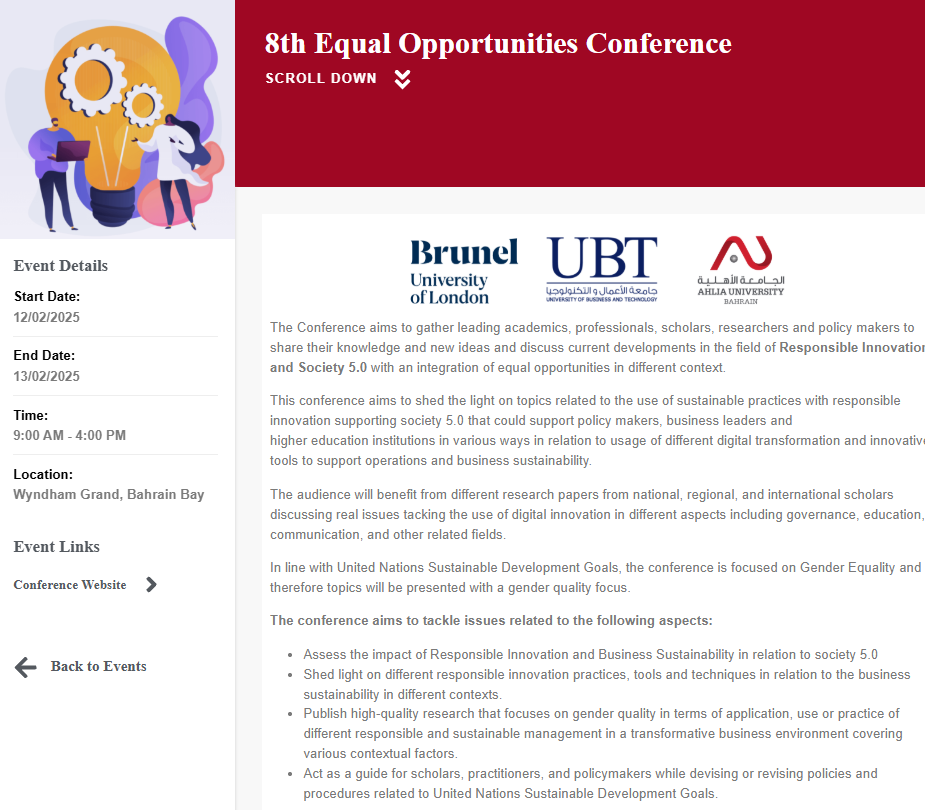
ITIKD 2025
In April 2025, the second International Conference on Innovation in Information Technology and Knowledge Discovery brought together researchers representing 50 countries. Organised with the IEEE Society on Social Implications of Technology and IEEE, it linked technological innovation with human-capital development, digital infrastructure and sustainable development. More than 400 research submissions were received and over 1,000 international experts participated in peer review, with accepted work published through the IEEE Digital Library. [S14]
Ahlia University Hosts the 2nd International Conference on Innovation in Information Technology and Knowledge Discovery with Participation from 50 Countries
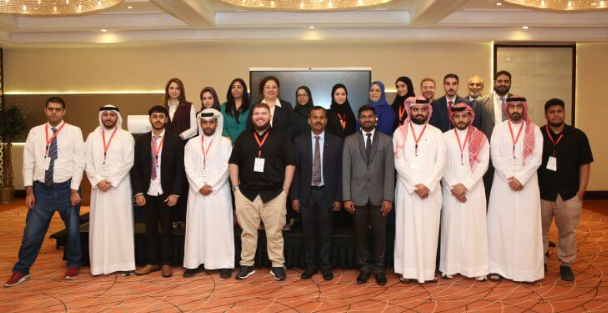
Under the patronage of Her Excellency Dr. Diana Abdulkarim Al-Jahromi, Secretary-General of the Higher Education Council, Ahlia University has launched the second edition of the International Conference on Innovation in Information Technology and Knowledge Discovery (ITIKD 2025), with participation from researchers representing 50 countries. The event was organized in partnership with the Society for the Social Impact of Technology (SSIT), and the Institute of Electrical and Electronics Engineers (IEEE).
In her keynote speech, Dr. Al-Jahromi highlighted the conference’s alignment with Bahrain’s vision for educational and technological leadership, emphasizing the importance of innovation, scientific research, and human capital development. “Today’s graduates are tomorrow’s leaders,” she said, stressing that sustainable development is intrinsically linked to smart investment in human capital and digital infrastructure. She also noted that robust public-private partnerships and a thriving research ecosystem are now central to the Kingdom’s higher education strategy.
In his welcoming speech, Professor Abdulla Al-Hawaj, Founding President and Chairman of the Board of Trustees, praised Bahrain as an emerging global hub for technology leadership. “We don’t just import ideas; we create them. From here, we shape the digital future,” he said. “Ahlia University firmly believes that the path to global competitiveness begins with unwavering support for scientific research and innovation.”
Professor Mansoor Alaali, underlined Bahrain’s role in shaping the digital future through education and innovation, highlighting the rise of artificial general intelligence (AGI). He called for a comprehensive rethinking of higher education systems to adapt to emerging technologies and prepare students for the future.
The conference received over 400 research submissions, with 50% accepted for peer review. Accepted papers will be published in the IEEE Digital Library and indexed in Scopus. Over three days, ITIKD 2025 featured sessions on artificial intelligence, cybersecurity, smart healthcare, and the social impact of technology, fostering global academic exchange and collaboration.
Under the patronage and in the presence of Her Excellency Dr. Diana Abdulkarim Al-Jahromi, Secretary-General of the Higher Education Council, the second edition of the International Conference on Innovation in Information Technology and Knowledge Discovery (ITIKD 2025) commenced today at Ahlia University. The prestigious event, organized by the College of Information Technology in collaboration with the.
In her opening address, Her Excellency Dr. Al-Jahromi underscored the conference’s alignment with the Kingdom of Bahrain’s national strategy to enhance leadership in education, technology, and knowledge-based development. “In an era marked by rapid technological advancement, knowledge stands as the foundation of economic progress and institutional competitiveness,” she stated, reaffirming the Higher Education Council’s commitment to building a flexible, sustainable academic framework tailored to the digital age.
Dr. Al-Jahromi further emphasized the strategic importance of scientific research, technological innovation, and entrepreneurship. She highlighted Bahrain’s proactive approach to the Fourth Industrial Revolution, citing the launch of pioneering academic programs in artificial intelligence, data analytics, fintech, and the Internet of Things as vital steps in preparing future-ready graduates.
Delivering his remarks, Professor Abdullah Al-Hawaj, Founding President and Chairman of the Board of Trustees of Ahlia University,
Conference Chair and Dean of the College of Information Technology, Dr. Wassan Awad, revealed that this year’s conference attracted over 400 research submissions from scholars across 50 countries. Following rigorous peer review by over 1,000 international experts, approximately 50% of submissions were accepted for presentation. All accepted papers will be published in the IEEE Digital Library and indexed in the Scopus database, underscoring the conference’s high academic standards and global recognition.
Spanning three days, ITIKD 2025 will feature in-depth sessions and keynote addresses on cutting-edge themes such as artificial intelligence, cybersecurity, smart healthcare applications, knowledge management, innovation in digital ecosystems, and the broader societal impact of technological advancement. The conference promises a vibrant platform for interdisciplinary dialogue and knowledge exchange among global thought leaders, researchers, and industry professionals.
Wider-community value
The Equal Opportunities Conference explicitly targeted policy, professional and institutional practice. [S13]
The research programme covered governance, education, communication, gender equality and sustainable management. [S13]
ITIKD created a global professional learning platform linking technology to sustainable human and social development. [S14]
Publication through an accessible international research platform extends the educational resource beyond the event itself. [S14]
SDG alignment: SDG 4, SDG 5, SDG 9, SDG 10, SDG 16 and SDG 17.
9. Community reach and SDG education pathways
| Audience beyond the University | Verified pathway | Learning contribution |
| Citizens and residents | Open community proposal route; free venue for community-based events | Enables co-created educational and community activity. |
| Innovators and entrepreneurs | We Invent Hackathon; Tamkeen session | Technical capability, venture support, digitalisation and problem-solving. |
| Young people and employers | Ahlia Youth 2023 | Career readiness, real business challenges and industry knowledge. |
| Civil society | Consultative meeting with civil, charity, professional and social societies | Partnerships for education, training, research and youth opportunity. |
| People concerned with disability inclusion | Inclusion forum and practice-sharing recommendations | Inclusive education, assistive technology, training and accessibility. |
| Professionals and policymakers | Recurring Equal Opportunities Conferences | Evidence and research for SDG-related policy and organisational practice. |
| Researchers and industry | CBF, ICGER and ITIKD conferences | Knowledge exchange on sustainable business, technology, governance and social impact. |
Programmed and responsive activity
Ahlia University combines programmed and responsive outreach. Programmed commitment is demonstrated by the 2021–2025 Community Engagement Direction, the standing Community Engagement Committee, the recurring Equal Opportunities Conference series and continuing conference platforms. Responsive activity is demonstrated by challenge-based hackathons, topical inclusion forums and partnership sessions that address current social, technological and labour-market needs. [S1] [S3] [S6] [S13]
Knowledge transfer beyond the event
The outreach model does more than convene audiences. It creates reusable pathways: research papers and proceedings; policy and practice recommendations; faculty mentoring; employer and civil-society networks; virtual access; and continuing partnerships that support training, innovation and community leadership. [S4] [S6] [S7] [S10] [S13] [S14]
10. Consolidated conclusion
Ahlia University has demonstrated a clear institutional commitment to SDG education beyond campus in the wider community during every year of the 2021–2025 evidence period.
The commitment is embedded in strategy, policy, governance and operational planning. [S1]
Community participation is enabled through an open proposal mechanism and free use of University premises for community-based events. [S1]
Outreach serves diverse non-student audiences, including citizens, young people, civil-society leaders, innovators, employers, specialists, researchers, professionals and policymakers. [S4] [S7] [S8] [S10] [S13] [S14]
Activities cover multiple SDG dimensions: quality education, equality and inclusion, decent work, innovation, sustainable business, responsible technology, strong institutions and partnerships. [S2] [S5] [S6] [S10] [S12] [S13]
Continuity is evidenced across 2021, 2022, 2023, 2024 and 2025, with recurring programmes complemented by targeted community responses. [S3] [S4] [S6] [S10] [S13]
Final determination
YES — Ahlia University, as a body, provides sustained and institutionally supported SDG education beyond campus for the wider community.
11. Source register
All sources below are original Ahlia University webpages. Links are provided for direct verification; no prior indicator report is used as evidence.
S1 Ahlia University — Community Engagement
S2 Universities’ efforts forum on achieving the SDGs (2021)
S3 Fifth Equal Opportunities Conference (2021)
S5 CBF International Conference on Business and Technology (2022)
S6 Sixth Equal Opportunities Conference (2023)
S7 Eleventh Consultative Meeting with Civil Society Institutions (2023)
S8 Ahlia Youth 2023: Empowering Tomorrow’s Leaders
S9 Tamkeen and the Bahraini Entrepreneurial Ecosystem (2023)
S10 Second Forum on Inclusion of Students with Disabilities in Higher Education (2024)
S11 Inspiring Change: sharing practices for disability inclusion (2024)
S12 ICGER 2024: AI, business innovation and economic diversification
S13 Eighth Equal Opportunities Conference (2025)
S14 ITIKD 2025: innovation, information technology and knowledge discovery