NGO AND BUSINESS
COLLABORATION FOR THE SDGs
Student volunteering programmes · research programmes · development of educational resources
YES — Ahlia University collaborates with NGOs and businesses to tackle the SDGs. The evidence shows a university-level framework for community engagement and operational collaborations through student-facing service activity, research and knowledge exchange, and the creation or delivery of educational resources. The core evidence year is 2024. |
Assessment question
Does the University as a body collaborate with NGOs and/or businesses to tackle the SDGs through student volunteering programmes, research programmes, and the development of educational resources?
| Route | Institutional evidence | Source IDs |
|---|---|---|
| Student volunteering programmes | Institutional community-engagement mechanism active in 2024; NGO-linked fundraising and campus service pathways are documented immediately before the core year, with humanitarian-skills collaboration continuing in 2025. | [E01] [E11] [E12] [E13] |
| Research programmes | ICGER 2024 connected researchers and industry professionals around AI, sustainability and economic diversification, with business-publisher dissemination; JBSED operated with Emerald. | [E06] [E08] [E09] [E10] |
| Educational resources | Huawei-supported digital learning infrastructure and training, an IEEE workshop, an Akhbar Al Khaleej cooperation agreement, open-access publishing and an inclusion forum created or shared learning resources. | [E02] [E03] [E05] [E06] [E09] |
Evidence interpretation
-
“As a body” is evidenced by university policy, formal MoUs, university-organised events, institutional research platforms and central units such as Student Services & Activities and Professional Relations.
-
“NGOs and/or businesses” includes charities and civil-society organisations, professional societies, technology and industrial companies, a newspaper business, and commercial academic publishers.
-
“Tackle the SDGs” is demonstrated by explicit sustainable-development framing and by activities addressing health, education, decent work, innovation, inclusion, responsible consumption and partnership.
Evidence: [E01] · [E02] · [E04] · [E08] · [E09]
INSTITUTIONAL BASIS A university-wide framework for partnership Community engagement connects governance, student activity, research and external relations |
3 |
Community engagement is embedded in institutional purpose
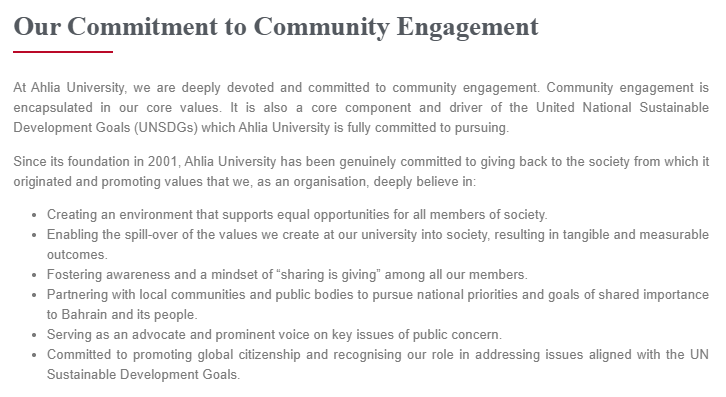
Ahlia University describes community engagement as a core value and a driver of the United Nations Sustainable Development Goals. Its published Community Engagement framework connects the University’s mission to measurable value for society, partnerships with local communities and public bodies, global citizenship, and action on public-interest issues. [E01]
| Published objective | Institutional meaning for this indicator |
|---|---|
| Social responsibility | Service to local and regional communities through organised initiatives. |
| Collaborative research | Community-based research undertaken with community partners to support social and economic development. |
| Empowerment through education | Skills and knowledge for entrepreneurship, leadership and community contribution. |
| Access and inclusion | Equal opportunity, scholarships and support for learners with disabilities or disadvantaged backgrounds. |
Governance active during the 2024 evidence year
The published direction for community engagement covers 2021–2025. A Community Engagement Committee coordinates planning and implementation across the University. Its membership includes leaders from Student Services & Activities, Professional Relations, the Ahlia Centre for Entrepreneurship, Human Resources and academic faculties. This structure links all three assessed routes within one institutional mechanism. [E01]
ENGAGE NGOs · businesses · community |
CO-DESIGN projects · studies · training |
DELIVER students · researchers · partners |
SHARE service · evidence · resources |
Open participation mechanism The University invites students, staff, citizens and residents to propose community projects or events and offers its campus as a venue for community activity. This provides a standing route through which external organisations and students can initiate SDG-related action. [E01] |
Evidence: [E01]
CORE EVIDENCE YEAR 2024 collaboration record Original sources show repeated engagement with businesses and professional/civil-society actors |
4 |
| Date | Partner / platform | Partner type | Documented activity | Route |
|---|---|---|---|---|
| Jan–Mar | Akhbar Al Khaleej | Business / media | Agreement covered student and staff training, joint projects, seminars, workshops, dialogues and proposed studies. | Research · resources |
| 15 Feb | Huawei Bahrain | Business / technology | Digital learning and research infrastructure; e-learning, training, competitions and graduate opportunities. | Resources · research |
| 28 Feb | IEEE Computer Society Bahrain Chapter | Professional society | Digital-entrepreneurship workshop in which students developed new digital-wallet concepts. | Resources |
| 5 Jun | Ebrahim Khalil Kanoo | Business / industry | Formal MoU strengthening the bridge between higher education and the business community and supporting workplace skills. | Resources |
| 25 Sep | Special-needs integration forum | Civil society + business case | Three themes, four working sessions and 16 research papers; organisations shared inclusion practices and assistive-technology knowledge. | Research · resources |
| 1–3 Oct | ICGER 2024 + publishers | Industry + publishing businesses | Research exchange on AI, economic diversification, digital inequality, circular economy and sustainability governance. | Research · resources |
| 2024 | JBSED + Emerald Publishing | Publishing business | Open-access research platform with a 2024 issue addressing governance, philanthropy, entrepreneurship and development. | Research · resources |
Core-year finding The 2024 record is not a single event. It is a portfolio of formal agreements, co-delivered workshops, research dissemination and shared learning infrastructure involving external organisations across multiple sectors. |
Evidence: [E02] · [E03] · [E04] · [E05] · [E06] · [E07] · [E08] · [E09] · [E10]
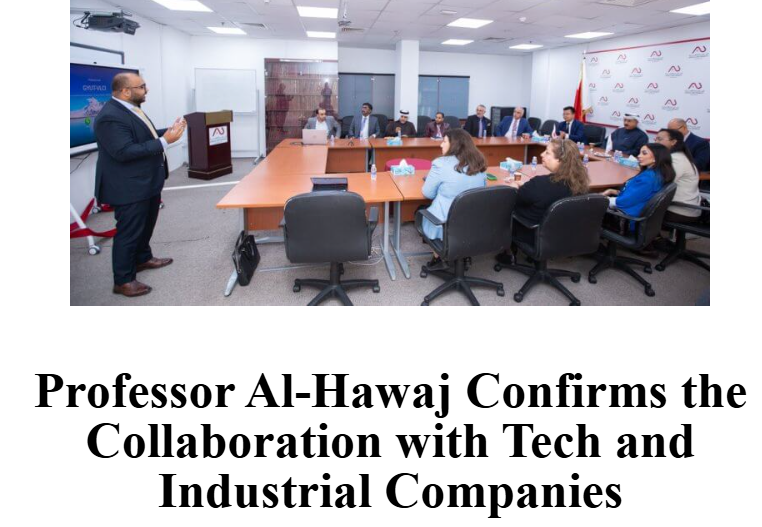
Professor Al-Hawaj Confirms the Collaboration with Tech and Industrial Companies
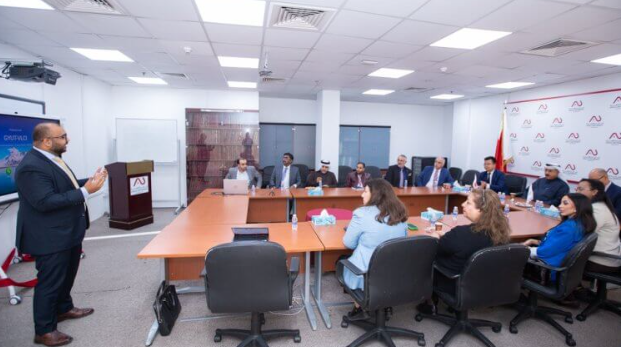
Ahlia University Harnesses Huawei Technologies to Enhance Its Digital Infrastructure
Professor Abdulla Al-Hawaj, the Founding President and Chairman of the Board of Trustees, along with Professor Mansoor Alaali, President of Ahlia University, welcomed several officials from Huawei Bahrain, led by Mr. Eric Lee, the Managing Director of Huawei Bahrain.
During the meeting, Mr. Lee presented a smart screen which is a highly advanced technological tool that supports digital development, serving as a productive asset for smart offices with smart writing packages that provide High Definition (HD) video conferencing and wireless sharing, also it fits into any environment, effortlessly transforming meeting rooms, executive offices, and open areas into smart spaces.
This initiative aligns with Ahlia University’s dedication to integrating information technology into its academic and research domains, while providing state-of-the-art electronic solutions and systems to enhance the effectiveness, quality, and academic achievements of its students, professors, faculty members, and researchers alike.
The meeting facilitated fruitful discussions between leaderships from Ahlia University and Huawei Bahrain, exploring opportunities for collaboration and partnership. These endeavours are expected to have a positive impact on the educational process, offering more training and employment prospects for graduates from Ahlia University, particularly those from the College of Engineering and Information Technology.
Professor Abdullah Al-Hawaj praised Huawei Bahrain for its initiatives and steps, highlighting the company’s strong sense of academic and social responsibility. He emphasised the University’s keenness to establish a mutually beneficial relationship with Huawei Bahrain, as well as other leading companies and institutions in the information technology field, to remain at the forefront of scientific and technological advancements, empowering its students accordingly.
Mr. Eric Li, the Managing Director of Huawei Bahrain, praised the University’s efforts in providing students the necessary training in the field of information and communication technology, stressing Huawei’s commitment to providing all its advanced capabilities and expertise to support the education sector in Bahrain, and contribute to achieving Bahrain’s Vision 2030.
Expressing his gratitude, Professor Mansoor Alaali, thanked Huawei Bahrain for its commitment to supporting education. He emphasised the significant impact of this collaboration on enhancing the University’s interactive e-learning strategies, including the students’ participation in competitions regularly organised by the company and providing students with cutting-edge technical skills through specialised training programmes.
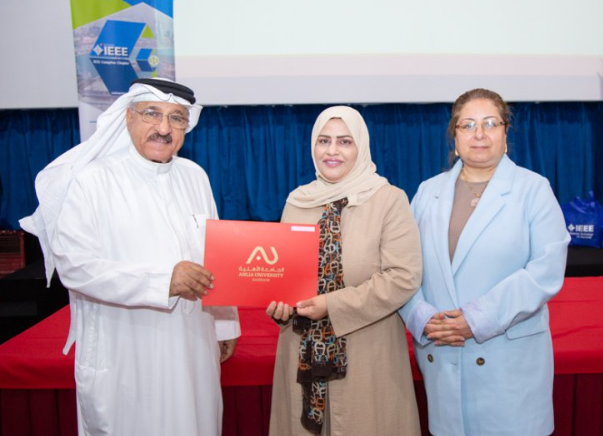
Ahlia Students Showcase Extraordinary Digital Wallets in Intense Competition
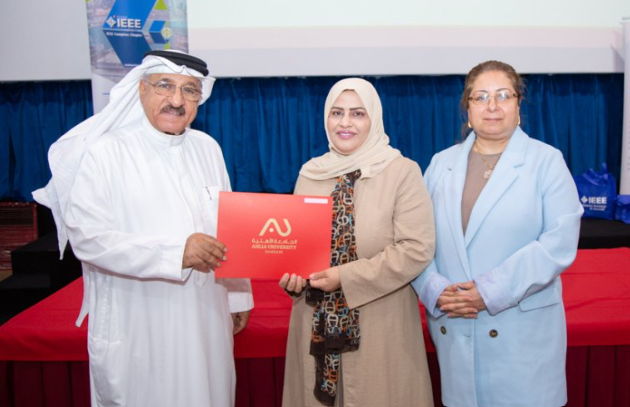
Through a remarkable display of creativity, Ahlia IT and Engineering students won the challenging competition during a workshop organised by the College of Information Technology at Ahlia University in conjunction with IEEE Bahrain Computer Society Chapter. Students were asked to reimagine the “Wallet” with new creative concepts. The first-place was secured for the team comprised of Mohammed Al-Qaq, Salman Bader, Hussein Ali, and Souad Al-Jar, while the second-place honours went to Razan Abdulaziz and Sabeeka Amjad.
Dr. Wasan Shaker Awad, the Dean of the College of Information Technology, emphasised the significance of providing students with essential knowledge and skills while nurturing their creativity and encouraging them to think outside the box. Dr. Awad urged students to capitalize on this opportunity, benefiting from the educational and training aspects to shape their professional future and contribute to society’s advancement.
During the workshop, Dr. Resala Al-Adraj, IEEE Computer Society Chapter Chair, explained the transformative impact of digital technology on businesses and society. Students explored strategies for attracting customers, developing innovative projects and services, optimizing revenue generation and costs, fostering collaborations and partnerships, and identifying new opportunities, risks, and competitive advantages.
Ebrahim Khalil Kanoo Company and Ahlia University Sign Memorandum of Understanding to Enhance Cooperation
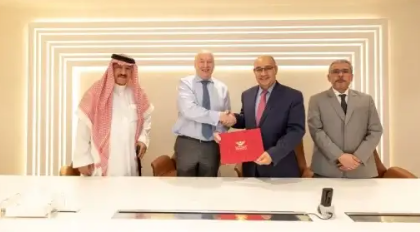
Ebrahim Khalil Kanoo Company and Ahlia University signed a Memorandum of Understanding (MoU) to enhance cooperation between the two entities. The signing ceremony took place during the visit of a delegation from Ahlia University to Ebrahim Khalil Kanoo’s headquarters. The delegation was led by Prof. Abdullah Al-Hawaj, the Founding President and the Chairman of the Board of Trustees, Prof. Mansoor Alaali, the President of Ahlia University, and Mr. Hussain Habib, the Director of Professional Relations.
The Ebrahim Khalil Kanoo team, including Mr. Mike Brightmore, the CEO of the company, and directors from various departments, welcomed the University delegation.
“This partnership with Ahlia University represents an important step in our ongoing commitment towards developing and enriching our team and their families,” said Mr. Mike Brightmore. He added:. “Through this agreement, we not only invest in their educational future, but also strengthen the bridge between the academic sector and the business community, ensuring a strong foundation for growth and mutual success.”
Professor Abdullah Al-Hawaj, the Founding President of Ahlia University, emphasised the importance of such joint cooperation between the educational sector and the labor market, stating that it will enable students to acquire the necessary skills for the workplace.
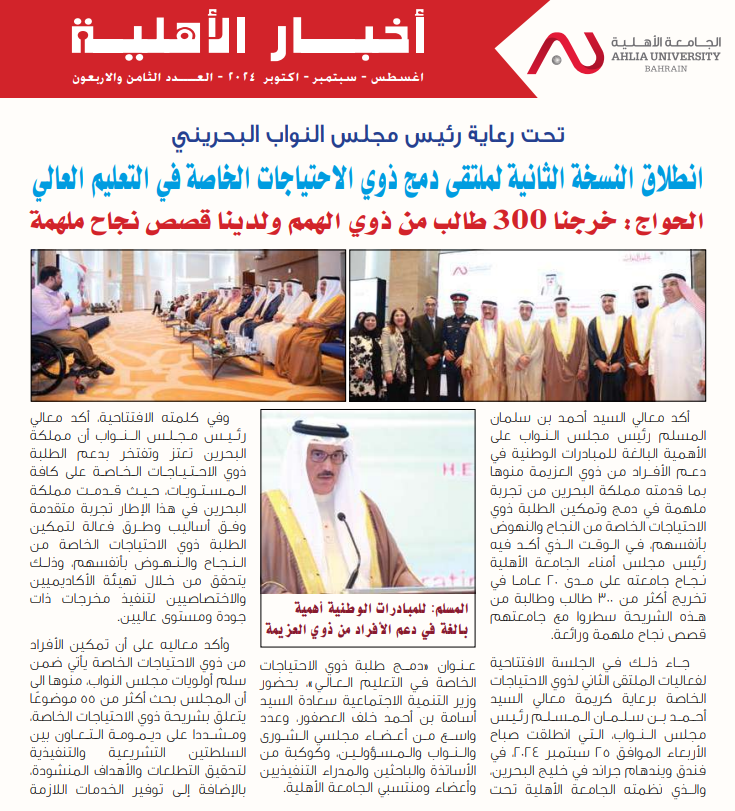
Inspiring Change: Ahlia University a Beacon of Special Needs Integration in HEIs Alaali Advocates for Sharing Successful Practices in Universities
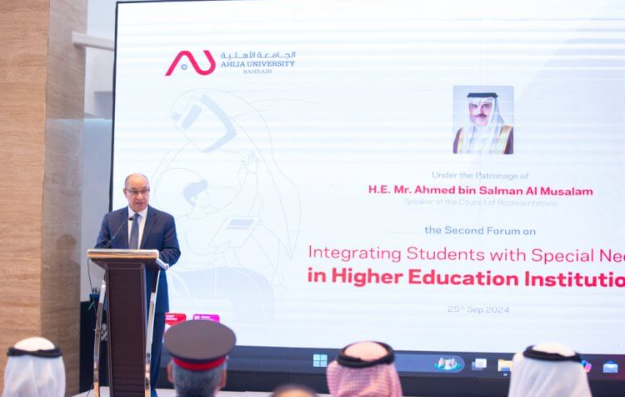
Professor Mansoor Alaali, President of Ahlia University, emphasized the need for greater focus on research and academic attention to issues faced by individuals with determination. He highlighted the importance of evaluating the integration in universities and sharing successful practices to improve the educational landscape.
During a forum on the integration of students with determination into higher education institutions, held under the patronage of Mr. Ahmed bin Salman Al-Musallam, Chairman of the House of Representatives, several recommendations were made. Key suggestions included increasing governmental and community support for institutions that assist individuals with determination, establishing supportive legislative frameworks, and creating specialized training programs tailored for these individuals, particularly in suitable fields such as administration, organization, reception, support roles, and public relations.
The forum also called for improving transportation and traffic systems in line with international standards for individuals with determination. It aimed to empower these individuals with tools like artificial intelligence, increase community initiatives, and develop clear strategies for training educators to effectively support students with disabilities, ensuring ongoing communication between academic institutions and organizations.
A presentation by Ms. Lulwa Ali Al-Rumaihi, Member of Parliament, highlighted the legislative and oversight efforts of the Parliament to protect the rights of individuals with determination. She underscored the Parliament’s role in enhancing these rights across various sectors, including health services, youth and sports, training, and employment.
Discussions revealed significant challenges faced by students with determination in universities, such as accessibility to buildings and facilities, social integration difficulties, limited access to assistive technologies, and financial constraints. Addressing these issues requires effective strategies for integration and comprehensive academic and financial support.
Ms. Shatha Al-Qasimi, HR Supervisor at the National Bank of Bahrain and a graduate of Ahlia University, shared the bank’s successful experience in integrating individuals with determination into its workforce in partnership with the Bahrain Down Syndrome Society. This initiative began with a specially prepared training room and followed a two-phase approach: obtaining necessary approvals and then moving to practical employment and on-the-job training. This effort led to notable success, with the number of employees with Down Syndrome at the bank increasing from three in 2018 to five in 2019.
Dr. Fatima Al-Dhaen, Assistant Professor at Ahlia University, discussed the role of artificial intelligence in helping students with determination pursue higher education. She emphasized how tools like “ChatGPT” can assist these individuals in reading by converting text to audio, simplifying complex language, and aiding in writing and grammar. Such technologies can also make difficult subjects more understandable by breaking them down into simpler terms or providing summaries.
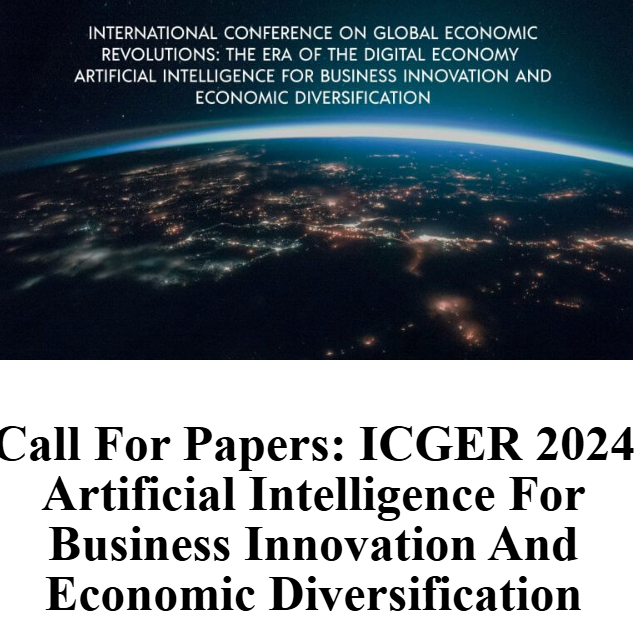
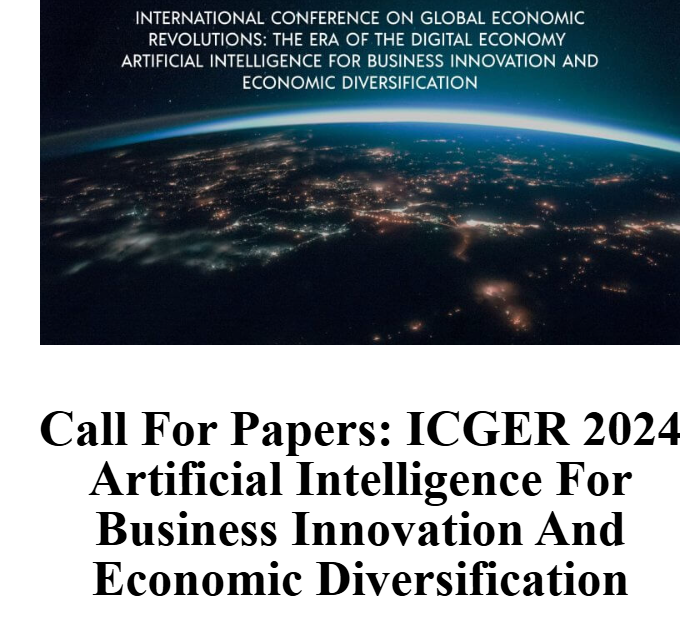
Call For Papers: ICGER 2024 Artificial Intelligence For Business Innovation And Economic Diversification
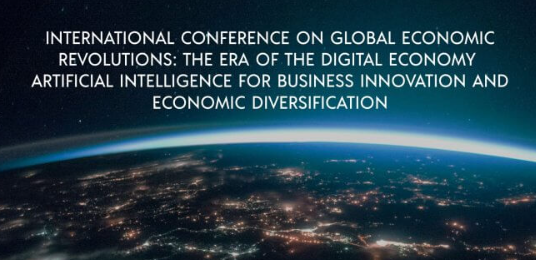
While Industry 4.0 witnessed the beginnings of Artificial Intelligence, Internet of Things (IoT) and big data, the new digital revolution will take a societal approach to digitalization. Therefore, it is essential to prepare for the upcoming revolution starting today. With the ongoing advancement in technology, from AI to the metaverse, the phenomenon of the digital divide has become more prominent, particularly post-pandemic. Thus, hindering and limiting equal opportunities among countries and societies for economic diversification, business innovation and sustainable development. The digital divide refers to the disparities and inequalities among societies in Information and Communications Technology access, usage, and impacts.
Sustainable technologies such as AI and big data o!ers us new ideas and methods to understand society and undertake the epic mission of economic diversification, business innovation and sustainable development with a new impetus. Nevertheless, digital inequalities restrict compliance and effective implementation of the SDGs in several countries around the world. Thus, it is particularly necessary to improve access to technologies, data, and the exchange of information between di!erent organizations and countries. This is only possible by democratizing digital resources, information, data and in particular scientific knowledge.
The International Conference on Global Economic Revolutions: The Era of the Digital Economy (ICGER) is an international forum for the exchange of ideas and information on the economic changes and developments in the era of the digitalization. ICGER aims to provide a premier platform for discussing a variety of views on a wide range of novel and important topics in the digital era. ICGER brings together contributors from a variety of perspectives, disciplines, and communities seeking the advancement of knowledge regarding the digital economy.
The purpose of the ICGER 2024 conference is to bring together leading researchers, academics, scientists, research scholars and industry professionals to exchange their ideas, present their research, and offer solutions to important issues such as economic diversification, digital inequalities, business innovation for sustainability and the circular economy. This conference further aims to provide an interdisciplinary platform to discuss the most recent innovations, trends, and approaches which will support economic diversification strategies and address concerns faced by businesses in the era of the digital economy.
This year’s hybrid conference will be organized by Ahlia University, the Kingdom of Bahrain. ICGER 2024 “Artificial Intelligence for Business Innovation and Economic Diversification” will be held on 1-3 October 2024
ROUTE 1 Student volunteering programmes Institutional mechanism and documented NGO-linked service activity |
5 |
Route confirmed Ahlia’s community-engagement system explicitly includes social responsibility and Student Services & Activities in institutional coordination. The public record documents student-facing fundraising and campus service activities with NGOs. [E01] |
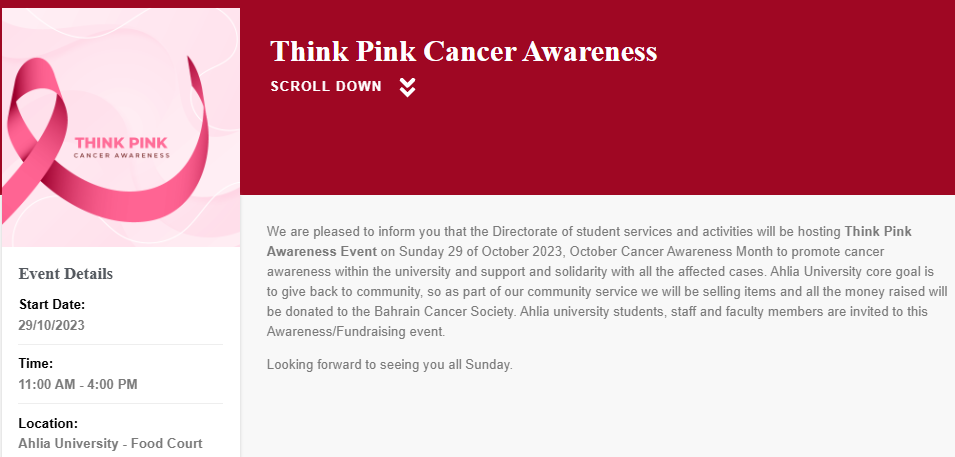
Think Pink cancer-awareness and fundraising event — 29 October 2023 The Directorate of Student Services & Activities hosted a community-service event and invited students, staff and faculty to participate. Items were sold on campus and all money raised was designated for the Bahrain Cancer Society. This is direct university-organised student participation linked to an external health NGO and SDG 3. Evidence [E11] |
Bahraini Association for Parents and Friends of the Disabled — MoU signed 9 April 2023 The institutional agreement supported joint activities for students with disabilities. Ahlia also collected plastic across University facilities and transferred it to the Association for recycling, with revenue intended to support the purchase of wheelchairs. The activity connects campus participation, an NGO partner, disability inclusion and circular use of materials. Evidence [E12] |
How the route tackles the SDGs
| SDG | Contribution |
|---|---|
| SDG 3 | Cancer awareness, fundraising for a health NGO, and later emergency-response capability. |
| SDG 10 | Support for persons with disabilities and participation in joint inclusion activities. |
| SDG 12 | Campus plastic collection for NGO recycling and a defined social benefit. |
| SDG 17 | Institutional collaboration converts student participation into shared community outcomes. |
The programme examples on this page pre-date the 2024 core year and are retained as documented implementation history. The institutional framework itself covered 2024.
ROUTE 1 · CONTINUITY From community service to humanitarian capability The adjacent-year record shows the student-facing partnership pathway continuing |
6 |
 |
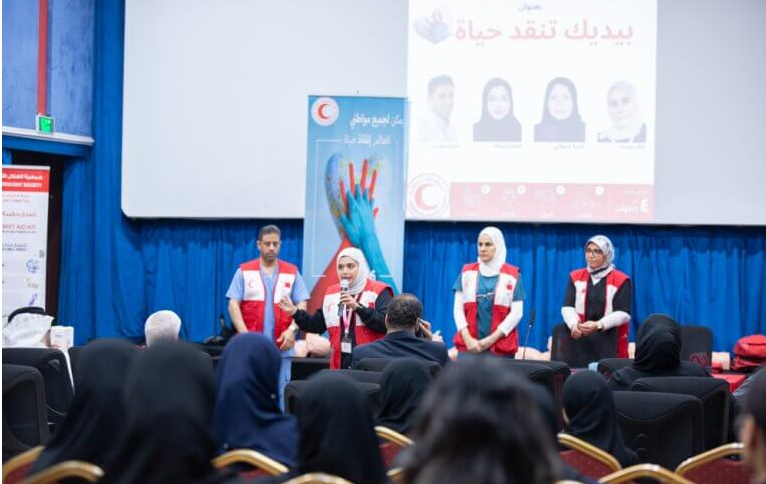 |
| Think Pink awareness and fundraising activity; source record dated 29 October 2023. [E11] | Bahrain Red Crescent life-saving workshop; source record dated 10 October 2025. [E13] |
Bahrain Red Crescent Society life-saving workshop — 10 October 2025
Ahlia University and the Bahrain Red Crescent Society jointly hosted the student workshop “With Your Hands, Lives Saved”. Health experts, Red Crescent trainers and students took part in an interactive session with practical cardiopulmonary-resuscitation demonstrations. The University described the activity as part of a broader effort to develop a safe, resilient and proactive learning environment and to strengthen students’ life skills and community readiness. [E13]
| Dimension | Documented contribution |
|---|---|
| University role | Hosted the programme through the academic and student-affairs environment; connected students to external humanitarian expertise. |
| NGO role | Provided first-aid and disaster-management trainers, demonstrations and volunteer expertise. |
| Student outcome | Hands-on emergency-response capability, social responsibility and readiness to assist others. |
| SDG relevance | SDG 3 (health), SDG 4 (skills), SDG 11 (resilience) and SDG 17 (partnership). |
Evidence boundary: this 2025 activity is used only as continuity after the 2024 core evidence year. It is not counted as a 2024 event.
Evidence: [E11] · [E12] · [E13]
Ahlia University and Bahrain Red Crescent Hold Life-Saving Workshop
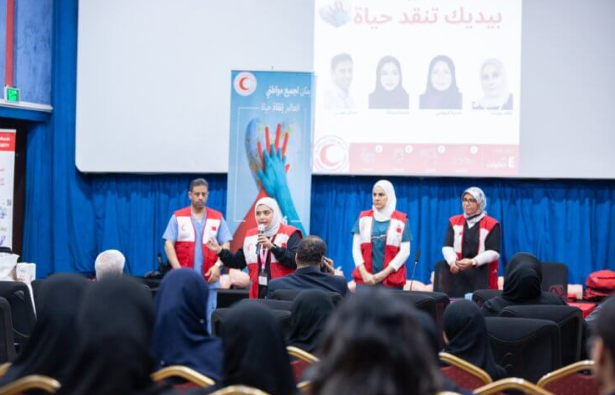
As part of its commitment to raising awareness and equipping students with essential emergency response skill, Ahlia University partnered with the Bahrain Red Crescent Society to host a life-saving workshop titled “With your hands, Lives saved,” coinciding with World Cardiopulmonary Resus-citation (CPR) Day. The interactive session brought together health experts, Red Crescent trainers, and students, reinforcing Ahlia’s commitment to fostering a socially responsible and safety-conscious academic community.
Dr. Faisal Al Showaikh, Dean of Student Affairs, said the collaboration reflected Ahlia’s mission to build a more aware and compassionate generation. “We are not simply conducting a training session, we are drawing a roadmap for a more humane and responsible society,” he said.
For his part, Prof. Mohamed Elissawi, Dean of the College of Medical and Health Sciences, stated that workshop is a “living proof of Ahlia’s commitment to preparing a generation capable of making a difference when a human life is at stake.”
Fatima Abdullah, Head of the First Aid Committee at Bahrain Red Crescent Society, highlighted the value of youth participation. “We strive to ignite the flame of knowledge in the hearts of young people. This partnership sets an exemplary model for purposeful institutional collaboration.” She said.
The workshop featured practical CPR demonstrations led by Fatheya Al-Tublani, Head of the Disaster Management Team at the Bahrain Red Crescent, and volunteers Afaf Abdulla and Salman Isa. Participants engaged in intensive, hands-on training, transitioning from theoretical instruction to real-world application.
“It’s not your academic degree that defines your ability to save a life, but your human courage and social responsibility. Every second counts, each moment could make you a hero in someone’s life.” Trainers stated.
This initiative forms part of Ahlia University’s broader effort to build a safe, resilient, and proactive learning environment while strengthening partnerships with national institutions to enhance students’ life skills and community readiness.
ROUTE 2 Research programmes with external partners Research exchange, publication and problem-focused knowledge production |
7 |
ICGER 2024 — Artificial Intelligence for Business Innovation and Economic Diversification Held on 1–3 October 2024, the conference brought researchers, academics, scientists, research scholars and industry professionals together to exchange work and solutions. Tracks addressed AI and economic diversification, digital inequality, business resilience, the circular economy, sustainability governance, digital social equality, Industry 5.0 and Society 5.0. Evidence [E08] |
Selected papers were invited to publication pathways with Springer, Emerald, Routledge/Taylor & Francis, Inderscience and Elsevier. These publishing businesses extended the programme from conference exchange to international research dissemination.
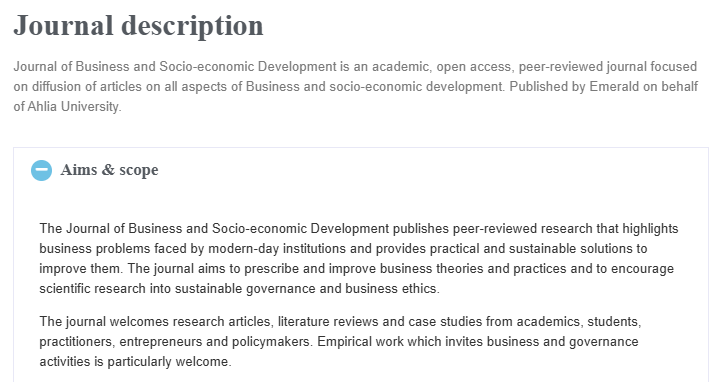
Journal of Business and Socio-economic Development (JBSED) with Emerald Publishing Ahlia University owns and funds this open-access, peer-reviewed journal, while Emerald publishes it on the University’s behalf. The journal brings academics, students, practitioners, entrepreneurs and policymakers into a shared research platform focused on practical and sustainable solutions, governance and business ethics. |
The 2024 volume provides a dated core-year output. Volume 4, Issue 1 includes research on economic growth, corporate philanthropy, higher-education governance, forensic-accounting practitioners and entrepreneurship.
Research-route result Ahlia did not only consult external partners. It established recurring structures through which industry professionals, practitioners and commercial publishers could shape, disseminate and apply SDG-relevant knowledge. |
Evidence: [E08] · [E09] · [E10]
Journal of Business and Socio-economic Development
ROUTE 2 · APPLICATION Research connected to community priorities Inclusion, media, sustainability and innovation |
8 |
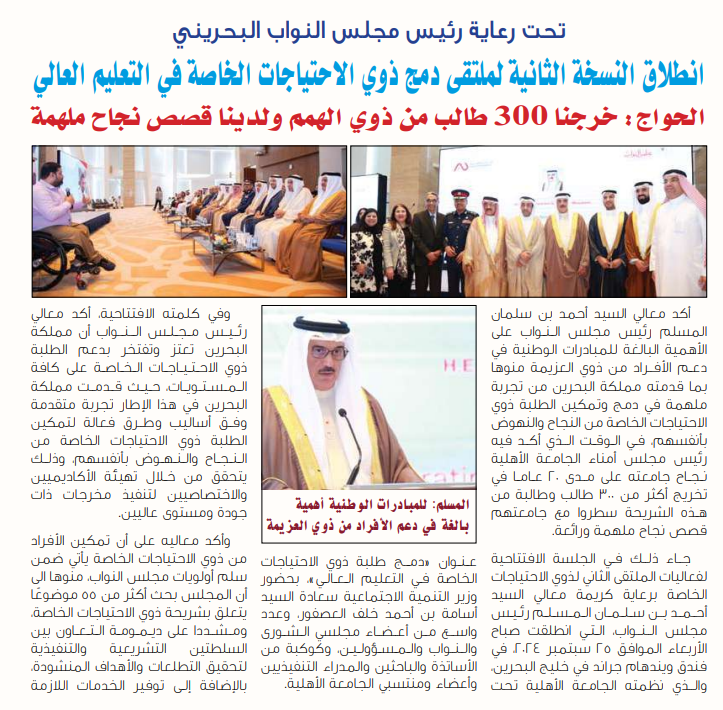
Forum on integrating students with determination in higher education — September 2024 Ahlia convened a forum around successful inclusion practice, specialist training, assistive artificial intelligence and stronger links between academic institutions and relevant organisations. The University’s official newsletter records three themes, four working sessions and 16 research papers, alongside participation by civil-society organisations. |
The forum included a National Bank of Bahrain presentation on its collaboration with the Bahrain Down Syndrome Society, including a prepared training room and on-the-job training. Ahlia faculty also presented AI tools for learners with disabilities. This shows the University functioning as a research-and-practice convenor across business, civil society and higher education.
Akhbar Al Khaleej cooperation agreement — documented in 2024 The agreement covered student and staff training, joint projects, seminars, programmes, workshops, dialogues and proposed studies. The newspaper described the collaboration as serving society, spreading journalistic culture and preparing generations able to understand the roles of journalism and media. Evidence [E05] |
| Priority | Research / knowledge mechanism | SDG connection |
|---|---|---|
| Inclusion | Research papers + organisational cases + assistive technology | SDGs 4, 10, 17 |
| Media and public knowledge | Joint studies, dialogues, workshops and cultural dissemination | SDGs 4, 16, 17 |
| Economic and environmental transition | AI, diversification, digital equity, circular economy and sustainability governance | SDGs 8, 9, 10, 12, 17 |
| Open research access | No-fee, CC BY 4.0 publication through the Ahlia–Emerald model | SDGs 4, 9, 17 |
Evidence: [E05] · [E06] · [E07] · [E08] · [E09] · [E10]
Inspiring Change: Ahlia University a Beacon of Special Needs Integration in HEIs Alaali Advocates for Sharing Successful Practices in Universities
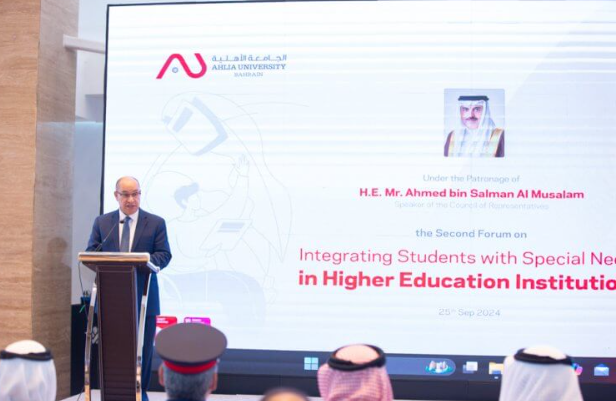
Professor Mansoor Alaali, President of Ahlia University, emphasized the need for greater focus on research and academic attention to issues faced by individuals with determination. He highlighted the importance of evaluating the integration in universities and sharing successful practices to improve the educational landscape.
During a forum on the integration of students with determination into higher education institutions, held under the patronage of Mr. Ahmed bin Salman Al-Musallam, Chairman of the House of Representatives, several recommendations were made. Key suggestions included increasing governmental and community support for institutions that assist individuals with determination, establishing supportive legislative frameworks, and creating specialized training programs tailored for these individuals, particularly in suitable fields such as administration, organization, reception, support roles, and public relations.
The forum also called for improving transportation and traffic systems in line with international standards for individuals with determination. It aimed to empower these individuals with tools like artificial intelligence, increase community initiatives, and develop clear strategies for training educators to effectively support students with disabilities, ensuring ongoing communication between academic institutions and organizations.
A presentation by Ms. Lulwa Ali Al-Rumaihi, Member of Parliament, highlighted the legislative and oversight efforts of the Parliament to protect the rights of individuals with determination. She underscored the Parliament’s role in enhancing these rights across various sectors, including health services, youth and sports, training, and employment.
Discussions revealed significant challenges faced by students with determination in universities, such as accessibility to buildings and facilities, social integration difficulties, limited access to assistive technologies, and financial constraints. Addressing these issues requires effective strategies for integration and comprehensive academic and financial support.
Ms. Shatha Al-Qasimi, HR Supervisor at the National Bank of Bahrain and a graduate of Ahlia University, shared the bank’s successful experience in integrating individuals with determination into its workforce in partnership with the Bahrain Down Syndrome Society. This initiative began with a specially prepared training room and followed a two-phase approach: obtaining necessary approvals and then moving to practical employment and on-the-job training. This effort led to notable success, with the number of employees with Down Syndrome at the bank increasing from three in 2018 to five in 2019.
Dr. Fatima Al-Dhaen, Assistant Professor at Ahlia University, discussed the role of artificial intelligence in helping students with determination pursue higher education. She emphasized how tools like “ChatGPT” can assist these individuals in reading by converting text to audio, simplifying complex language, and aiding in writing and grammar. Such technologies can also make difficult subjects more understandable by breaking them down into simpler terms or providing summaries.
ROUTE 3 Development of educational resources Technology, workshops, open access and shared professional knowledge |
9 |
| Partner / platform | Resource developed or shared | Beneficiaries | SDGs |
|---|---|---|---|
| Huawei Bahrain | Smart screen with HD video conferencing and wireless sharing; support for interactive e-learning; specialised training and competitions. | Students · faculty · researchers | 4 · 9 · 17 |
| IEEE Computer Society Bahrain Chapter | Co-delivered digital-entrepreneurship workshop; students created new digital-wallet concepts and learned innovation methods. | IT and engineering students | 4 · 8 · 9 · 17 |
| Akhbar Al Khaleej | Training, joint projects, seminars, workshops, dialogues and studies supporting media education and public knowledge. | Students · staff · media sector | 4 · 16 · 17 |
| JBSED + Emerald | Open-access, peer-reviewed articles made available under a CC BY 4.0 licence without author publication charges. | Learners · researchers · practitioners · policymakers | 4 · 9 · 17 |
| Special-needs forum participants | Research papers, shared practices, training proposals and demonstrations of AI tools for students with disabilities. | Educators · institutions · learners with disabilities | 4 · 10 · 17 |
Huawei collaboration — 15 February 2024 Huawei’s smart-screen contribution supported Ahlia’s digital infrastructure across academic and research domains. The parties also discussed collaboration on training and employment, while Ahlia linked the relationship to e-learning strategies, Huawei competitions and specialised technical training. [E02] Evidence [E02] |
IEEE workshop — 28 February 2024 The College of Information Technology organised the workshop with the IEEE Computer Society Bahrain Chapter. Student teams reimagined digital wallets, and the session covered technology’s impact on business and society, innovation, collaboration, opportunities and risk. [E03] Evidence [E03] |
Resource-route result The collaborations produced both tangible infrastructure and reusable knowledge: digital teaching tools, training programmes, workshop methods, research articles, case material and inclusive-education practices. |
Ahlia Students Showcase Extraordinary Digital Wallets in Intense Competition
Through a remarkable display of creativity, Ahlia IT and Engineering students won the challenging competition during a workshop organised by the College of Information Technology at Ahlia University in conjunction with IEEE Bahrain Computer Society Chapter. Students were asked to reimagine the “Wallet” with new creative concepts. The first-place was secured for the team comprised of Mohammed Al-Qaq, Salman Bader, Hussein Ali, and Souad Al-Jar, while the second-place honours went to Razan Abdulaziz and Sabeeka Amjad.
Dr. Wasan Shaker Awad, the Dean of the College of Information Technology, emphasised the significance of providing students with essential knowledge and skills while nurturing their creativity and encouraging them to think outside the box. Dr. Awad urged students to capitalize on this opportunity, benefiting from the educational and training aspects to shape their professional future and contribute to society’s advancement.
During the workshop, Dr. Resala Al-Adraj, IEEE Computer Society Chapter Chair, explained the transformative impact of digital technology on businesses and society. Students explored strategies for attracting customers, developing innovative projects and services, optimizing revenue generation and costs, fostering collaborations and partnerships, and identifying new opportunities, risks, and competitive advantages.
PARTNERSHIP PORTFOLIO How external organisations contribute Distinct partner capabilities are integrated into student, research and learning routes |
10 |
| External organisation | Type | Contribution | Route |
|---|---|---|---|
| Bahrain Cancer Society | NGO / health charity | Receives student-facing fundraising support and anchors cancer-awareness activity. | Volunteering |
| Bahraini Association for Parents and Friends of the Disabled | NGO / disability inclusion | Joint activities, recycling-linked wheelchair support and pathways for inclusive education. | Volunteering · resources |
| IEEE Computer Society Bahrain Chapter | Professional society | Co-delivers technical and entrepreneurship learning with students. | Resources |
| Huawei Bahrain | Technology business | Supplies digital infrastructure, expertise, training pathways and competitions. | Resources · research |
| Ebrahim Khalil Kanoo | Industrial business | Formal cooperation linking education with workplace capability and the business community. | Resources |
| Akhbar Al Khaleej | Media business | Training, studies, workshops, projects and public-knowledge dissemination. | Research · resources |
| Emerald Publishing and other publishers | Publishing businesses | Peer review, open dissemination and publication pathways for SDG-related research. | Research · resources |
| Bahrain Red Crescent Society | Humanitarian NGO | First-aid and disaster-management expertise for hands-on student learning (2025 continuity). | Volunteering · resources |
A connected institutional model
Student activity supplies participation and community reach. Research programmes produce and test knowledge. Educational-resource collaborations convert knowledge and external expertise into tools, workshops, publications and transferable skills. Together, the three routes form a repeatable partnership model rather than isolated sponsorship.
NEED community priority |
PARTNER NGO or business |
PROGRAMME service or research |
RESOURCE tool or knowledge |
SDG VALUE capability and impact |
Evidence: [E01] · [E02] · [E03] · [E04] · [E05] · [E08] · [E09] · [E11] · [E12] · [E13]
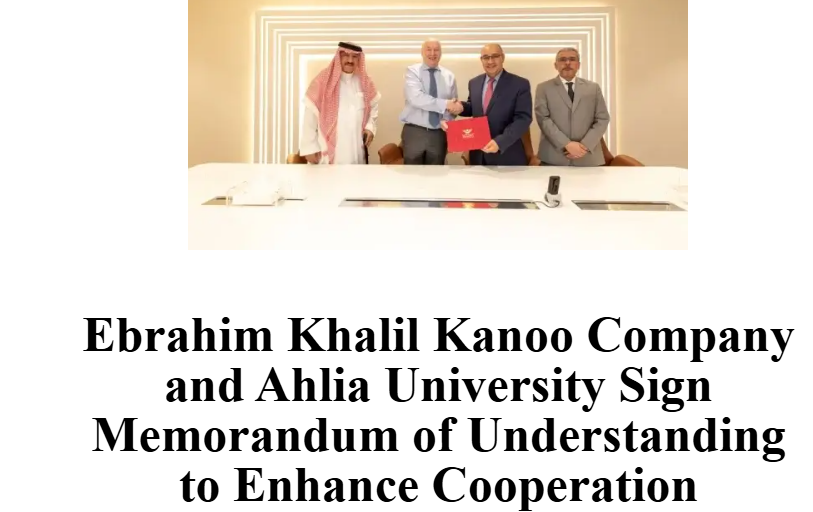
Ebrahim Khalil Kanoo Company and Ahlia University signed a Memorandum of Understanding (MoU) to enhance cooperation between the two entities. The signing ceremony took place during the visit of a delegation from Ahlia University to Ebrahim Khalil Kanoo’s headquarters. The delegation was led by Prof. Abdullah Al-Hawaj, the Founding President and the Chairman of the Board of Trustees, Prof. Mansoor Alaali, the President of Ahlia University, and Mr. Hussain Habib, the Director of Professional Relations.
The Ebrahim Khalil Kanoo team, including Mr. Mike Brightmore, the CEO of the company, and directors from various departments, welcomed the University delegation.
“This partnership with Ahlia University represents an important step in our ongoing commitment towards developing and enriching our team and their families,” said Mr. Mike Brightmore. He added:. “Through this agreement, we not only invest in their educational future, but also strengthen the bridge between the academic sector and the business community, ensuring a strong foundation for growth and mutual success.”
Professor Abdullah Al-Hawaj, the Founding President of Ahlia University, emphasised the importance of such joint cooperation between the educational sector and the labor market, stating that it will enable students to acquire the necessary skills for the workplace.
Ahlia University Signs an MoU with the Bahraini Association for Parents of the Disabled
The President of Ahlia University, Professor Mansour Al-Aali, noted that disabled people receive special care and attention the academic and administrative bodies of the university. They also receive partial scholarships of 50% of the tuition fees, which is what made Ahlia university the most attractive among universities to this segment of society.
prof. Al-Aali praised the campaign launched by the Bahraini Association for Parents of the Disabled, which included collecting and recycling of plastics to benefit from its revenue in providing special chairs for the disabled.
For his part, the President of the Bahraini Association for Parents and Friends of the Disabled affirmed his pride in the prestigious status of Ahlia University and the role played by the university in supporting and assisting the disabled and their families, noting the successes achieved by the university in graduating dozens of students with disabilities in the past years, expressing the association’s desire for more cooperation with the university.
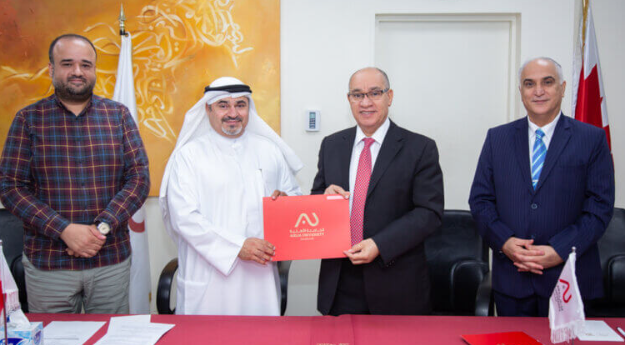
Ahlia University signed a memorandum of understanding with the Bahraini Association for Parents and Friends of the Disabled, with the aim of achieving fruitful cooperation between them on the basis of mutual benefit and common interests, in accordance with the laws and regulations in the Kingdom of Bahrain.
Ahlia University was represented by the President of the University, Professor Mansour Al-Aali, and the Bahraini Society for Parents and Friends of the Disabled was represented by the Chairman of the Board of Directors, Mr. Jassim Muhammad Siyadi.
This agreement comes within the framework of both parties’ desire to activate the role of cooperation between them, and bilateral cooperation in the field of supporting students with disabilities, that is through exchanging invitations to participate and attend events held by the two parties, and the university provided support for the activities of the Bahraini Association for Parents of the Disabled and their friends by collecting plastic materials in all University facilities and presenting them to the association for recycling in order to contribute to the purchase of the largest possible number of wheelchairs for specific cases of people with disabilities, in addition to organizing joint activities aimed at enhancing the opportunities of enabling students with disabilities from completing their university education.
SDG CONTRIBUTION Evidence-to-goal alignment The collaborations address social, economic, educational and institutional dimensions |
11 |
| SDG | Evidence-linked contribution | Source IDs |
|---|---|---|
| 3 — Good Health and Well-being | Cancer-awareness fundraising; CPR and emergency-response training. | E11 · E13 |
| 4 — Quality Education | Community empowerment, digital learning, workshops, open research and inclusive higher education. | E01 · E02 · E03 · E06 · E09 |
| 8 — Decent Work and Economic Growth | Workplace skills, business–university links, entrepreneurship and economic-diversification research. | E03 · E04 · E08 |
| 9 — Industry, Innovation and Infrastructure | Digital infrastructure, student innovation, AI research and publication platforms. | E02 · E03 · E08 · E09 |
| 10 — Reduced Inequalities | Disability support, assistive technology and research on digital and social equality. | E06 · E08 · E12 |
| 12 — Responsible Consumption and Production | Plastic collection for NGO recycling and circular-economy research. | E08 · E12 |
| 16 — Peace, Justice and Strong Institutions | Media literacy, public dialogue and institutional inclusion practice. | E05 · E06 |
| 17 — Partnerships for the Goals | Cross-sector co-delivery, formal agreements, shared research and open educational resources. | E01–E13 |
Evidence-year discipline
| Evidence status | Period | Treatment in this report |
|---|---|---|
| Core evidence | 2024 | Huawei; IEEE workshop; E.K. Kanoo MoU; Akhbar Al Khaleej agreement; inclusion forum; ICGER 2024; JBSED 2024 output. |
| Institutional framework | 2021–2025 | Community Engagement direction and committee in force during 2024. |
| Programme history | 2023 | Think Pink fundraising and the disability-association MoU demonstrate established NGO-linked service routes. |
| Continuity only | 2025 | Bahrain Red Crescent workshop shows the student-facing humanitarian partnership route continuing after 2024. |
INSTITUTIONAL CONCLUSION The criterion is met Ahlia University demonstrates body-level collaboration with NGOs and businesses |
12 |
CONFIRMED — YES The University’s published framework and evidence show collaboration with NGOs and businesses through all three routes named in the question: student volunteering programmes, research programmes, and development of educational resources. |
Basis for confirmation
1 · Student volunteering programmes University-organised student-facing community service is evidenced through fundraising for the Bahrain Cancer Society and the disability-association partnership, within a formal community-engagement system active in 2024. The 2025 Red Crescent collaboration confirms continuation of this route. |
2 · Research programmes ICGER 2024, the Ahlia–Emerald JBSED model, the special-needs integration forum and the Akhbar Al Khaleej agreement connect external organisations with research exchange, studies, peer review and dissemination. |
3 · Development of educational resources Huawei-supported technology, specialised training, the IEEE workshop, media-sector programmes, open-access journal content and inclusive-education resources convert external expertise into accessible learning tools and knowledge. |
Institutional character of the evidence
The collaborations are authorised and delivered through formal university structures: institutional plans, a standing committee, signed MoUs, academic colleges, the Deanship of Student Affairs, Student Services & Activities, Professional Relations, research conferences and University-owned publication platforms. The evidence therefore represents Ahlia University as a body, not only individual participation.
VOLUNTEER students in service |
RESEARCH knowledge with partners |
RESOURCE learning made reusable |
Evidence register follows. All hyperlinks lead to original institutional or publisher sources; prior SDG indicator/report pages are excluded.
EVIDENCE REGISTER Original sources · E01–E07 Hyperlinks are active; accessed and verified 20 September 2026 |
13 |
| E01 | Ahlia University — Community Engagement Date / coverage: Framework covering 2021–2025 | Source: Ahlia University institutional page University-wide SDG purpose; social responsibility, collaborative research, education and inclusion objectives; committee membership; open project-proposal route. |
| E02 | Ahlia University — Collaboration with Tech and Industrial Companies Date / coverage: 15 February 2024 | Source: Ahlia University news Huawei Bahrain collaboration: smart screen, academic/research technology, e-learning, training, competitions and graduate opportunities. |
| E03 | Ahlia Students Showcase Extraordinary Digital Wallets Date / coverage: 28 February 2024 | Source: Ahlia University news IEEE Computer Society Bahrain Chapter workshop: student innovation, digital entrepreneurship, tools and professional learning. |
| E04 | Ebrahim Khalil Kanoo and Ahlia University Sign MoU Date / coverage: 5 June 2024 | Source: Ahlia University news Formal business collaboration strengthening the academic–business bridge and workplace capability. |
| E05 |
Date / coverage: January–March 2024 | Source: Ahlia University publication Records Akhbar Al Khaleej agreement covering training, joint projects, workshops, dialogues and studies; corroborates IEEE workshop. |
| E06 | Inspiring Change: Special-needs Integration in HEIs Date / coverage: 30 September 2024 report | Source: Ahlia University news Cross-sector inclusion forum; research and training priorities; assistive AI; NBB/Bahrain Down Syndrome Society case. |
| E07 |
Date / coverage: August–October 2024 | Source: Ahlia University publication Documents forum scale (three themes, four sessions, 16 papers), civil-society engagement and ICGER 2024 participation. |
EVIDENCE REGISTER Original sources · E08–E13 Core-year sources are separated from programme history and continuity evidence |
14 |
| E08 |
Date / coverage: Conference held 1–3 October 2024 | Source: Ahlia University conference page Industry-professional research exchange; AI, economic diversification, digital inequality, circular economy and sustainability governance; publisher pathways. |
| E09 | Journal of Business and Socio-economic Development Date / coverage: Ongoing; verified for 2024 activity | Source: Ahlia University publication page Ahlia-owned, Emerald-published, no-fee open-access research resource serving academic and practitioner audiences under CC BY 4.0. |
| E10 |
Date / coverage: 2024 | Source: Emerald Publishing issue page Dated 2024 research output on growth, corporate philanthropy, higher-education governance, professional practice and entrepreneurship. |
| E11 |
Date / coverage: 29 October 2023 | Source: Ahlia University event page Student Services & Activities fundraising event; students, staff and faculty invited; proceeds designated for Bahrain Cancer Society. |
| E12 | MoU with Bahraini Association for Parents of the Disabled Date / coverage: 9 April 2023 | Source: Ahlia University news NGO partnership for joint inclusion activities, campus plastic collection, recycling and support for wheelchair provision. |
| E13 | Ahlia University and Bahrain Red Crescent Hold Life-Saving Workshop Date / coverage: 10 October 2025 — continuity only | Source: Ahlia University news Student-facing CPR and emergency-response training co-delivered with humanitarian experts and volunteers. |
Verification statement Each registered item was checked against the original public source. Evidence identifiers in the report link directly to those sources. Earlier evidence is labelled as programme history, and 2025 evidence is labelled as continuity after the 2024 core year. |