SUBMISSION STATEMENT
This report presents public, original-source evidence of Ahlia University’s institutional participation in international collaborations that gather, analyse, measure and communicate data relevant to the Sustainable Development Goals. The principal evidence is drawn from 2024 empirical research, formal measurement systems, international conferences, cross-border doctoral research and research agreements.
1. Direct institutional response
Yes. Ahlia University participates in international collaboration that gathers and measures data connected to the Sustainable Development Goals. During the 2024 evidence year, Ahlia-affiliated researchers worked with institutions in India, Saudi Arabia and the United Kingdom on empirical and evidence-synthesis projects addressing responsible consumption, resilient healthcare systems, sustainable finance, digital transformation, gender equality and inclusive development. These collaborations generated survey data, interview evidence, case studies, comparative analysis and research outputs designed to inform practice and policy. Evidence: E02, E03, E04, E06.
This international research is reinforced by an institutional measurement framework. Ahlia University’s Centre for Measurement and Evaluation Manual, approved in April 2024, establishes systematic quantitative and qualitative data collection, KPI measurement, analysis and reporting. Its annual Study Abroad Exit Survey measures the experience of Ahlia students participating in international mobility and is explicitly aligned with SDGs 4, 5 and 17. The system connects international engagement with a documented cycle of measurement, reporting and improvement. Evidence: E07.
Ahlia also convenes and contributes to international research platforms through its partnership with Brunel University London and the University of Business and Technology in Saudi Arabia. In 2024, the Equal Opportunities Conference and the Ahlia–Brunel PhD Symposium enabled researchers from different institutions and countries to present and compare evidence on equality, employment, digitalisation, public-sector leadership, health and technological development. Evidence: E08, E09, E10, E11, E12.
Institutional model
| Stage | Ahlia University practice | Public evidence |
|---|---|---|
| Gather | International teams collect primary survey, interview and case-study evidence on sustainability and health-related challenges. | E02, E03 |
| Measure | The Centre for Measurement and Evaluation applies surveys, KPIs, sampling, validity and reliability controls, including international mobility measurement. | E07 |
| Analyse | Researchers use mixed-method, qualitative, statistical and comparative approaches to interpret SDG-related evidence. | E02, E03, E15, E16 |
| Share | International conferences, doctoral symposia and peer-reviewed volumes disseminate findings to researchers, practitioners and policy audiences. | E05, E06, E08–E12 |
| Extend | International agreements enable further joint research, academic exchange, workshops and training. | E13 |
2. 2024 evidence of international SDG data collaboration
The following evidence matrix identifies the international partner, the data or measurement activity, the SDG-related subject and the resulting public output. It separates completed data activity from agreements that establish future research capacity. Evidence: E01.
| 2024 collaboration | Data or measurement activity | SDG contribution | Output |
|---|---|---|---|
| Ahlia University + SEA College of Science, Commerce and Arts + Kristu Jayanti College, India | Mixed-method study: survey of 425 respondents and interviews with industry experts. | Responsible consumption and production; sustainable retail and resource efficiency. | Peer-reviewed Springer chapter (E02) |
| Ahlia University + Saudi/Bahrain healthcare-affiliated researcher | Qualitative interviews and case studies from healthcare organisations in emerging economies. | Health and wellbeing; resilient infrastructure; digital transformation; partnerships. | Peer-reviewed Springer chapter (E03) |
| Ahlia University + Brunel University London | International synthesis of evidence and development of an AI-enabled sustainable banking framework. | Decent work, innovation, effective institutions and partnerships. | Peer-reviewed Springer chapter (E04) |
| Ahlia University + Brunel University London + University of Business and Technology, Saudi Arabia | International presentation and comparison of gender, inclusion, digitalisation and resilience research. | Quality education, gender equality, reduced inequalities, sustainable communities and partnerships. | 2024 Equal Opportunities Conference and programme (E08–E10) |
| Ahlia University + Brunel University London | Cross-border doctoral researchers presented findings on social, economic, health and technological challenges. | Multiple SDGs, with emphasis on education, health, innovation, employment and institutions. | 2024 PhD Symposium and ongoing joint programme (E11–E12) |
| Ahlia University international mobility partnerships | Annual Study Abroad Exit Survey measures exchange students’ satisfaction with the learning experience. | SDGs 4, 5 and 17. | Approved 2024 CME measurement framework (E07) |
3. International empirical research: responsible consumption and sustainable logistics
Ahlia University participated in a 2024 international empirical study with researchers from SEA College of Science, Commerce and Arts and Kristu Jayanti College in India. The study examined how reverse-logistics practices in online retail can improve sustainability and customer satisfaction. Its mixed-method design generated primary evidence from a survey of 425 respondents and qualitative interviews with industry experts. Evidence: E02.
| Evidence element | Documented contribution |
|---|---|
| International participation | Allam Hamdan represented Ahlia University alongside researchers from two Indian higher-education institutions. |
| Data gathered | 425 survey responses and expert interview evidence. |
| Measurement focus | Customer satisfaction, flexible timing, service accessibility and the effectiveness of reverse-logistics arrangements. |
| SDG relevance | The research advances evidence on sustainable consumption and production, waste and return management, service accessibility and resource efficiency. |
| Public output | The results were published by Springer in August 2024 in an internationally edited research volume. |
The collaboration demonstrates the complete data pathway required by the indicator: an international research team defined a sustainability problem, collected quantitative and qualitative data, analysed the results and published the findings through an accessible scholarly source. The work supports evidence-informed decisions by online retailers seeking to reduce inefficiencies while improving the accessibility and quality of return services. Evidence: E02, E05.
Institutional significance
International co-authorship connected Ahlia University with two Indian academic institutions.
Primary data collection produced a substantial respondent base rather than relying only on conceptual discussion.
The research addresses practical sustainability performance in a high-growth economic sector.
Publication in the 2024 Ahlia-led international volume enabled broader comparison and dissemination. Evidence: E05.
Sustainability in Reverse Logistics: Reshaping Customer Satisfaction Through Flexible Timing and Accessible Services in Online Retail Returns
This study delves into the critical domain of customer-centric reverse logistics in online retail, a pivotal yet often overlooked aspect of e-commerce operations. Recognizing the escalating significance of efficient return processes in shaping customer satisfaction and loyalty, this research centers on key features such as flexible return windows, 24/7 return initiation, drop-off points, scheduled pickups, real-time tracking, and personalized communication. Through a comprehensive mixed-methods approach, encompassing a survey of 425 respondents and qualitative interviews with industry experts, the study scrutinizes the impact of these customer-centric elements on the overall return experience. The findings shed light on the nuanced relationships between specific features and customer satisfaction, offering practical insights for e-commerce traders aiming to optimize their reverse logistics strategies. As online retailers navigate an increasingly competitive landscape, understanding and enhancing the return experience emerges as a strategic imperative, influencing brand perception and fostering customer loyalty in the digital marketplace.
4. International empirical research: health systems and supply-chain resilience
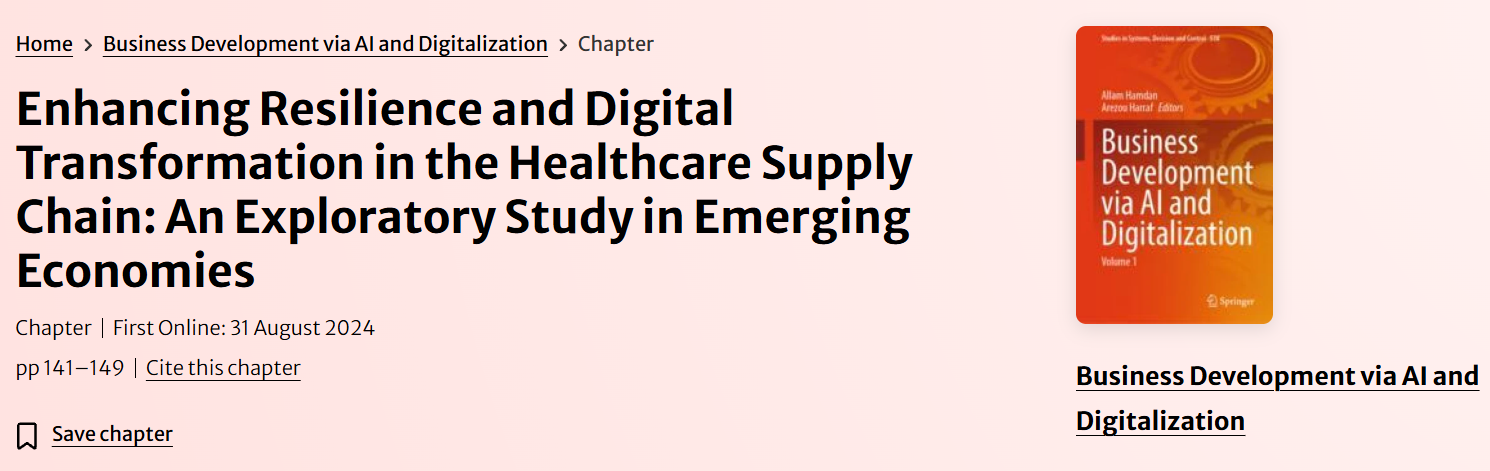
A second 2024 international collaboration linked Ahlia University with a researcher affiliated with institutions in Bahrain and Saudi Arabia. The study investigated resilience and digital transformation in healthcare supply chains across emerging economies. It gathered evidence through qualitative interviews and organisational case studies, allowing the collaborators to examine operational challenges, digital readiness and resilience practices in real healthcare settings. Evidence: E03.
| Evidence element | Documented contribution |
|---|---|
| International participation | Ahlia University collaborated with a researcher affiliated with the University of Business and Technology in Jeddah, Saudi Arabia, and a Bahrain medical centre. |
| Data gathered | Qualitative interviews and case-study evidence from healthcare organisations in emerging economies. |
| Measurement focus | Supply-chain resilience, digital transformation, organisational challenges and improvement strategies. |
| SDG relevance | The published source explicitly identifies the Sustainable Development Goals; the subject supports health and wellbeing, innovation and resilient systems. |
| Public output | Peer-reviewed Springer publication in August 2024. |
This work extends Ahlia University’s SDG data activity beyond the campus and beyond Bahrain. By comparing experience across healthcare organisations in emerging economies, the partnership generated evidence applicable to health-system planning, organisational resilience and responsible adoption of digital technologies. Evidence: E03.
Contribution to global wellbeing
The research focuses on service continuity and resilience in the healthcare sector, supporting better health-system outcomes.
Its cross-border perspective creates evidence that can be considered across emerging-economy contexts.
The study combines clinical-sector experience with academic research capability.
The published findings support international learning on digital transformation and sustainable service delivery.
5. Ahlia–Brunel international research and measurement platform
Ahlia University’s collaboration with Brunel University London provides a sustained international platform for research design, supervision, comparative evidence and dissemination. The partnership is visible in joint doctoral provision, the annual PhD Symposium, the Equal Opportunities Conference and internationally edited research volumes. Evidence: E06, E08, E11, E12.
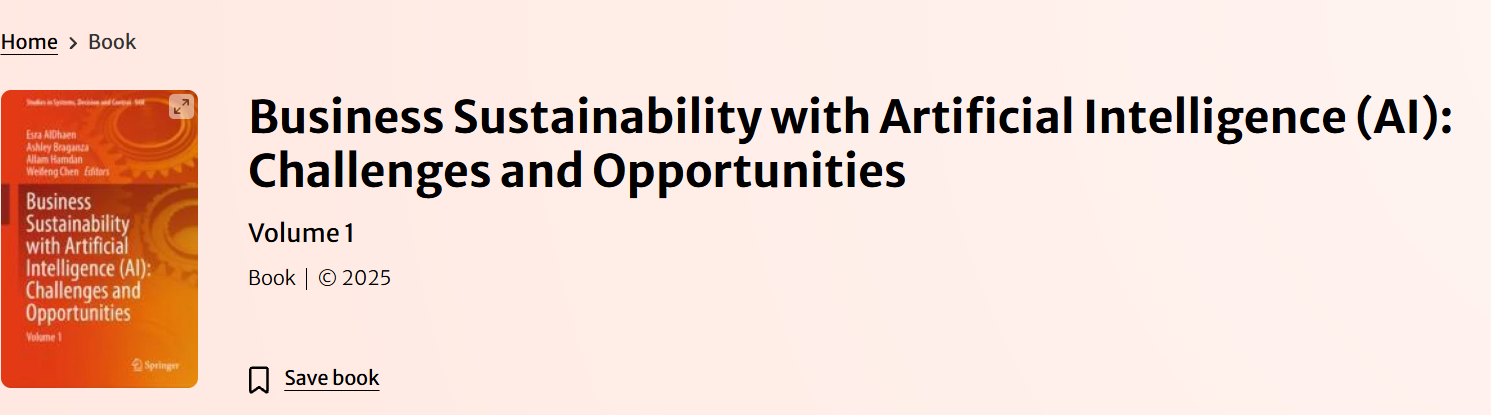
With the recent development of Artificial Intelligence (AI), businesses are urged to consider innovation while applying digital transformation. Depending on the nature of the businesses, it is found that innovative digital transformation is required with the use of Artificial Intelligence. However, the future of AI in businesses is yet unclear, the question is it true that without digital transformation businesses are no longer sustainable? Researchers argue that digital transformation could be an opportunity for business to create a global brand however several implications and challenges should be considered including governance and responsible digital management. This book explores how businesses could benefit from AI and leverage technologies to sustain businesses, and the book covers different technological and business-related issues including ethical use and cultural sensitivity of data used in businesses, managing data privacy and protection, governance standards for digital transformation, executive leadership strategic decisions, business innovation, and sustainability.
The book is authored by leading experts in the field of AI, digitalization, and business innovation and sustainability, and the author’s diversity reflects quality of research with high level of impact in the research topic. It is written in accessible language that makes it easy for business leaders, researchers, policymakers, and anyone interested in the future of business development to understand the complex concepts and ideas presented in the book.
This book provides insight for executive leaders in setting new innovative strategies toward leveraging AI in business at different levels of operations to support business sustainability. The book provides different theoretical and practical practices and case studies that could be used as a guideline for policy making and devising innovative directions.
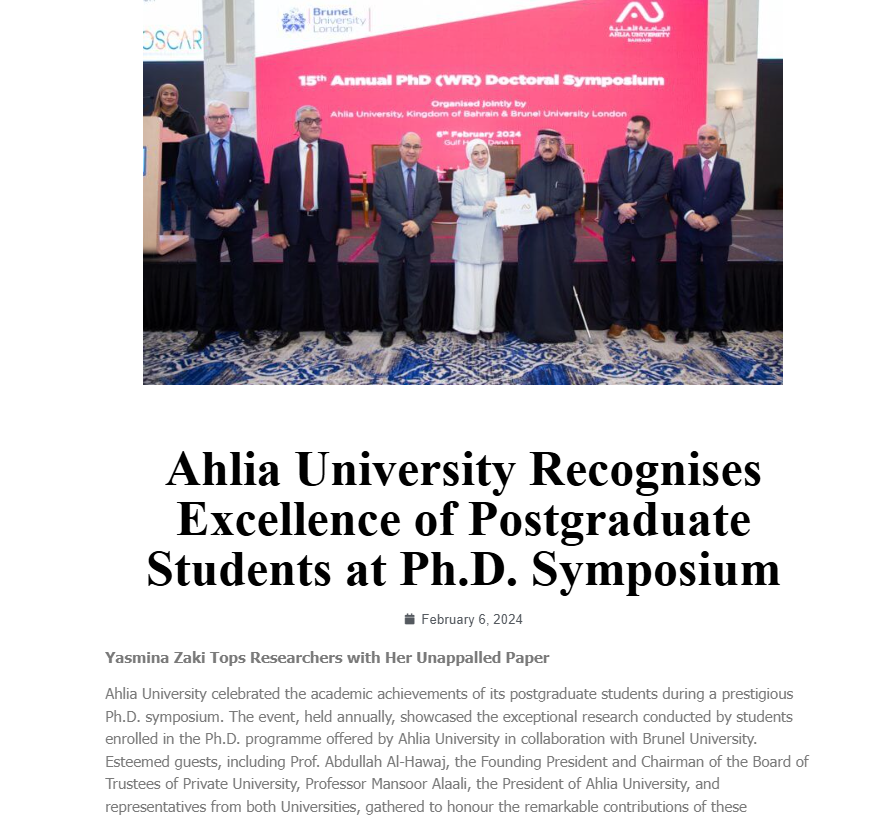
Ahlia University Recognises Excellence of Postgraduate Students at Ph.D. Symposium
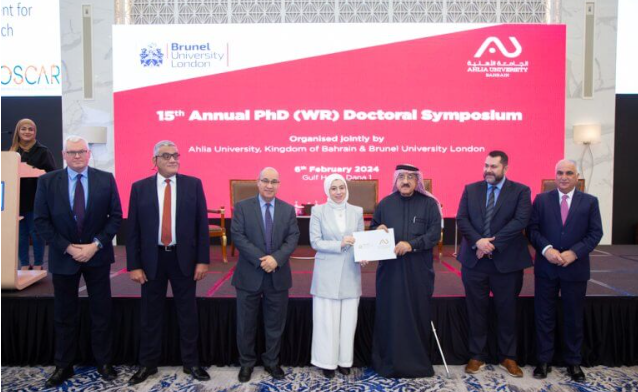
Ahlia University celebrated the academic achievements of its postgraduate students during a prestigious Ph.D. symposium. The event, held annually, showcased the exceptional research conducted by students enrolled in the Ph.D. programme offered by Ahlia University in collaboration with Brunel University. Esteemed guests, including Prof. Abdullah Al-Hawaj, the Founding President and Chairman of the Board of Trustees of Private University, Professor Mansoor Alaali, the President of Ahlia University, and representatives from both Universities, gathered to honour the remarkable contributions of these researchers.
The conference is a testament to Ahlia University’s commitment to fostering a culture of research and innovation, provided a platform for postgraduate students to present their cutting-edge research findings. Prof. Abdullah Al-Hawaj praised the students for their outstanding work, highlighting the overall excellence demonstrated by postgraduate students at Ahlia University, whether pursuing a Master’s or Ph.D. degree. He expressed his pride in the dedicated efforts of the University’s faculty members and the collaborative partnership with Brunel University, which contributed to the students’ success.
The event celebrated the exemplary achievements of several researchers. Yasmina Zaki captured the first-place for both the best scientific paper and the best presentation with her research on “Fashion Brands in the Metaverse: Redefining Digital Marketing and Branding Landscapes”.” Hameed Al-Mubarak secured the second-place for his paper on “Edge Computing Security: Overview and Challenges”, while Zainab Jaber earned the second-place for the best presentation with her work on “The Effects of of Transformational Leadership on Employee Job Satisfaction in Education Sector.”
Prof. Mansoor Alaali confirmed Ahlia University’s dedication to promoting scientific research in the Kingdom of Bahrain and beyond. He emphasised the importance of such conferences that provides a platform for researchers to exchange ideas, enhance their scientific skills, and address significant social, economic, health, and technological challenges faced by communities.
The Ph.D. Symposium featured engaging discussions that impressed the supervisors from both Ahlia University and Brunel University, as well as the attending researchers themselves. It served as a catalyst for professional dialogue and idea generation, boosting further advancements in various fields of study.
Cross-border doctoral research
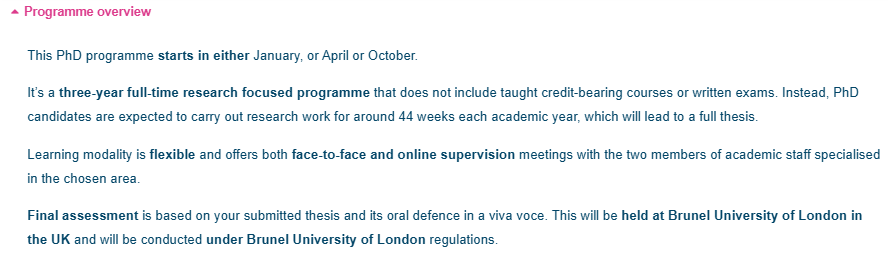
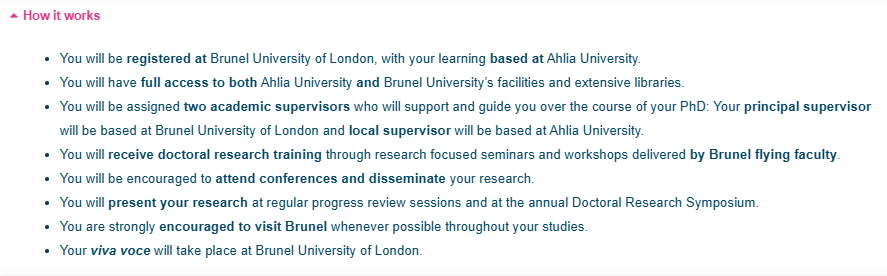
At the February 2024 PhD Symposium, postgraduate researchers presented findings addressing social, economic, health and technological challenges. Ahlia and Brunel representatives and supervisors participated in the symposium, linking the collection and interpretation of doctoral research data to an international supervisory and review structure. The continuing PhD-without-residence programme provides the formal cross-border academic framework for this research. Evidence: E11, E12.
A research programme conducted in Alhia University, Bahrain
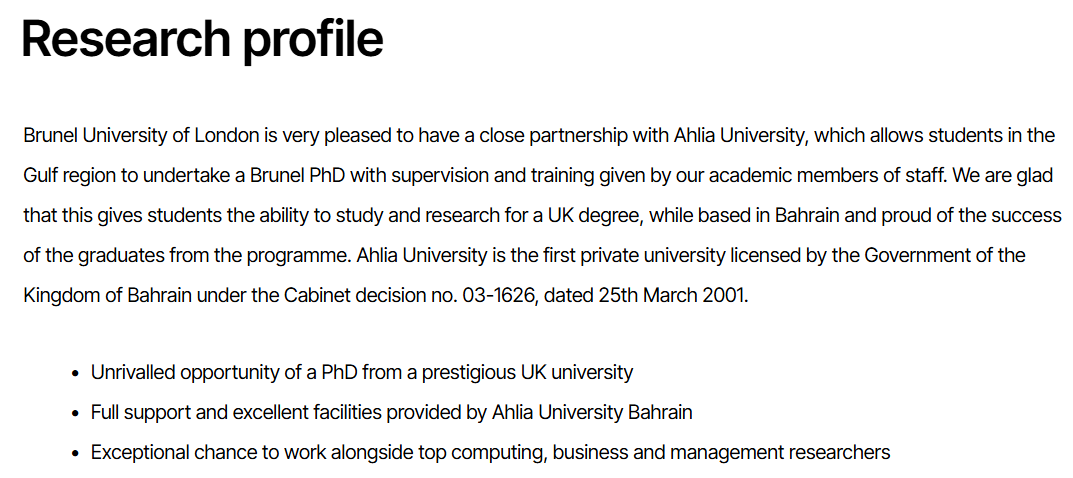
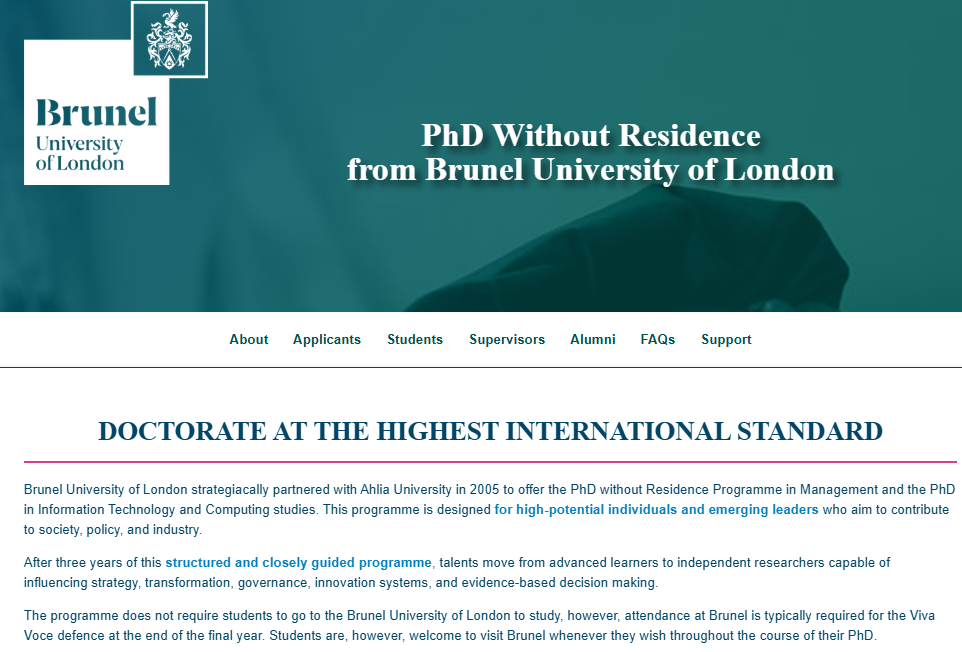
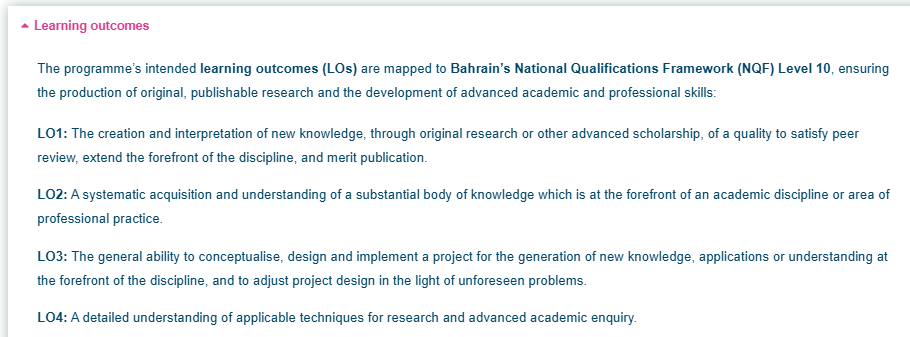
International research publication
The 2024 Springer volume “Business Sustainability with Artificial Intelligence: Challenges and Opportunities” was edited jointly by Ahlia University and Brunel University London scholars. Its 107 chapters bring together international research on sustainability, data ethics, privacy, governance, business practice and evidence-informed decision-making. A second 2024 volume, “Business Development via AI and Digitalization,” was led by Ahlia University with Box Hill College Kuwait and contains 85 chapters, including Ahlia-affiliated empirical work on sustainability, health, education and digital transformation. Evidence: E05, E06.
Sustainable banking evidence framework
Within the 2024 international research programme, authors affiliated with both Ahlia University and Brunel University London developed an AI-enabled framework for a sustainable banking ecosystem in Bahrain. The work synthesises international evidence and translates it into a context-specific framework supporting responsible innovation, sustainable economic activity and policy decision-making. Evidence: E04.
| International mechanism | How it contributes to SDG data collaboration |
|---|---|
| Joint doctoral supervision | Supports internationally reviewed research design, data analysis and presentation. |
| Annual research symposium | Provides a structured forum for comparing findings across social, economic, health and technology themes. |
| International conference | Connects research evidence with academic, professional and policy audiences. |
| Co-edited scholarly volumes | Aggregates and disseminates data-based and comparative research from multiple countries and disciplines. |
6. Systematic measurement of international engagement
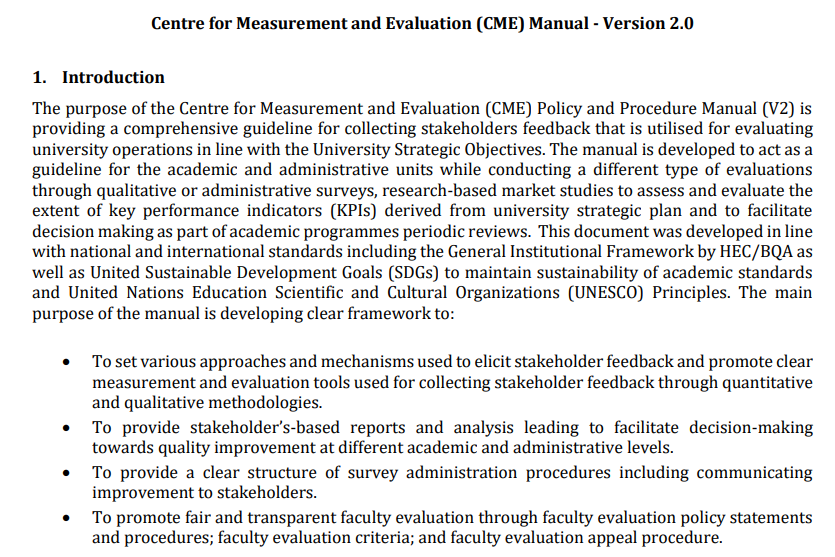
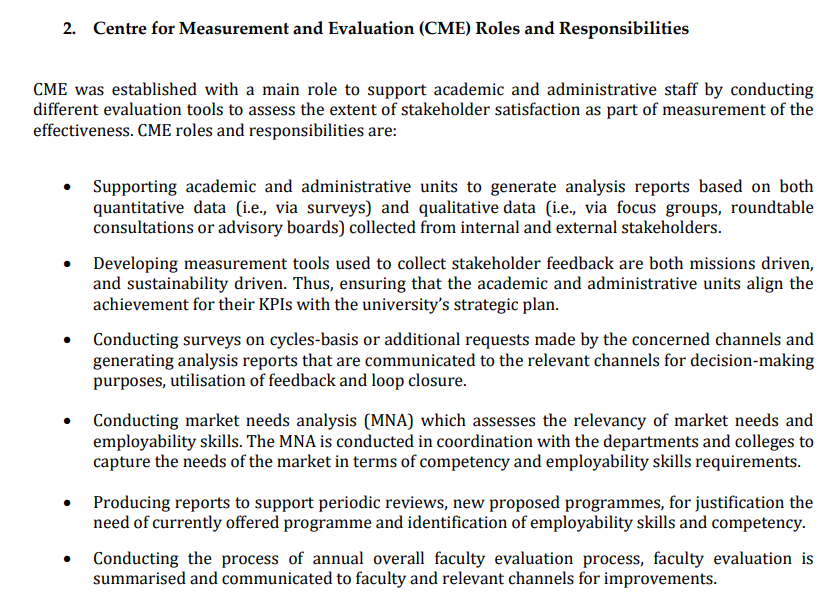
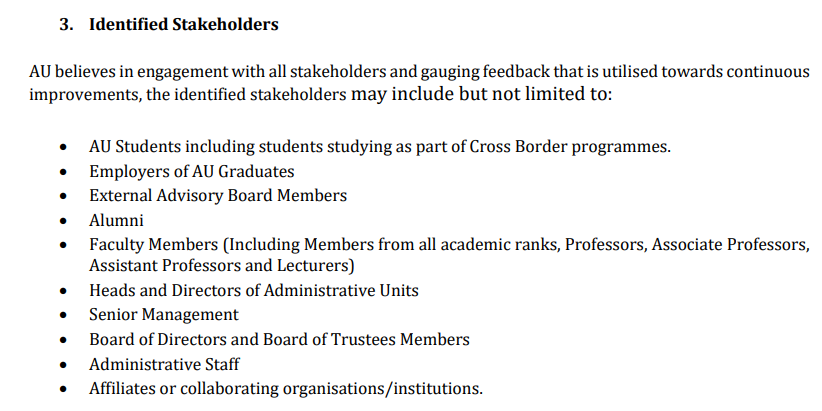
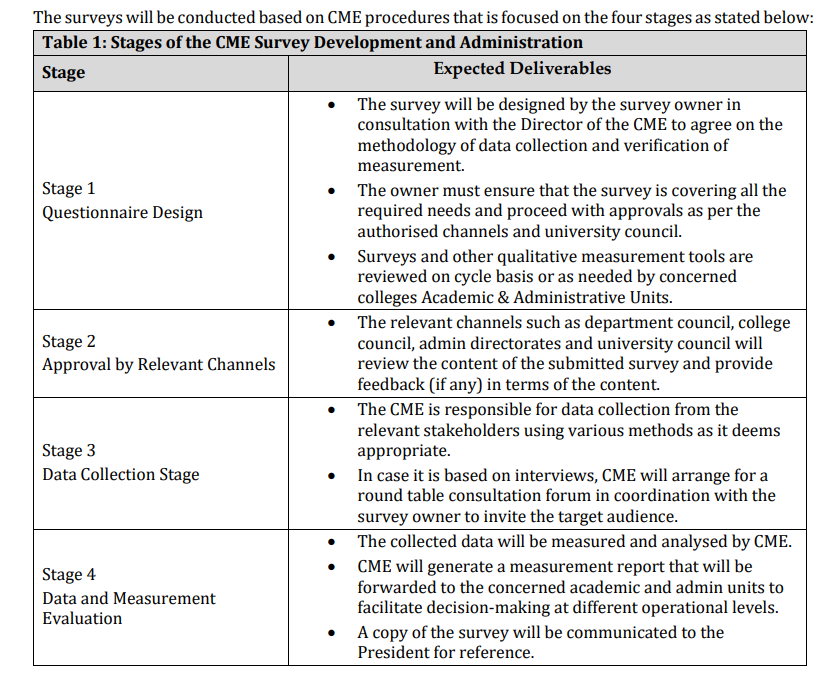
Ahlia University’s Centre for Measurement and Evaluation Manual converts international engagement into a systematic measurement process. Approved by the University Council in April 2024, the manual defines responsibilities for quantitative and qualitative surveys, KPI measurement, sampling, data validation, analysis, reporting and the use of results in institutional improvement. It identifies external stakeholders and collaborating international organisations as part of the University’s evidence environment. Evidence: E07.
Annual Study Abroad Exit Survey
The manual establishes an annual Study Abroad Exit Survey for Ahlia students who complete an international exchange. The survey is jointly owned by the Directorate of International Relations and the Centre for Measurement and Evaluation. Its purpose is to measure participants’ satisfaction with the international learning experience, and the manual maps the instrument directly to SDGs 4, 5 and 17. Evidence: E07.
| Measurement feature | Documented arrangement |
|---|---|
| Population | Ahlia University students participating in study-abroad or exchange activity. |
| Frequency | Annual. |
| Responsible units | Directorate of International Relations and Centre for Measurement and Evaluation. |
| Measure | Satisfaction with the international learning experience. |
| SDG alignment | SDG 4 (quality education), SDG 5 (gender equality) and SDG 17 (partnerships). |
| Quality controls | Sampling principles, validity and reliability, analysis, reporting and documented follow-up are embedded in the wider manual. |
This arrangement demonstrates that Ahlia does not treat international exchange only as an activity count. The University gathers participant data, measures the quality of the experience and assigns responsibility for analysis and institutional follow-up. The resulting evidence supports adaptive management of international partnerships and the educational outcomes they are intended to deliver. Evidence: E07.
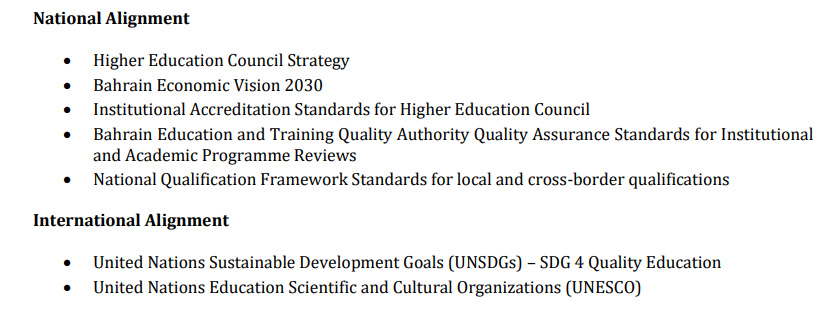
Centre for Measurement and Evaluation
7. Gender equality and women’s participation in international data collaboration
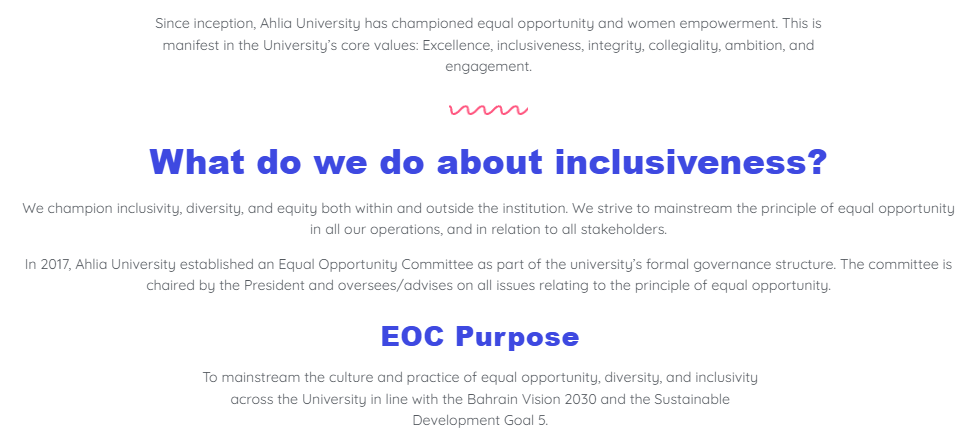
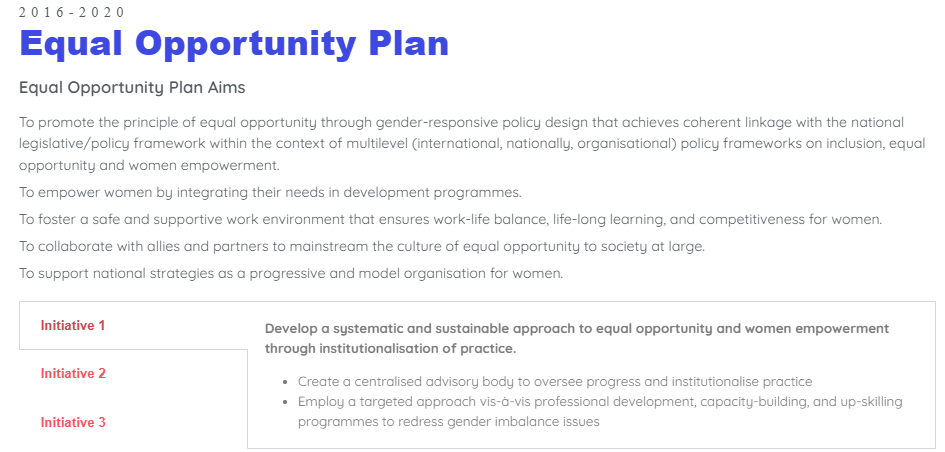
Ahlia University integrates gender equality into its international measurement and research activity. The Centre for Measurement and Evaluation Manual requires attention to gender representation in data collection and maps the Study Abroad Exit Survey to SDG 5. Ahlia’s Equal Opportunity framework also connects international partnerships, women in STEM and the development of instruments that measure awareness and impact. Evidence: E07, E14.
Equal Opportunity



Equal Opportunities Conference 2024
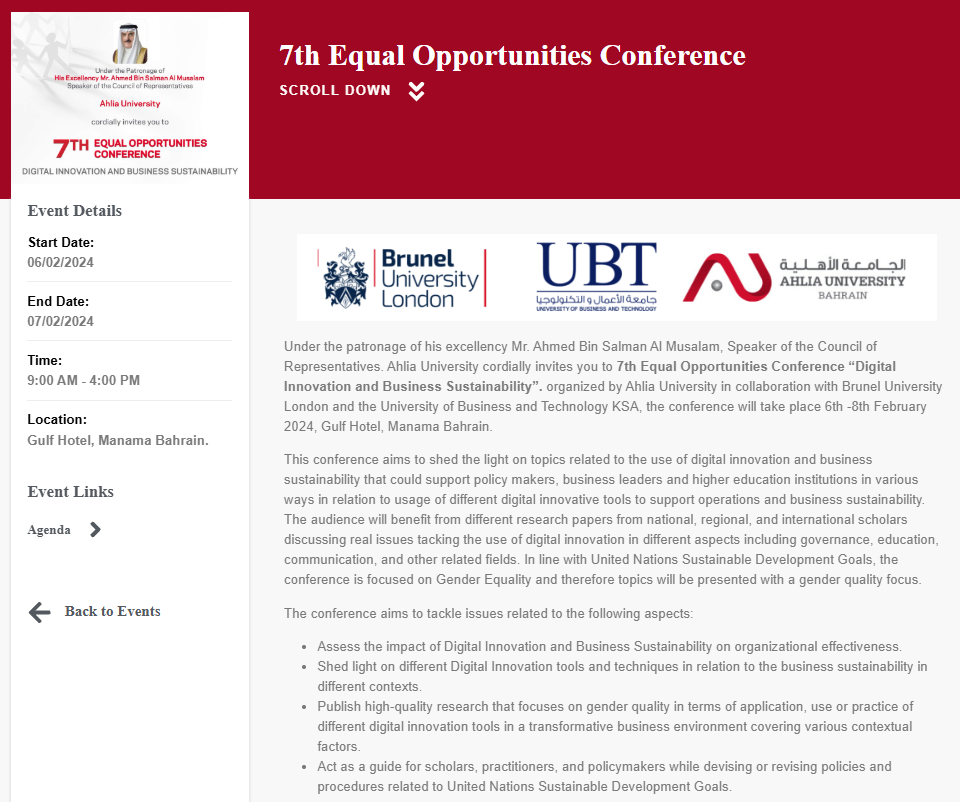
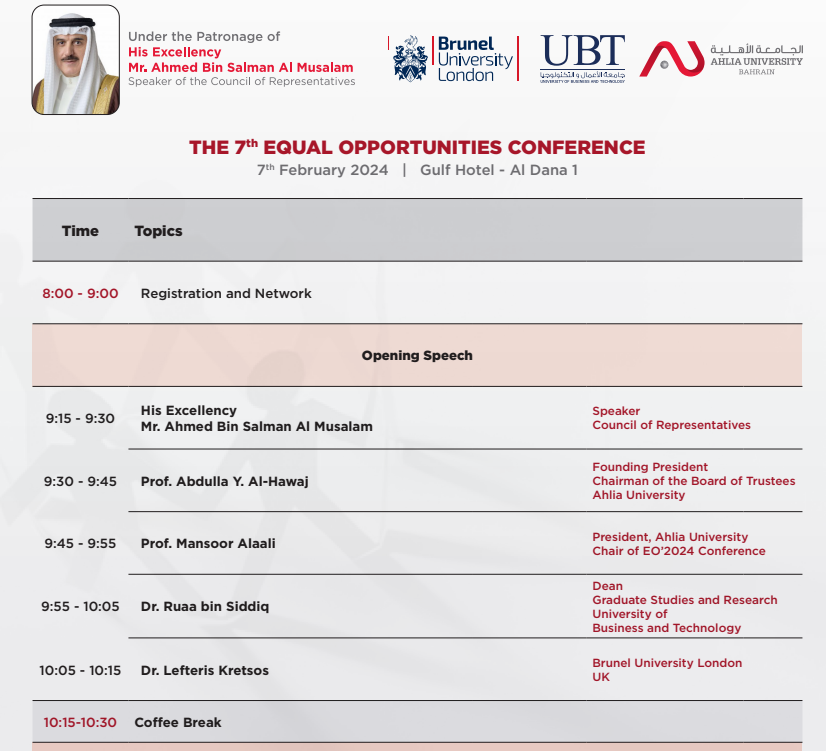
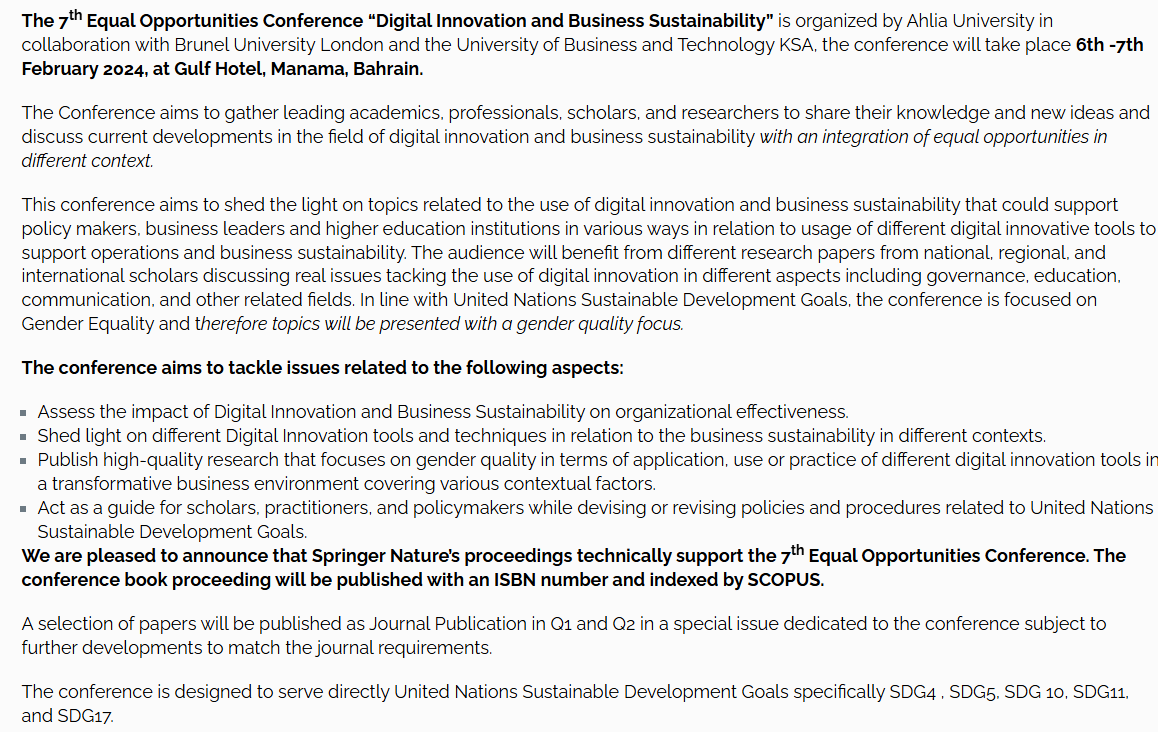
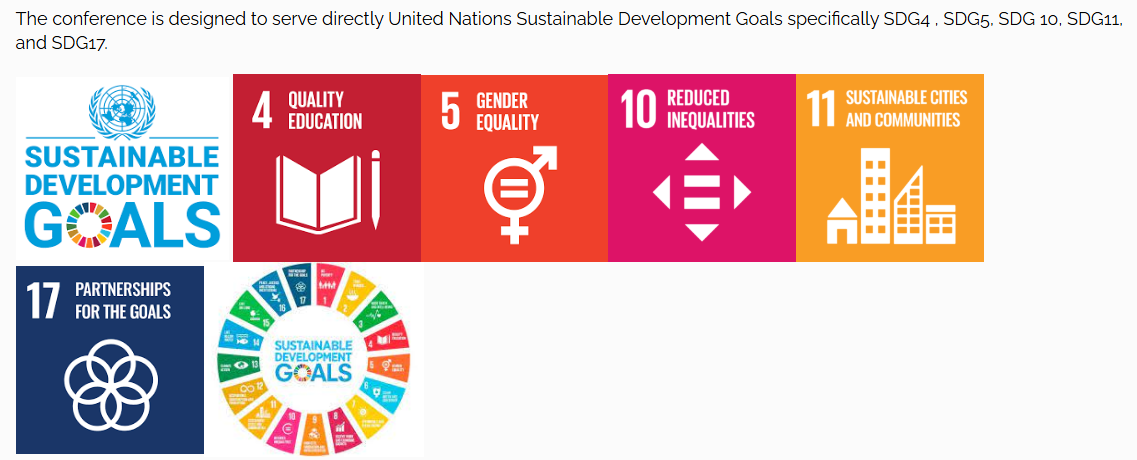
The seventh Equal Opportunities Conference, held on 6–7 February 2024, was organised by Ahlia University with Brunel University London and the University of Business and Technology in Saudi Arabia. The conference was explicitly aligned with SDGs 4, 5, 10, 11 and 17 and created an international forum for scholars, practitioners and policy audiences to exchange evidence on equality and inclusion. Evidence: E08, E09.
The published programme demonstrates the measurement orientation of the dialogue. Research addressed firm digitalisation and inclusive growth, knowledge-sharing in Bahraini higher education, artificial intelligence and gender-related job displacement, women’s likelihood of appointment to senior public-sector roles, and comparative assessment of GCC digital-transformation strategies and economic resilience. Evidence: E10.
| Gender-responsive mechanism | Contribution |
|---|---|
| Inclusive data practice | Mixed-gender representation supports reliable institutional measurement and equitable interpretation of results. |
| International partnerships | Collaboration with Brunel and UBT connects Bahrain-based equality research to regional and global academic expertise. |
| Women and leadership evidence | Conference research examined women’s progression to senior public-sector positions. |
| Future skills and employment | Research on AI and job displacement considered how technological change may affect gender equality and labour-market participation. |
| International mobility measurement | The Study Abroad Exit Survey measures exchange outcomes within a framework explicitly aligned with SDG 5. |
Through these arrangements, Ahlia University supports women’s participation not only through access to international academic activity, but also through research and measurement that make gender-related outcomes visible. This evidence base contributes to the development of skills, leadership pathways and inclusive participation relevant to Bahrain Economic Vision 2030 and the SDGs. Evidence: E07, E10, E14.
8. International agreements and expanding research capacity
Ahlia University strengthens the future capacity for international SDG data collaboration through formal agreements. In October 2024, Northern Technical University in Iraq publicly recorded an agreement with Ahlia University covering joint scientific research, academic and researcher exchange, student exchange, joint academic programmes, and joint workshops and training. The agreement gives particular attention to technology, applied sciences and artificial intelligence. Evidence: E13.
The agreement is an enabling framework for new joint research and does not replace the completed empirical evidence presented in Sections 3 and 4. Together, however, these elements show both active delivery and planned expansion: Ahlia was already producing internationally co-authored, data-based SDG research in 2024 while also building new institutional channels for future data collection, researcher exchange and comparative analysis. Evidence: E02, E03, E13.
Academic, scientific and cultural projects
| Project channel | International contribution | Examples |
|---|---|---|
| Academic | Cross-border doctoral education, international mobility and joint supervision strengthen research capability and knowledge exchange. | Ahlia–Brunel PhD programme; annual study-abroad measurement. |
| Scientific | Joint empirical research, case studies and international publication generate evidence on sustainability and wellbeing. | Reverse logistics; healthcare supply chains; digital transformation. |
| Cultural and social | International equality dialogue compares experiences of inclusion, leadership, work and technological change across societies. | Equal Opportunities Conference 2024. |
| Institutional development | Agreements create formal pathways for researcher exchange, joint studies, workshops and training. | Northern Technical University agreement. |
In a significant move to enhance academic relations and international cooperation, Northern Technical University, represented by its President, Professor Dr. Alyaa Abbas Ali Al-Attar, has reached an agreement with Ahlia University in the Kingdom of Bahrain on October 3, 2024.
This comprehensive academic collaboration aims to foster the exchange of academic and research expertise between the two universities.
The agreement encompasses organizing joint programs in education and scientific research, developing postgraduate programs, and facilitating student and academic exchanges. A Letter of Intent (LOI) has been agreed to be signed between the two institutions, establishing a formal framework for future cooperation. The LOI includes the following key points:
1. Academic and Researcher Exchange: This collaboration will enable faculty members from both universities to deliver lectures and participate in scientific research.
2. Student Exchange: Programs will be organized to allow students from both universities to study and benefit from diverse educational experiences.
3. Joint Scientific Research: Support will be provided for collaborative research projects between the two universities in areas of mutual interest, particularly in technology, applied sciences, and artificial intelligence.
4. Joint Academic Programs: Development of shared educational programs, including bachelor’s and master’s degrees focusing on new specializations such as technology and modern sciences.
5. Professional Training and Workshops: Organization of joint workshops and training programs to enhance the academic and research skills of students and faculty members.
The signing of this Letter of Intent marks the first step towards establishing a long-term strategic partnership between the two universities. This initiative is expected to significantly contribute to strengthening scientific and educational cooperation between Iraq and the Kingdom of Bahrain.
Complementary 2024 measurement evidence
Ahlia’s wider research system also produces SDG measurement that can feed international comparison. A 2024 study surveyed 346 Ahlia students to measure sustainability awareness, while another 2024 study used survey evidence from 370 higher-education staff and administrators to analyse digital transformation and the UN SDGs in Bahrain. Both were published through the internationally edited Ahlia-led Springer volume, connecting nationally gathered data with an international scholarly platform. Evidence: E05, E15, E16.

The study presents the perceptions of sustainability awareness levels in higher education settings and commitments to the Sustainable Development Goals (SDGs) among students at Ahlia University, Bahrain. The study is descriptive, with data collected using a self-administered questionnaire considering several factors (such as educational level, age category, and culture). A survey of 346 students in Ahlia University, Bahrain was conducted to measure their sustainability awareness. The results showed that students have a reasonable level of knowledge and awareness, especially when it comes to sustainable actions and behaviors. Yet, they fail to recognize some core knowledge about sustainability. This study provided recommendations such as incorporating sustainability into the curriculum, providing sustainability-focused degrees and programs, offering sustainability-focused extracurricular activities, implementing sustainable practices on campus, and engaging with the local community. Together, these recommendations will enhance the role of educational institutions in promoting sustainable behavior.
Digital Transformation as a Catalyst for Achieving UNSDGs in Higher Education Institutions in Bahrain: The Mediating Role of the University Culture
The main objective of the study was to investigate the role of digital transformation in achieving UNSDGs related to environmental sustainability in higher education institutions. It also aimed to discuss the role of university culture in mediating the relationship between the two variables. The researcher used the descriptive-analytical approach using a questionnaire as the main instrument for collecting data from the study sample represented (370) faculty members and administrators who were selected using a simple random sampling technique from the University of Bahrain. The findings of the study revealed that digital transformation had a statistically significant beneficial effect on sustainability (environmental, social, and economic) in Bahrain's higher education institutions at a significance level (0.05). The study findings also showed that, when university culture was taken into account as a mediating variable in Bahraini higher education institutions, there was a statistically significant beneficial effect of digital transformation on sustainability at a significance level (0.05).
9. Institutional outcomes and contribution to the SDGs
Ahlia University’s international collaborations create a connected evidence system: primary data are gathered through surveys, interviews and case studies; results are measured and analysed through academic and institutional methods; findings are compared through cross-border supervision and conferences; and outputs are disseminated through peer-reviewed international publications. This system strengthens the University’s ability to contribute evidence to the implementation of the SDGs in Bahrain and internationally. Evidence: E02, E03, E05, E06, E07.
| Strength demonstrated | 2024 evidence |
|---|---|
| International data gathering | Completed empirical studies with international co-authors collected survey, interview and case-study data on responsible consumption and healthcare resilience. |
| Institutional measurement | The approved CME Manual formalised surveys, KPIs, quality controls, analysis and reporting, including international mobility outcomes. |
| Gender-responsive evidence | Measurement guidance, the Equal Opportunity framework and the international Equal Opportunities Conference integrated SDG 5 into data and dialogue. |
| International knowledge infrastructure | Ahlia–Brunel doctoral research, conferences and jointly edited Springer volumes enabled comparison and dissemination across countries and disciplines. |
| Future collaboration capacity | The Northern Technical University agreement established new channels for joint research, exchange, workshops and training. |
Conclusion
Ahlia University therefore answers “Yes” to Indicator 17.2.3. In the 2024 evidence year, the University participated in international collaborations that generated and analysed primary data relevant to the SDGs; maintained a formal system for measuring international exchange outcomes; supported internationally supervised doctoral research; convened cross-border research dialogue on gender equality and inclusive development; and published international research outputs that translate evidence into practical and policy-relevant knowledge. These activities demonstrate meaningful institutional participation in gathering and measuring data for the SDGs. Evidence: E02, E03, E07, E08, E11, E13.
10. Public evidence register
All links below lead to the original methodology, university, partner-university, conference or publisher source. Evidence identifiers used throughout this report link back to this register.
E01 THE Sustainability Impact Ratings Methodology 2026, Indicator 17.2.3
Defines the 2024 evidence-year requirement: participation in international collaboration on gathering or measuring data for the SDGs.
E02 Sustainability in Reverse Logistics: Reshaping Customer Satisfaction Through Flexible Timing and Accessible Services in Online Retail Returns
2024 international empirical study with Ahlia University and Indian institutions; survey of 425 respondents and expert interviews.
E03 Enhancing Resilience and Digital Transformation in the Healthcare Supply Chain: An Exploratory Study in Emerging Economies
2024 Ahlia–Saudi international study using interviews and case studies from healthcare organisations; the source explicitly identifies SDGs among its keywords.
E04 Artificial Intelligence Enabled Sustainable Banking Sector Ecosystem in Kingdom of Bahrain
2024 Ahlia–Brunel international research output synthesising evidence and developing a framework for sustainable banking and policy decision-making.
E05 Business Development via AI and Digitalization, Volume 1
Internationally edited 2024 Springer research volume led by Ahlia University and Box Hill College Kuwait, providing the publication platform for comparative, data-based work.
E06 Business Sustainability with Artificial Intelligence: Challenges and Opportunities
2024 Ahlia–Brunel Springer volume bringing together international research on sustainability, governance, data ethics, privacy and evidence-informed practice.
E07 Ahlia University Centre for Measurement and Evaluation Manual, Version 2
Approved in April 2024; establishes surveys, KPI measurement, analysis and reporting, including the annual Study Abroad Exit Survey aligned with SDGs 4, 5 and 17.
E08 Ahlia University: 7th Equal Opportunities Conference
Official event record for the February 2024 conference organised with Brunel University London and the University of Business and Technology, Saudi Arabia.
E09 Equal Opportunities Conference 2024 official conference website
International conference platform connecting research, policy and practice around SDGs 4, 5, 10, 11 and 17.
E10 Equal Opportunities Conference 2024 programme
Original programme evidencing comparative and measurement-oriented research on gender, digitalisation, inclusive growth and economic resilience.
E11 Ahlia University recognises excellence of postgraduate students at PhD Symposium
Official 2024 record of the Ahlia–Brunel research symposium at which doctoral researchers presented findings on social, economic, health and technological challenges.
E12 Brunel University London: PhD without residence at Ahlia University
Original partner-university confirmation of the cross-border doctoral research programme delivered with Ahlia University.
E13 Northern Technical University agreement with Ahlia University
Original partner record of the October 2024 agreement enabling joint scientific research, academic and researcher exchange, workshops and training.
E14 Ahlia University Equal Opportunity framework
Institutional framework linking international partnerships, women in STEM and the use of data instruments to measure awareness and impact.
E15 Sustainability Awareness Among Higher Education Students: A Case Study of Ahlia University
2024 empirical study measuring sustainability awareness through a survey of 346 Ahlia University students and disseminated through an international research volume.
E16 Digital Transformation and the United Nations Sustainable Development Goals in Bahrain Higher Education Institutions
2024 quantitative research using survey evidence from 370 higher-education staff and administrators to analyse digital transformation and sustainability.