Current Collaborations with Health Institutions to Improve Health and Well-being Outcomes
Institutional response YES — Ahlia University maintains current collaborations at local, national and global levels. These collaborations combine specialist health education, clinical learning, preventive health activity, national health-promotion governance and WHO-led quality assurance. |
1. Formal institutional response
Ahlia University confirms that it has current collaborations with independent health institutions at all three levels required by THE: local, national and global. The University’s model translates partnership into health and well-being outcomes for students, staff and the wider community. It integrates mental-health capacity building, specialist consultations and screening, supervised clinical education, health-awareness programming, and participation in a WHO-governed Health-Promoting Universities framework. [E2] · [E3] · [E4] · [E6]
In Cooperation with Silwan Psychiatric Hospital Ahlia Provides Psychological Support for Students with Special Needs
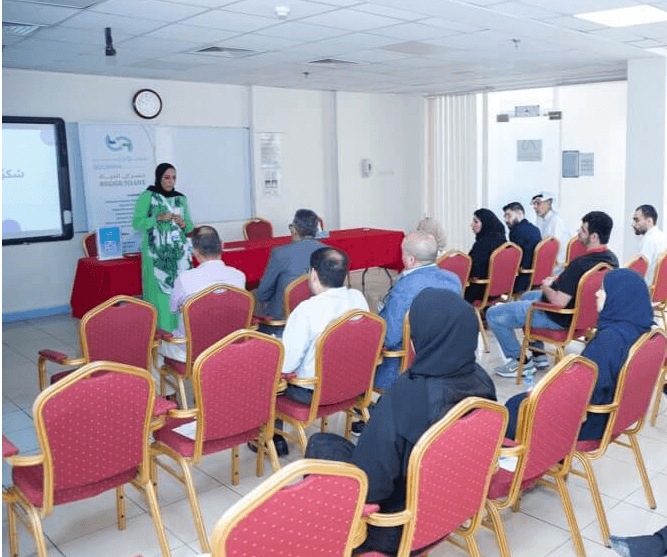
In a collaborative effort between Ahlia University and Silwan Psychiatric Hospital, the University hosted a lecture by psychiatry consultant Dr. Amani Al-Sabbagh, aimed at improving support for students with special needs.
The lecture, organised by Student Counselling Directorate, covered a range of topics related to special needs, including fear, forgetfulness, depression, obsessive-compulsive disorder, and physical disabilities. Dr. Al-Sabbagh emphasised the importance of fostering positive psychological attitudes, facilitating social interaction, and encouraging community participation for these students. “It’s crucial that we create an environment that is understanding and empathetic towards the needs of students with special needs,” said Dr. Al-Sabbagh. “By identifying and addressing their mental health challenges, we can better support them in reaching their full potential.”
The University’s commitment to inclusivity is evident in its various support initiatives. Students with special needs, as well as orphans, outstanding students, and creative students, are offered partial scholarships covering 50% of their tuition fees. “Our goal is to ensure that all students, regardless of their unique circumstances, have the opportunity to excel in their academic pursuits,” said Ms. Rasha Al-Najdi, Director of Counselling at Ahlia University. “We work closely with these students to help them unlock their talents and succeed throughout their studies.”
The lecture was well-received by the academic and administrative staff in attendance, who expressed a renewed understanding of the importance of providing comprehensive support for students with special needs.
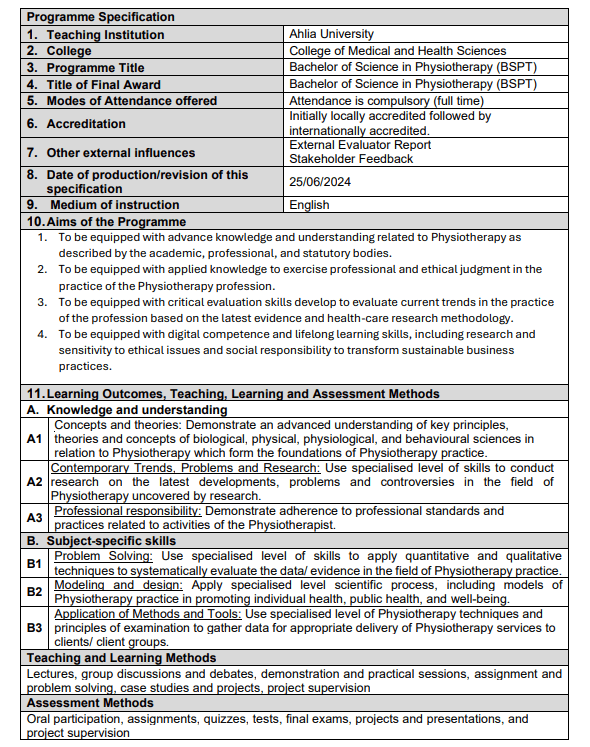
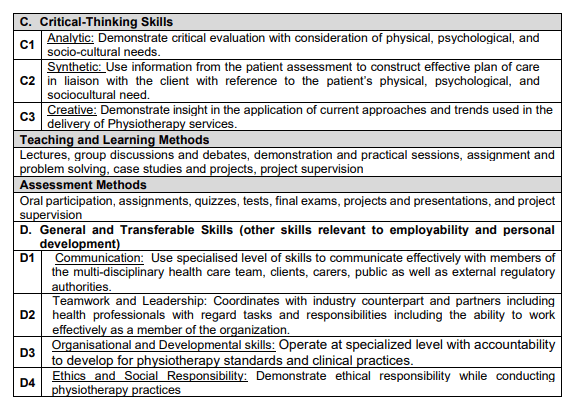
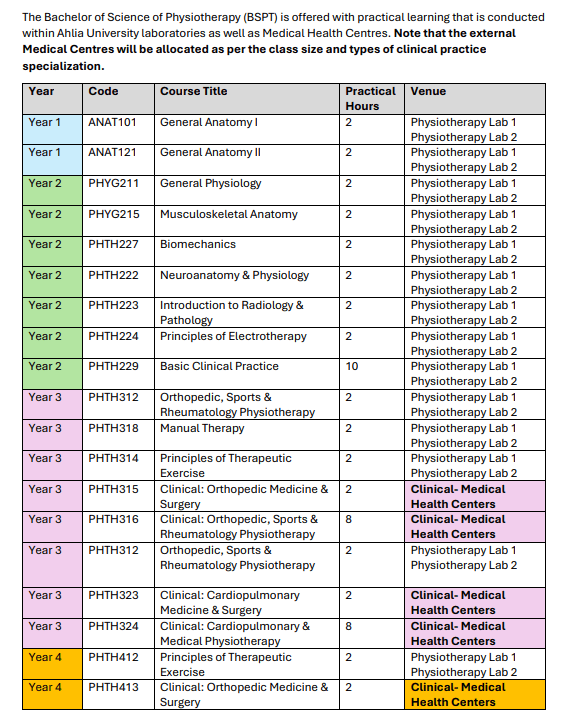
Programme Specification
WHO Bahrain: Scaling Up the Healthy Cities and Health-Promoting University Initiatives in Bahrain
The Healthy Governorate Initiative and the Health-Promoting University Programme
Bahrain's Capital and Northern governorates on the road to becoming healthy governorates
The Capital and the Northern governorates received joint regional and country evaluation teams in August and November 2024, respectively, to assess their eligibility for the Healthy Governorates status. The evaluation teams included WHO experts from the regional and country offices, representatives from the Ministry of Health, and the WHO Collaborating Centre for Healthy Cities in Riyadh, Kingdom of Saudi Arabia. These in-country evaluations came after a joint technical team from the Ministry of Health and WHO Bahrain visited the Capital governorate office in May 2024 and the Northern governorate office in July 2024 to guide the completion of the self-assessment.
The self-assessment involves 80 indicators across nine domains, including community organisation and mobilisation, intersectoral collaboration, availability of information, and environmental health.
During the field visits, the joint evaluation teams visited several healthy city implementation sites, where they observed programmes, interacted with community members, and reviewed documents to understand the governorates' role in creating supportive and enabling urban environments for health and promoting healthy living for all. Cities achieving over 80% receive the designation certificate from the WHO Regional Office for the Eastern Mediterranean and are re-evaluated every three years.
Classification against the indicator
| Level | Current collaborators | 2024 delivery mechanism | Health and well-being outcome |
|---|---|---|---|
| Local | Silwan Psychiatric Hospital; local hospitals, clinics and specialist centres | Specialist education; supervised clinical delivery; screening and consultations | Improved mental-health support, preventive care and practice-based education |
| National | Bahrain Ministry of Health; Higher Education Council; public and private healthcare network | Health-Promoting Universities governance, evaluation and clinical placements | Health equity, healthy environments, workforce development and national alignment |
| Global | World Health Organization regional and Bahrain country offices | International indicators, self-assessment, external evaluation and periodic re-evaluation | Evidence-based institutional health promotion for students, staff and community |
THE alignment: The methodology defines collaboration as ongoing formal or informal activity over time and distinguishes local, national and global collaborators. Ahlia University evidences each category through independent organisations that are not owned or managed by the University. [E1]
2. Local health-institution collaboration
Silwan Psychiatric Hospital: psychological support for students with special needs
On 8 May 2024, Ahlia University and Silwan Psychiatric Hospital delivered a collaborative specialist session led by consultant psychiatrist Dr Amani Al-Sabbagh. Organised through the Directorate of Student Counselling, the activity strengthened the capacity of academic and administrative staff to identify and respond to mental-health challenges affecting students with special needs. Topics included depression, obsessive-compulsive disorder, fear, forgetfulness and physical disability, together with positive psychological attitudes, social interaction and community participation. [E3]
The collaboration produced a direct institutional outcome: participating staff reported renewed understanding of comprehensive support needs, while the University linked specialist health knowledge with its continuing counselling and inclusion services. This places external clinical expertise inside the University’s student-support system. [E3] · [E11]
In Cooperation with Silwan Psychiatric Hospital Ahlia Provides Psychological Support for Students with Special Needs
In a collaborative effort between Ahlia University and Silwan Psychiatric Hospital, the University hosted a lecture by psychiatry consultant Dr. Amani Al-Sabbagh, aimed at improving support for students with special needs.
The lecture, organised by Student Counselling Directorate, covered a range of topics related to special needs, including fear, forgetfulness, depression, obsessive-compulsive disorder, and physical disabilities. Dr. Al-Sabbagh emphasised the importance of fostering positive psychological attitudes, facilitating social interaction, and encouraging community participation for these students. “It’s crucial that we create an environment that is understanding and empathetic towards the needs of students with special needs,” said Dr. Al-Sabbagh. “By identifying and addressing their mental health challenges, we can better support them in reaching their full potential.”
The University’s commitment to inclusivity is evident in its various support initiatives. Students with special needs, as well as orphans, outstanding students, and creative students, are offered partial scholarships covering 50% of their tuition fees. “Our goal is to ensure that all students, regardless of their unique circumstances, have the opportunity to excel in their academic pursuits,” said Ms. Rasha Al-Najdi, Director of Counselling at Ahlia University. “We work closely with these students to help them unlock their talents and succeed throughout their studies.”
The lecture was well-received by the academic and administrative staff in attendance, who expressed a renewed understanding of the importance of providing comprehensive support for students with special needs.
Local provider engagement: screening, consultation and prevention
Ahlia’s public SDG evidence documents an established pattern of collaboration with health providers in and around Manama. These engagements bring doctors and specialists onto campus and make preventive care and health information accessible to the university community.
-
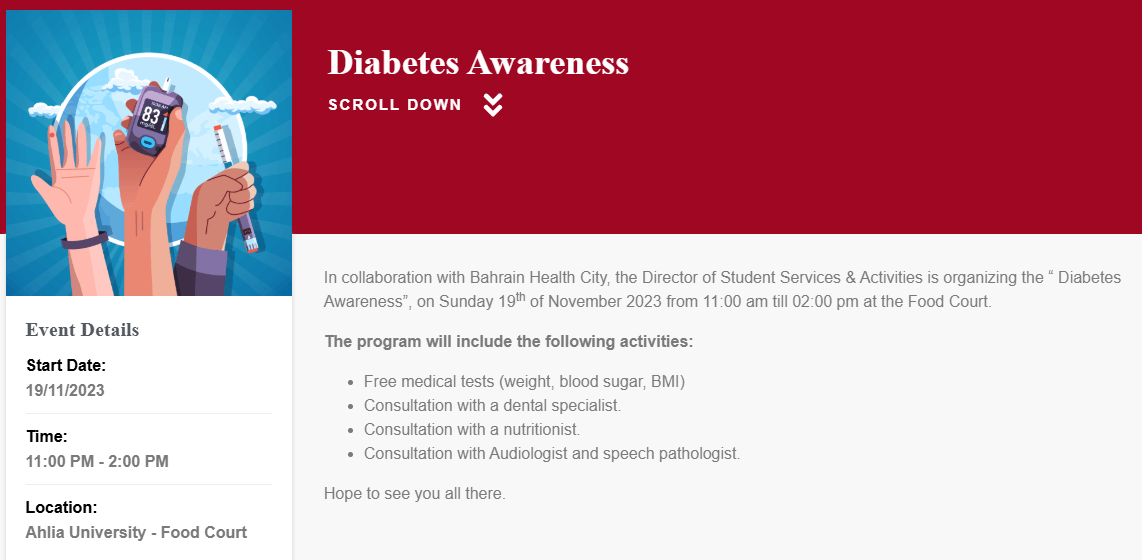
Bahrain Health City supported the Diabetes Awareness programme with free weight, blood-glucose and BMI testing and consultations in dentistry, nutrition, audiology and speech pathology. [E2] · [E7]
-
Bahrain Medical City supported the “Stay Healthy” health-education day through on-campus doctors and specialists, medical consultations, examinations and preventive testing for staff and students. [E2] · [E8]
Stay Healthy
The Student Services and Activities Department, in collaboration with Bahrain Medical City, is organizing a comprehensive health education day for the staff and students of Ahlia University. on Tuesday, July 11, 2023, at 10:00 AM in the mezzanine. This event aims to promote health awareness and provide valuable medical services to enhance the well-being of the university community.
During this event, doctors and specialists from Bahrain Medical City will be present on campus. They will offer medical consultations and examinations to students and staff.
The program will include the following activities:
Free medical tests (weight, blood sugar, BMI)
Consultation with a dental specialist.
Consultation with a nutritionist.
-
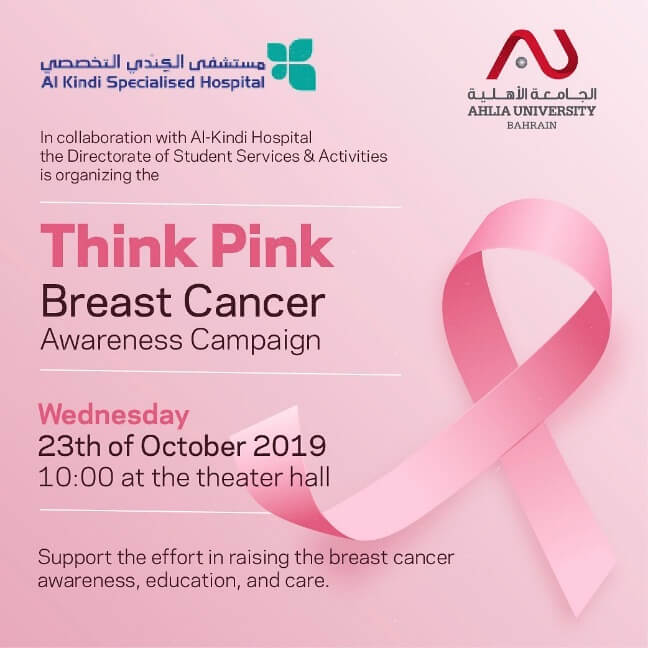
Al Kindi Specialised Hospital contributed to the “Think Pink” breast-cancer awareness campaign through health education, preventive testing and nutritional consultation. [E2]
Collaboration with Al-Kindi Hospital
In collaboration with Al-Kindi Hospital, the Director of Student Services & Activities, it was organized the ’Think Pink’ Breast Cancer Awareness Campaign at the theater hall. The aim of this event was to support the effort in raising breast cancer awareness, education, and care [3].
The program was included in the following activities:
Awareness Lecture.
Free medical tests (weight, blood sugar, BMI)
Consultation with a nutritionist
-
Ahlia’s mental-health programme records external emotional-health expertise, including a Sacred Feeler Clinic contribution to an art-journalling workshop for emotional self-care. [E11]
Formal cooperation supporting people with disabilities
Ahlia’s memorandum of understanding with the Bahraini Association for Parents and Friends of the Disabled formalises joint participation, mutual invitations, activity support and initiatives that enable students with disabilities to continue university education. This complements the University’s clinical and counselling partnerships by addressing social participation and well-being alongside academic access. [E10]
Ahlia University Signs an MoU with the Bahraini Association for Parents of the Disabled
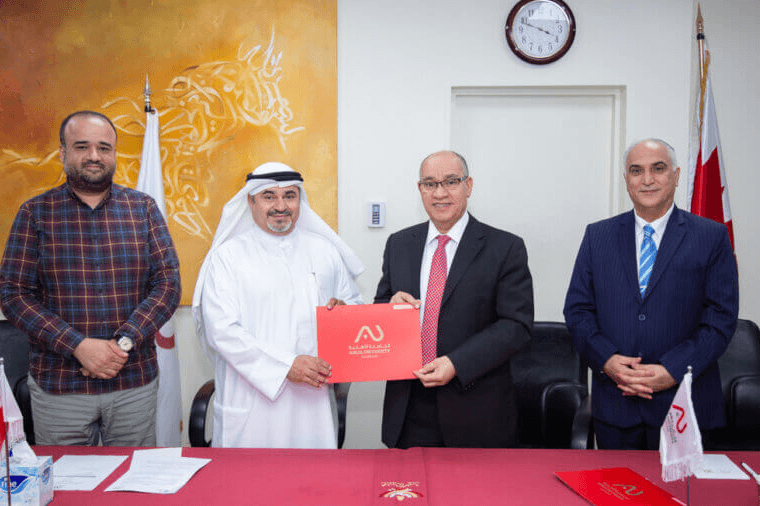
The President of Ahlia University, Professor Mansour Al-Aali, noted that disabled people receive special care and attention the academic and administrative bodies of the university. They also receive partial scholarships of 50% of the tuition fees, which is what made Ahlia university the most attractive among universities to this segment of society.
prof. Al-Aali praised the campaign launched by the Bahraini Association for Parents of the Disabled, which included collecting and recycling of plastics to benefit from its revenue in providing special chairs for the disabled.
For his part, the President of the Bahraini Association for Parents and Friends of the Disabled affirmed his pride in the prestigious status of Ahlia University and the role played by the university in supporting and assisting the disabled and their families, noting the successes achieved by the university in graduating dozens of students with disabilities in the past years, expressing the association’s desire for more cooperation with the university.
Ahlia University signed a memorandum of understanding with the Bahraini Association for Parents and Friends of the Disabled, with the aim of achieving fruitful cooperation between them on the basis of mutual benefit and common interests, in accordance with the laws and regulations in the Kingdom of Bahrain.
Ahlia University was represented by the President of the University, Professor Mansour Al-Aali, and the Bahraini Society for Parents and Friends of the Disabled was represented by the Chairman of the Board of Directors, Mr. Jassim Muhammad Siyadi.
This agreement comes within the framework of both parties’ desire to activate the role of cooperation between them, and bilateral cooperation in the field of supporting students with disabilities, that is through exchanging invitations to participate and attend events held by the two parties, and the university provided support for the activities of the Bahraini Association for Parents of the Disabled and their friends by collecting plastic materials in all University facilities and presenting them to the association for recycling in order to contribute to the purchase of the largest possible number of wheelchairs for specific cases of people with disabilities, in addition to organizing joint activities aimed at enhancing the opportunities of enabling students with disabilities from completing their university education.
3. Practice-based collaboration through the clinical network
Ahlia University’s Bachelor of Science in Physiotherapy embeds external health-institution collaboration in the curriculum. The programme specification revised on 25 June 2024 states that practical learning occurs both in University laboratories and in external medical health centres. It also requires students to coordinate with industry counterparts, partners and health professionals, and to communicate within multidisciplinary healthcare teams and with external regulatory authorities. [E4] · [E5]
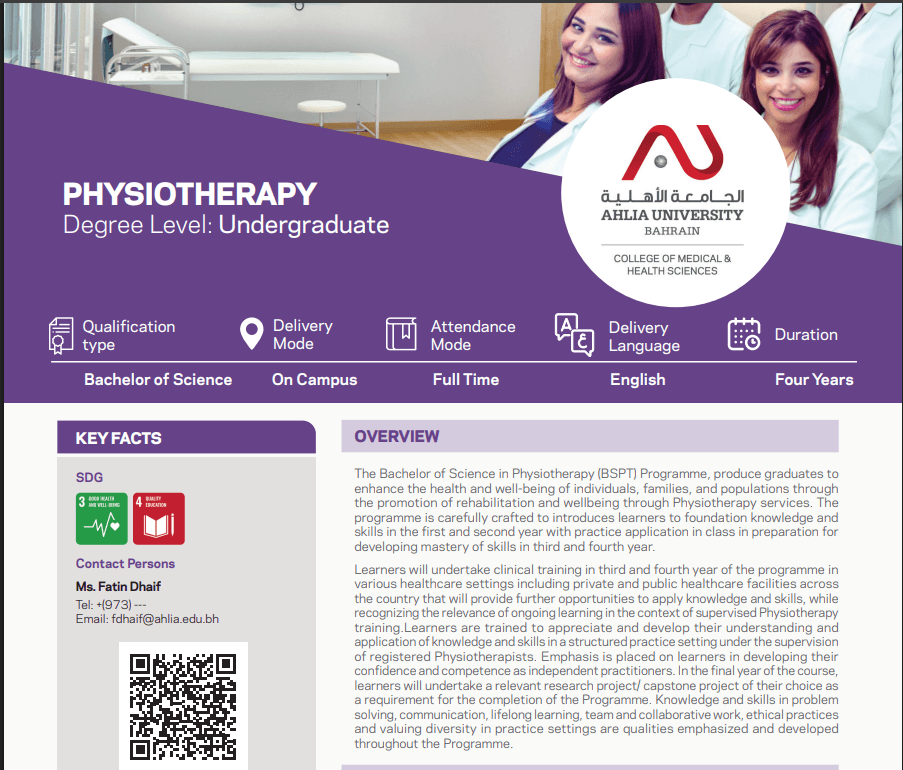
2024 clinical delivery
| Stage | External clinical fields | Collaborative contribution |
|---|---|---|
| Year 3 | Orthopaedic medicine and surgery; orthopaedic, sports and rheumatology physiotherapy; cardiopulmonary medicine and surgery; cardiopulmonary and medical physiotherapy | Health centres provide supervised settings in which students apply examination, treatment and professional communication skills. |
| Year 4 | Orthopaedic medicine and surgery; paediatric physiotherapy; paediatric medicine and surgery; community physiotherapy | Health institutions extend learning to children, families and community settings, strengthening workforce readiness and service awareness. |
| Across the programme | Multidisciplinary practice, professional standards, research-informed care and public-health promotion | External partners contribute authentic practice settings, feedback and exposure to national health needs. |
The University’s published affiliate network spans government hospitals, Ministry of Health primary healthcare centres, private hospitals, specialist facilities, physiotherapy services and community-based rehabilitation centres. The listed network includes Salmaniya Medical Complex, King Hamad University Hospital, Ministry of Health primary healthcare centres, American Mission Hospital, Ibn Al Nafees Hospital, Al Kindi Specialised Hospital, Royal Bahrain Hospital, International Hospital of Bahrain, Therapy Center for Physical Therapy and Bahrain Mobility Center. [E2] · [E4]
Outcome pathway Healthcare partners provide supervised clinical environments; students practise evidence-based physiotherapy under professional conditions; the partnership develops a nationally relevant health workforce while supporting community-based care, rehabilitation and prevention. |
4. National collaboration
Ministry of Health and Higher Education Council
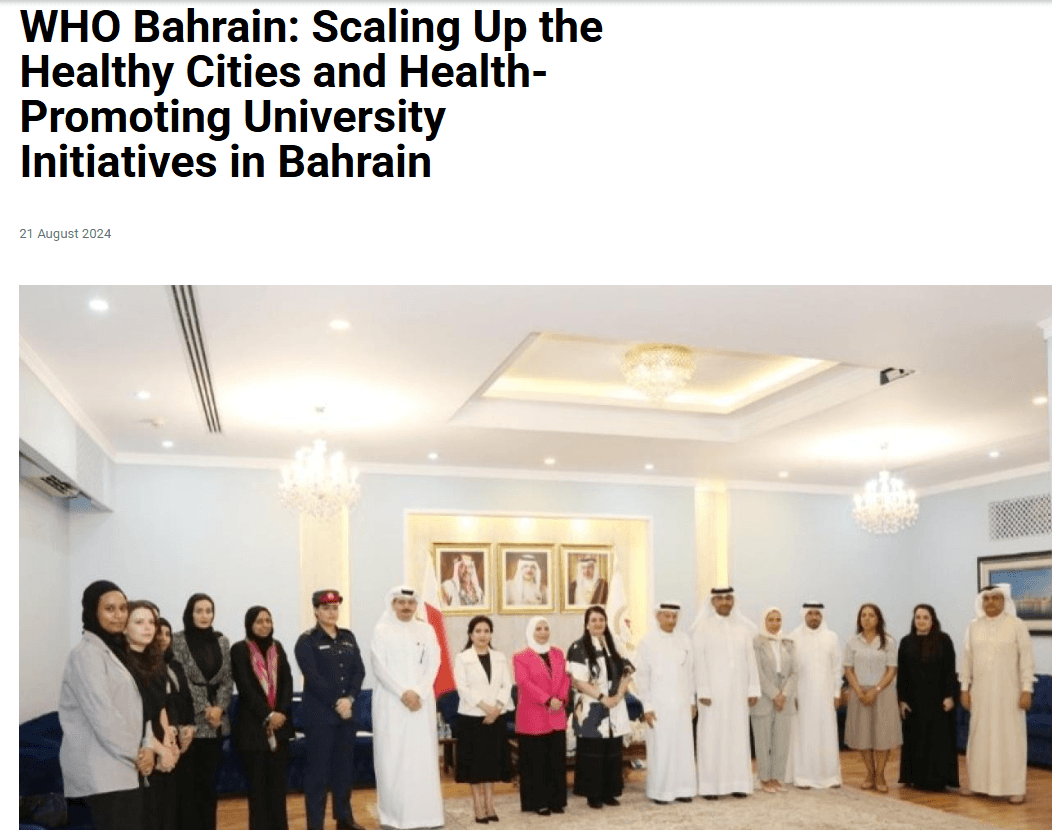
Ahlia University participates in Bahrain’s Health-Promoting Universities initiative, implemented by the World Health Organization in collaboration with the Ministry of Health and the Higher Education Council. This national structure aligns higher-education institutions with Bahrain’s health-promotion system and connects institutional action to public-health priorities, health equity and community well-being. [E2] · [E6]
Independent United Nations reporting published in August 2024 identifies Ahlia University among the five Bahraini universities that had achieved Health-Promoting University distinction. The same source explains that the framework addresses the social determinants of health and requires assessment across six domains, including the university environment, healthy lifestyles, emergency preparedness and response, community participation and sustainability. [E6]
WHO Bahrain: Scaling Up the Healthy Cities and Health-Promoting University Initiatives in Bahrain
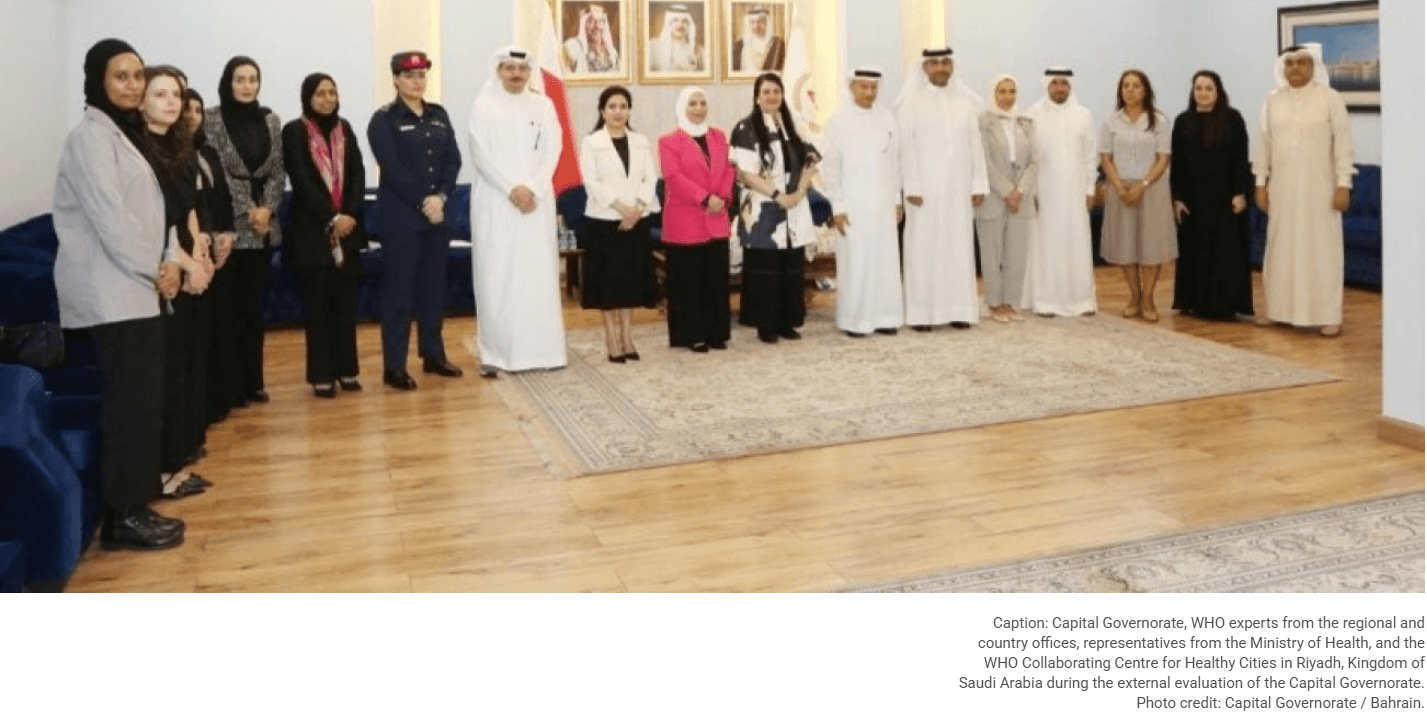
The Healthy Governorate Initiative and the Health-Promoting University Program
Bahrain's Capital and Northern governorates on the road to becoming healthy governorates
The Capital and the Northern governorates received joint regional and country evaluation teams in August and November 2024, respectively, to assess their eligibility for the Healthy Governorates status. The evaluation teams included WHO experts from the regional and country offices, representatives from the Ministry of Health, and the WHO Collaborating Centre for Healthy Cities in Riyadh, Kingdom of Saudi Arabia. These in-country evaluations came after a joint technical team from the Ministry of Health and WHO Bahrain visited the Capital governorate office in May 2024 and the Northern governorate office in July 2024 to guide the completion of the self-assessment.
The self-assessment involves 80 indicators across nine domains, including community organisation and mobilisation, intersectoral collaboration, availability of information, and environmental health.
During the field visits, the joint evaluation teams visited several healthy city implementation sites, where they observed programmes, interacted with community members, and reviewed documents to understand the governorates' role in creating supportive and enabling urban environments for health and promoting healthy living for all. Cities achieving over 80% receive the designation certificate from the WHO Regional Office for the Eastern Mediterranean and are re-evaluated every three years.
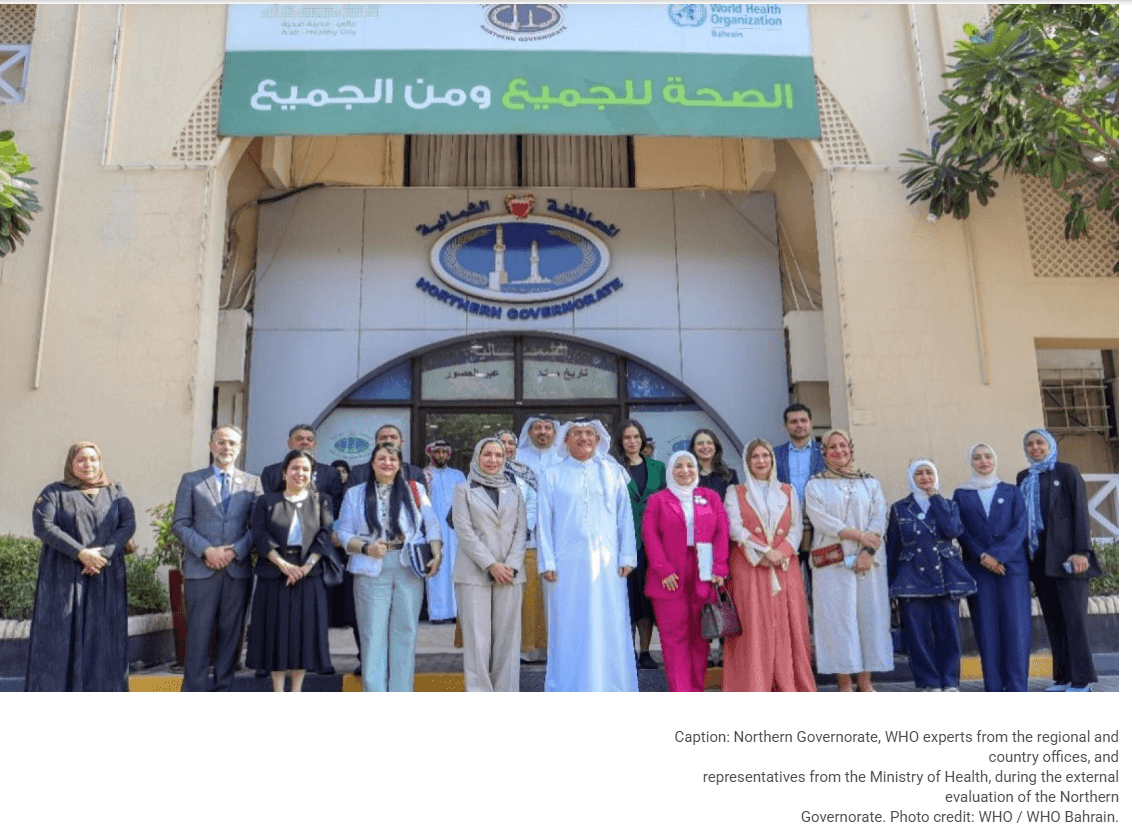
The American University of Bahrain makes significant strides towards achieving Health-Promoting University status
A joint regional and country evaluation team conducted a field visit to the American University of Bahrain (AUBH) to assess its eligibility for Health-Promoting University status. The team included WHO experts from the regional and country offices and representatives from the Ministry of Health, Higher Education Council, and WHO Collaborating Centre for Healthy Cities in Riyadh, Kingdom of Saudi Arabia.
During the field visit, the joint evaluation team interacted with AUBH staff and students, observed programmes, and reviewed documents to understand the university’s role in creating and promoting a health-conducive working and learning environment.
Once designated, AUBH will join five other Bahraini universities that received distinction in 2023: Ahlia University, Arabian Gulf University, Kingdom University, Royal College of Surgeons in Ireland—Medical University of Bahrain, and University of Technology Bahrain.
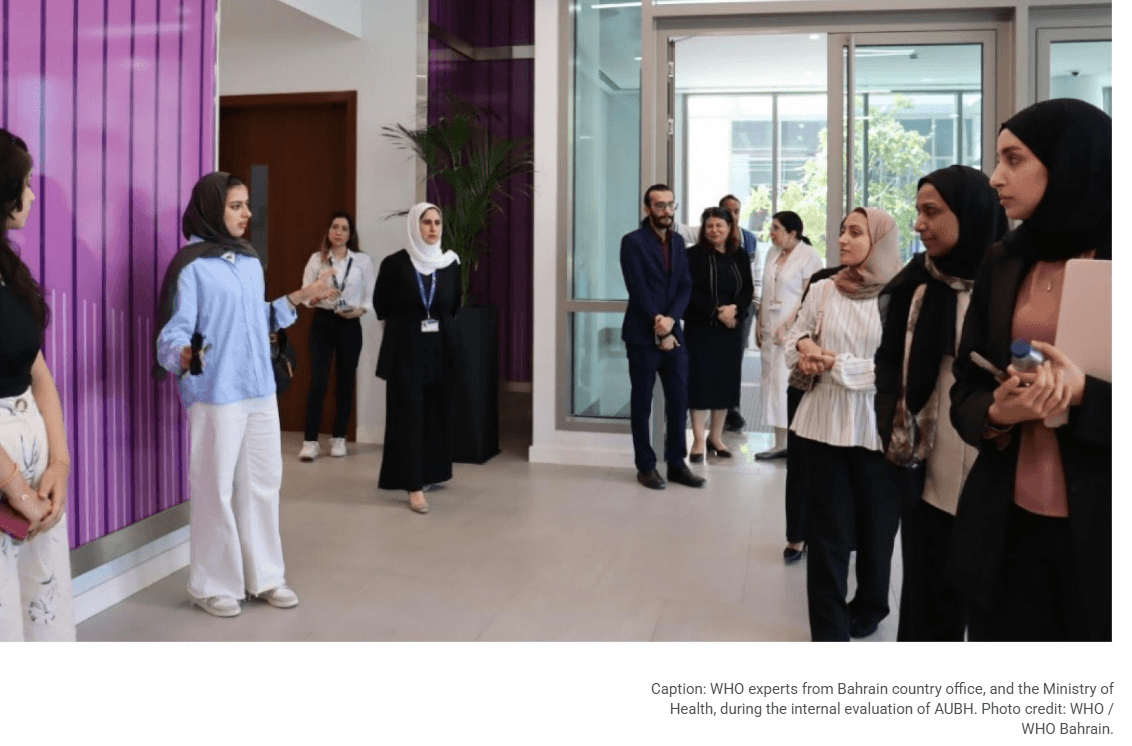
WHO conducts one-day workshop to bolster Health Promoting Universities in Bahrain
WHO, in collaboration with the Ministry of Health and Higher Education Council, conducted a one-day workshop at the American University of Bahrain to introduce the Health Promoting Universities Programme to academic institutions in Bahrain.
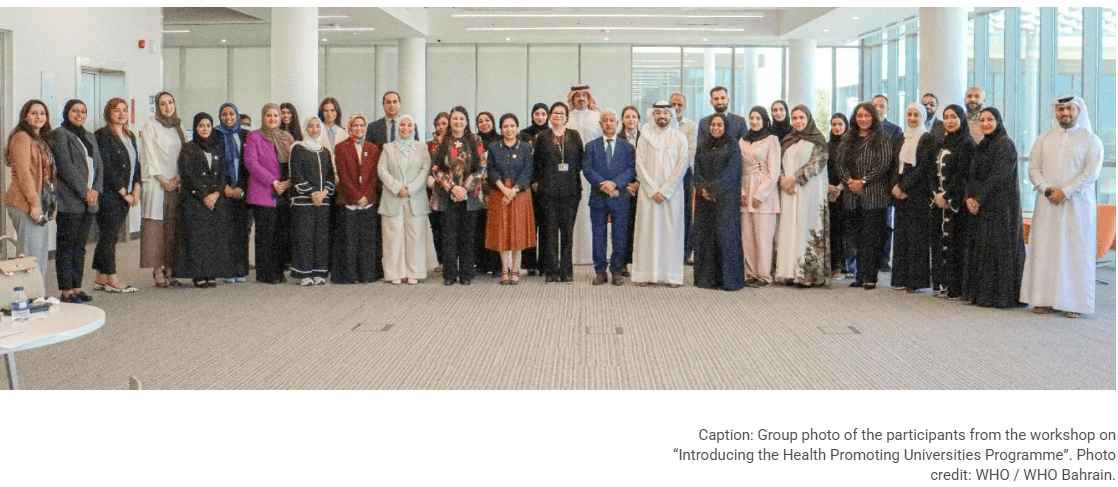
The workshop was inaugurated by Dr Wafa AlSharbati, Director of Health Promotion, and Dr Tasnim Atatrah, WHO Representative, and delivered by experts from the WHO Regional Office for the Eastern Mediterranean. It allowed more than 40 participants from different academic institutions to gain first-hand access to the Health-Promoting Universities Programme, exchange ideas and experiences, and learn more about the designation process.
The WHO Health-Promoting Universities Programme, derived from the Healthy Cities Programme, targets social determinants of health in academic settings, enhancing health and well-being among students, staff, and the wider community. In the Eastern Mediterranean region, academic institutions are awarded the Health-Promoting Universities status based on a self-assessment and in-county evaluation. To qualify, a university must commit to activities that promote health equity and complete an assessment.
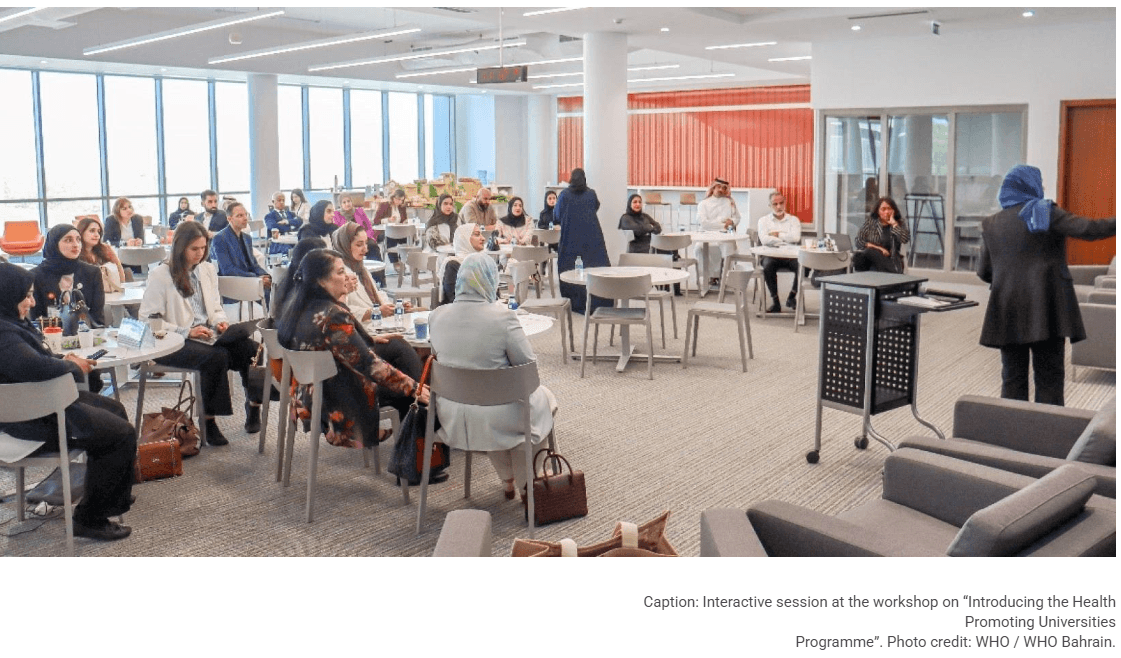
The self-assessment involves a set of indicators across six domains, including university environment, promotion of healthy lifestyles, emergency preparedness and response, and community participation and sustainability. Universities reflect on the indicators, and a joint WHO regional and country evaluation team conducts a field visit. Universities achieving over 80% receive the designation certificate and are re-evaluated every three years.
National implementation mechanisms
-
Common national health-promotion standards developed and applied across higher education. [E6]
-
Institutional self-assessment against defined health and well-being indicators. [E6]
-
External evaluation involving WHO experts and representatives of the Ministry of Health and Higher Education Council. [E6]
-
A threshold of more than 80% for designation and re-evaluation every three years, creating continuing accountability. [E6]
-
Clinical learning across Bahrain’s public and private healthcare sectors, connecting graduate preparation to national service settings and regulatory expectations. [E2] · [E4] · [E5]
Ministry of Health
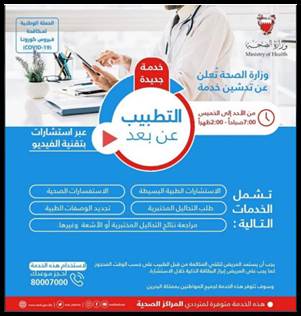 |
With the support of the Ministry of Health, telemedicine services have been launched in Bahrain’s primary health centers through video-based consultation technology. This initiative aims to expand access to medical advice and healthcare support by enabling virtual consultations between patients and healthcare professionals. Through this national initiative, Ahlia University community members — including students, faculty, and staff — are able to access telemedicine services in participating health centers. The collaboration reflects the joint efforts of the Ministry of Health and higher education institutions, such as Ahlia University, to promote health and well-being through digital innovation and to ensure equitable access to healthcare services. |
HIS Projects
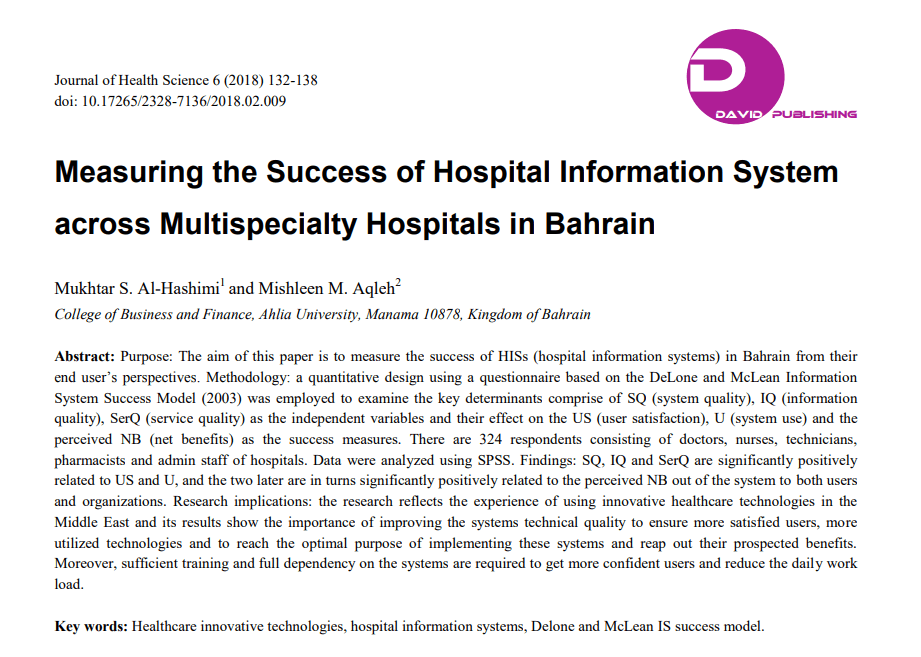
Ahlia University has collaborated in academic and research activities related to improvements in Hospital Information Systems (HIS) within healthcare institutions in Bahrain, including case studies and analyses involving King Hamad University Hospital. These collaborations have resulted in joint work on the implementation, evaluation, and success measurement of HIS from the perspective of end users, contributing to enhanced quality of care and more effective clinical information management.
Cooperation with King Hamad Hospital
Ahlia University, in cooperation with King Hamad Hospital, made a blood donation campaign that was held in the Ahlia University building [8].
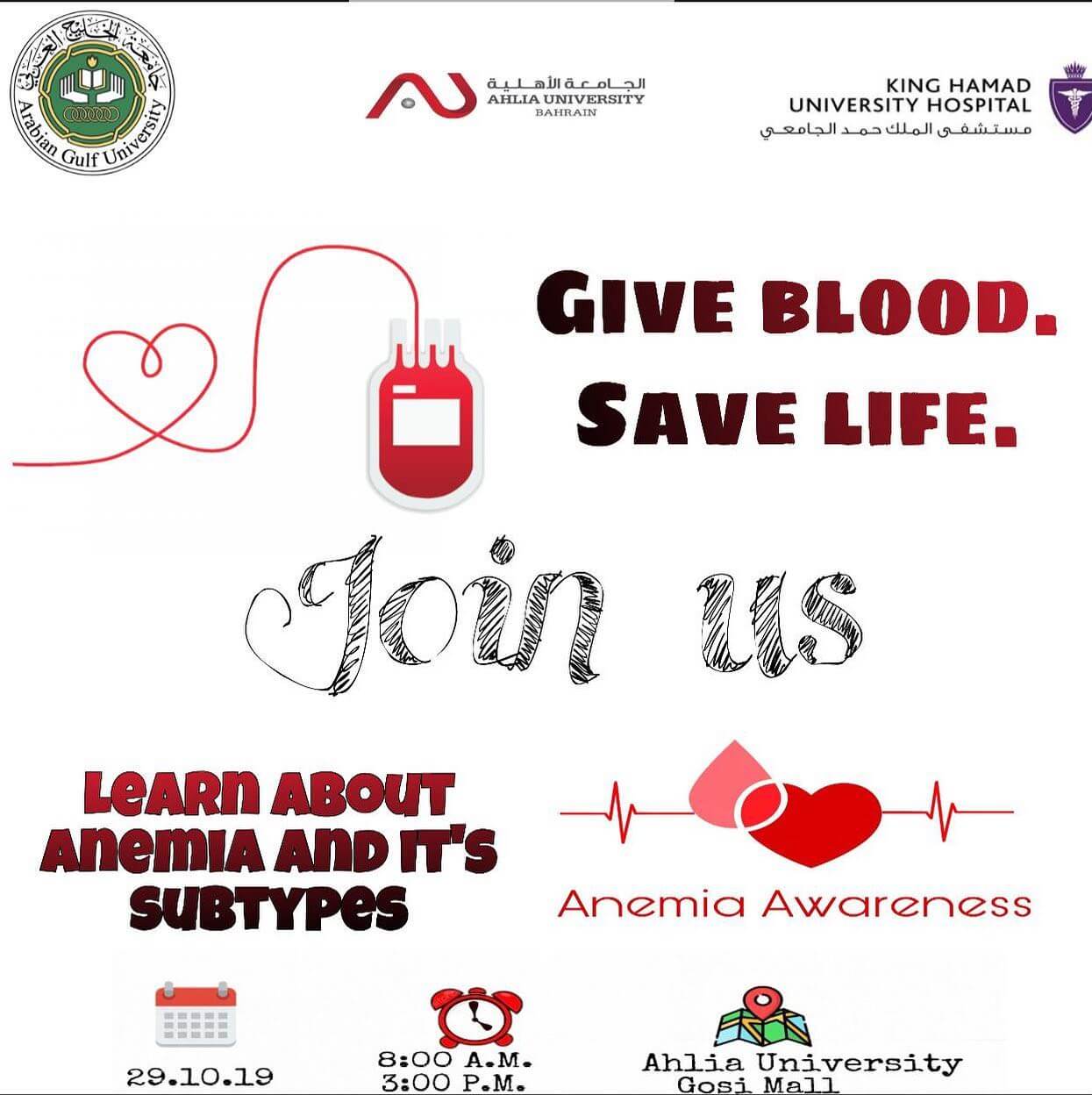
Ahlia Univeristy In Collaboration With @king_h_hospital Hospital Invites You To Participate in The Blood Donation Campaign Thats Going To Take Place @ahliauniversitybh.
Institutional Research Portfolio in Health and Wellbeing
Ahlia University maintains a consolidated research portfolio that integrates computing, engineering, health, and behavioral sciences to address local public health challenges. Our research unit documents publications and projects related to health, which inform internal wellbeing policies, prevention programs, and collaborations with healthcare institutions. The AU publication registry and the document “Research Collaboration” compile the university’s scientific output and the conferences where these studies have been presented [9].
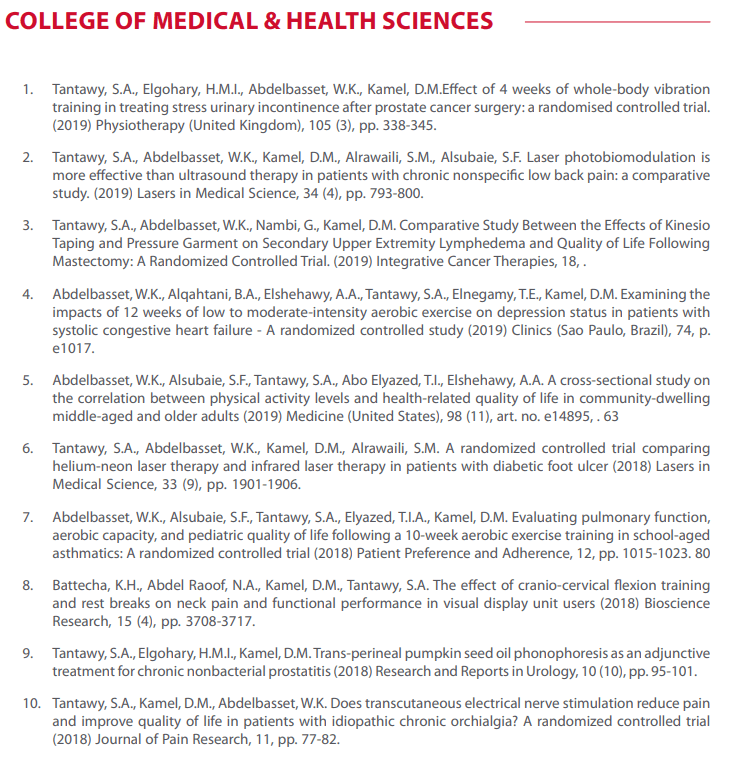
Ahlia Research Forum - Presentations and Projects with National Health Institutions
Ahlia University organizes its annual Research Forum as a platform to showcase projects involving national health partners —including the Bahrain Defence Force, the Ministry of Health, and King Hamad University Hospital. The forum’s abstract book documents posters and presentations on public health, rehabilitation, and prevention, demonstrating AU’s institutional commitment to applied research that enhances community wellbeing [10].
National outcome
Together, these mechanisms improve health and well-being at two levels. Within Ahlia University, they structure a healthy learning and working environment for students and staff. Across Bahrain, they support healthcare workforce development, community participation, preventive health education and coordinated action between higher education and the national health system.
5. Global cooperation
World Health Organization
Ahlia University’s Health-Promoting University status places it within a WHO-led international framework derived from the Healthy Cities Programme. The collaboration involves technical leadership and expert guidance from the WHO Regional Office for the Eastern Mediterranean and the WHO Country Office in Bahrain, alongside national authorities. [E2] · [E6]
This cooperation applies internationally informed standards to the University’s own environment and programmes. It combines local implementation with WHO methodology: self-assessment, documentary review, engagement with staff and students, external evaluation, a defined designation threshold and periodic re-evaluation. The process converts global best practice into an institutional cycle of planning, implementation, assessment and improvement. [E6]
Global-to-local impact
| WHO framework element | Ahlia University application | Resulting contribution |
|---|---|---|
| Social determinants of health | Whole-university attention to conditions in which students and staff learn and work | Health equity and inclusive well-being |
| Healthy lifestyles | Preventive health education, nutrition awareness, screening and specialist engagement | Improved health literacy and risk awareness |
| Emergency preparedness and response | Institutional assessment within WHO’s health-promoting framework | A more resilient learning and working environment |
| Community participation and sustainability | Partnership activities, outreach and student involvement | Health promotion beyond individual clinical care |
| External evaluation and re-evaluation | Independent review and continuing three-year accountability cycle | Quality assurance and sustained implementation |
Ahlia’s public SDG 3 platform maintains the collaboration evidence and situates these activities within the University’s continuing commitment to Good Health and Well-being. [E2] · [E15]
AU collaborates with Brunel University to lay down the initial plan for the opening of a post-graduate degree for health studies
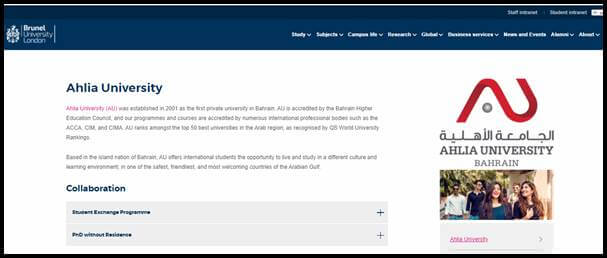
Ahlia University (AU) collaborates closely with Brunel University London to strengthen academic pathways in the field of health and well-being studies. Together, both institutions have developed the initial framework for launching a postgraduate programme in health studies, designed to enhance research capacity and professional training in Bahrain and the wider Gulf region [11].
Currently, the Brunel University–Ahlia University partnership enables students in Bahrain and neighboring countries to pursue Brunel PhD degrees while receiving supervision and training directly from Brunel University’s academic staff. This collaboration allows students to undertake UK-accredited research and study programmes while remaining based in Bahrain, and has already produced successful graduates contributing to health-related research and innovation.
In addition, the undergraduate student exchange programme between Brunel University London and Ahlia University offers students a truly global educational experience by enabling them to study in both London and Manama, enriching their academic, cultural, and research perspectives in the field of health and human development.
Ahlia University as a Health-Promoting University
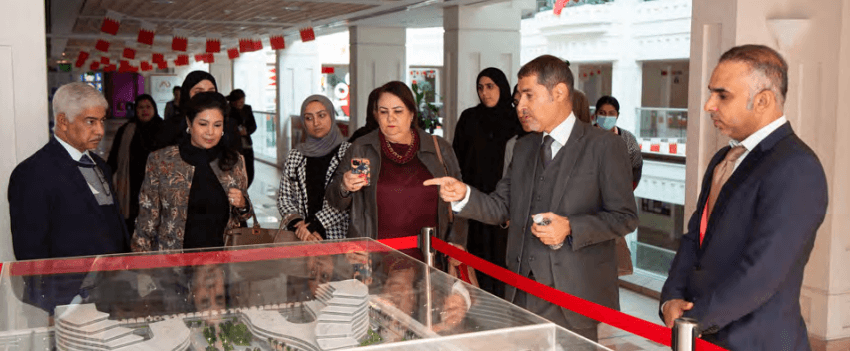
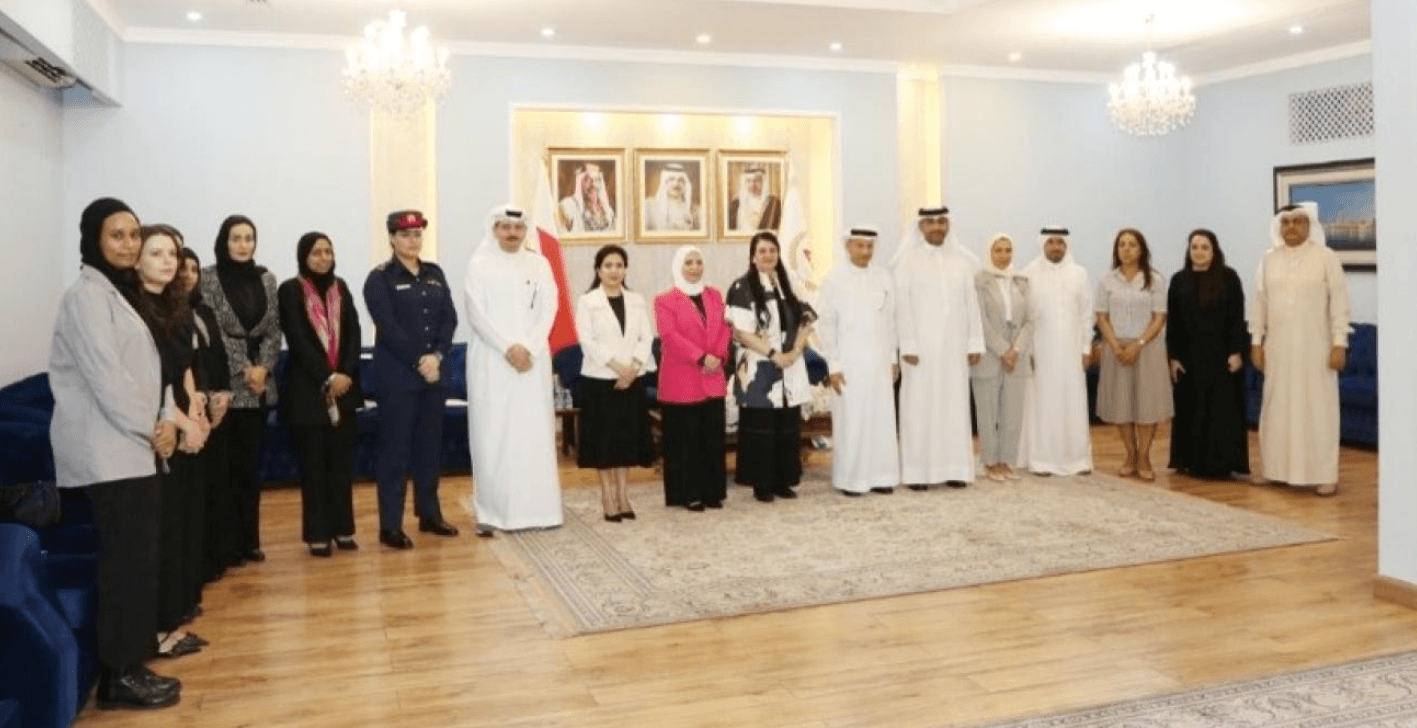
Figure 1: The WHO joint regional and country evaluation team visits Ahlia University to evaluate its eligibility for Health-Promoting University status. Photo credit: WHO Bahrain
In 2023, Ahlia University was officially designated as one of Bahrain’s health-promoting universities, alongside Arabian Gulf University, Kingdom University, the Royal College of Surgeons in Ireland – Medical University of Bahrain, and the University of Technology Bahrain [12].
This important milestone reflects Ahlia University’s commitment to fostering health-conducive working, learning, and living environments for its entire community — students, faculty, and staff alike. The initiative aligns with the national strategy to promote holistic well-being across higher education institutions in Bahrain.
The designation process was carried out under the technical leadership and expert guidance of the World Health Organization (WHO) Regional Office for the Eastern Mediterranean and the WHO Country Office in Bahrain, in close collaboration with the Ministry of Health and the Higher Education Council [13].
Ahlia University received its official Health-Promoting University designation award in February 2023, presented by Dr. Ahmed Al-Mandhari, WHO Regional Director for the Eastern Mediterranean. The ceremony was held in the presence of H.E. Dr. Jaleela bint AlSayed Jawad Hasan, Minister of Health; H.E. Dr. Shaikha Rana bint Isa bin Duaij Al-Khalifa, Secretary-General of the Higher Education Council; and Dr. Tasnim Atatrah, WHO Representative in Bahrain.
Through this recognition, Ahlia University reaffirms its ongoing dedication to supporting a healthy campus environment and contributing to national and global health development goals in partnership with key institutions and organizations.
6. Integrated outcomes and continuing delivery
Ahlia University’s collaborations form a connected health and well-being system rather than isolated events. Specialist providers strengthen knowledge and access; clinical sites develop competent health professionals; national authorities align implementation with Bahrain’s health priorities; and WHO provides an international evidence framework and independent quality process.
Demonstrated outcomes
-
Enhanced institutional capacity to support the mental health and participation of students with special needs through specialist psychiatric input in 2024. [E3]
-
Sustained access to authentic clinical environments across orthopaedic, cardiopulmonary, paediatric and community physiotherapy in the 2024 programme specification. [E4] · [E5]
-
Preventive screening, consultations and health education delivered with local providers across diabetes, nutrition, dental, hearing, speech and breast-health themes. [E2] · [E7] · [E8]
-
Whole-university health promotion aligned with WHO indicators and supported by Bahrain’s Ministry of Health and Higher Education Council. [E6]
-
Community-facing health literacy, illustrated in 2024 by the Sugar-Free exhibition promoting healthy nutrition and diabetes prevention while engaging Bahraini enterprises. [E12]
Continuity after the 2024 evidence year
The collaboration model continued to develop after the reporting year. The College of Medical and Health Sciences remains explicitly committed to clinical practice, health research, community outreach and relationships with government, hospitals, industry and the community. In 2025 Ahlia hosted breast-cancer awareness sessions featuring healthcare professionals and survivor perspectives. In 2026 students delivered a blood-donation awareness exhibition in collaboration with Al Hilal Hospital, KIMSHEALTH and other health organisations. These later activities confirm continuing implementation and expansion of the same partnership model. [E9] · [E13] · [E14]
Institutional conclusion Ahlia University meets the full intent of THE Indicator 3.3.1 through current local, national and global collaboration. The evidence demonstrates active delivery, formal clinical integration, government alignment, international quality assurance and identifiable outcomes for students, staff and the wider community. |
7. Public evidence register
All links below are publicly accessible. Evidence-year sources are listed first, followed by institutional context and continuity evidence. Each evidence identifier used in the report links directly to its source.
| ID | Public source | Date / status | Evidence contribution |
|---|---|---|---|
| E3 | Ahlia University — cooperation with Silwan Psychiatric Hospital | 8 May 2024 | Direct local collaboration; psychiatric expertise; staff capacity and student-support outcomes. |
| E4 | Ahlia University — BSPT Programme Specification | Revised 25 Jun 2024 | External medical health centres, multidisciplinary partners and clinical courses across Years 3–4. |
| E5 | Ahlia University — BSPT programme brochure | 2024 publication | Supervised clinical education in public and private healthcare facilities across Bahrain. |
| E6 | United Nations in Bahrain / WHO Bahrain — scaling Health-Promoting Universities | 21 Aug 2024 | Independent confirmation of Ahlia’s designation; WHO, Ministry of Health and HEC framework. |
| E12 | Ahlia University — Sugar-Free exhibition | 17 Nov 2024 | Community health literacy, nutrition and diabetes prevention during the evidence year. |
| E2 | Ahlia University — SDG 3.3.1 institutional evidence page | Public institutional page | Consolidated collaboration evidence; affiliate health institutions and health activities. |
| E1 | THE Sustainability Impact Rankings Methodology 2026 | Current methodology | Indicator definition, collaboration categories and evidence expectations. |
7. Public evidence register — continued
| ID | Public source | Date / status | Evidence contribution |
|---|---|---|---|
| E7 | Ahlia University — Diabetes Awareness with Bahrain Health City | 19 Nov 2023 | Local provider collaboration; free screening and specialist consultations. |
| E8 | Ahlia University — Stay Healthy with Bahrain Medical City | 11 Jul 2023 | Local health-education day; doctors, consultations, examinations and testing. |
| E10 | Ahlia University — MoU with Bahraini Association for Parents and Friends of the Disabled | 9 Apr 2023 | Formal cooperation supporting participation, well-being and educational continuity. |
| E11 | Ahlia University — SDG 3.3.5 mental-health support page | Public institutional page | Counselling context and external emotional-health expertise. |
| E9 | Ahlia University — College of Medical and Health Sciences | Current institutional page | Clinical practice, health research, community outreach and external relationships. |
| E13 | Ahlia University — Breast Cancer Awareness Sessions | 28 Oct 2025 | Continuity of health education involving healthcare professionals. |
| E14 | Ahlia University — Blood Donation Awareness Exhibition | 27 Jun 2026 | Continuity with Al Hilal Hospital, KIMSHEALTH and health organisations. |
| E15 | Ahlia University — SDG 3 portal | Current institutional page | University-wide public reporting on Good Health and Well-being. |